明/清 佚名 揭缽圖 卷|Raising the Alms-Bowl by After Zhao Boju
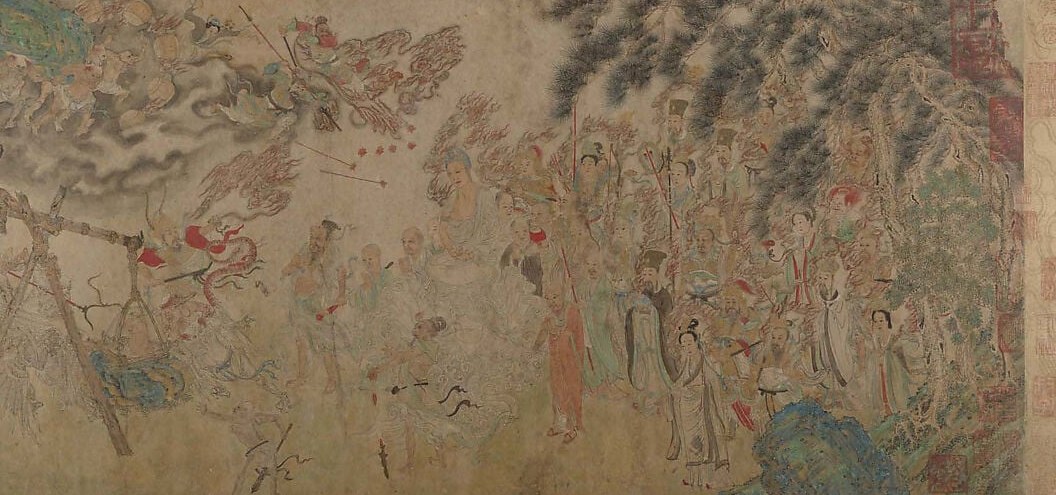
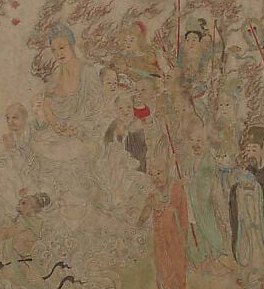
This is Raising the Alms-Bowl, an anonymous handscroll from the Ming or Qing dynasty, attributed to a follower of the 12th-century master Zhao Boju. The single most striking thing about it is not the demon, but the ground. The paper is prepared with gold leaf, a luxury material that turns a narrative about spiritual peril into an object of sheer material devotion. The gold isn't decoration; it is the first donation on the scroll.
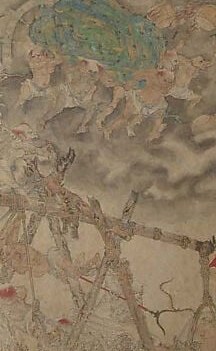
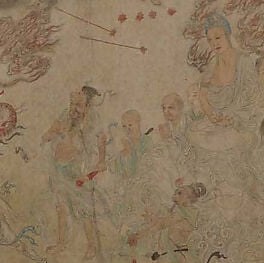
Look at the luminous spaces between the bamboo and the crowd. The gold catches light differently from ink and pigment, so the physical scroll would have shimmered as it unrolled. Then find the central gesture: a monk in dark robes raises an alms-bowl, his arms the still center of the storm. A red-orange demon lunges at him from the left. Their face-to-face confrontation is the spiritual argument of the whole legend.
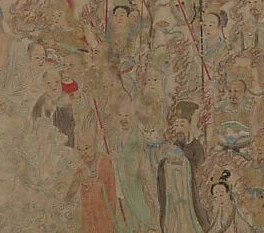
Malevolent spirits are trying to prevent the monk's act of charity. The story comes from Buddhist lore about the challenges on the path to enlightenment, and every figure here witnesses that test. The blue-robed attendant monks stand calmly; a pink-robed figure, possibly a court lady, watches from the left crowd; smaller figures along the bottom register crouch in fear or reverence. Each one is a small portrait of reaction.
The artist's name has been lost, which is why the work is labeled 佚名, anonymous. But the gold ground tells us someone paid for this. Pigment and precious metal on paper were an offering, a way to accrue spiritual merit for the patron. What would it have felt like to unroll this in a dim room, the gold catching the lamplight before the demon appeared?
Details
Transcript
The paper glows before any figure appears. That warm light is real gold, applied behind the ink. A monk raises his bowl as a red demon lunges at him. Malevolent spirits are trying to stop his act of devotion. Gold leaf on a Buddhist scroll was a donation, a merit. The painter's name is lost, but the gold remembers his patron.