Twilight in the Wilderness by Frederic Edwin Church
Frederic Edwin Church painted Twilight in the Wilderness in 1860, literally on the eve of the American Civil War. This is not just a landscape. It is a sermon in oil, asking what the nation stood to lose if it destroyed itself. It hangs today at the Cleveland Museum of Art.
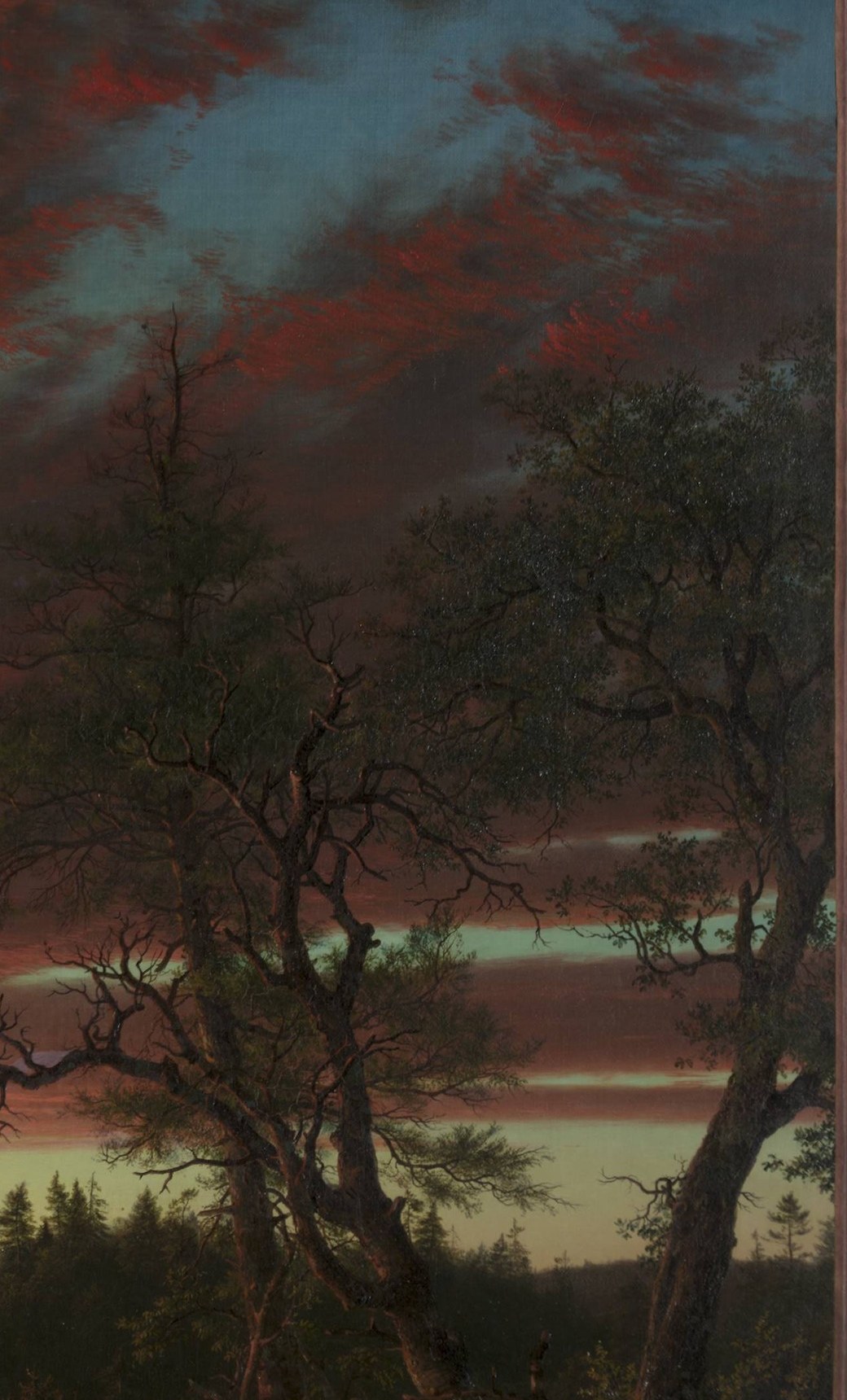
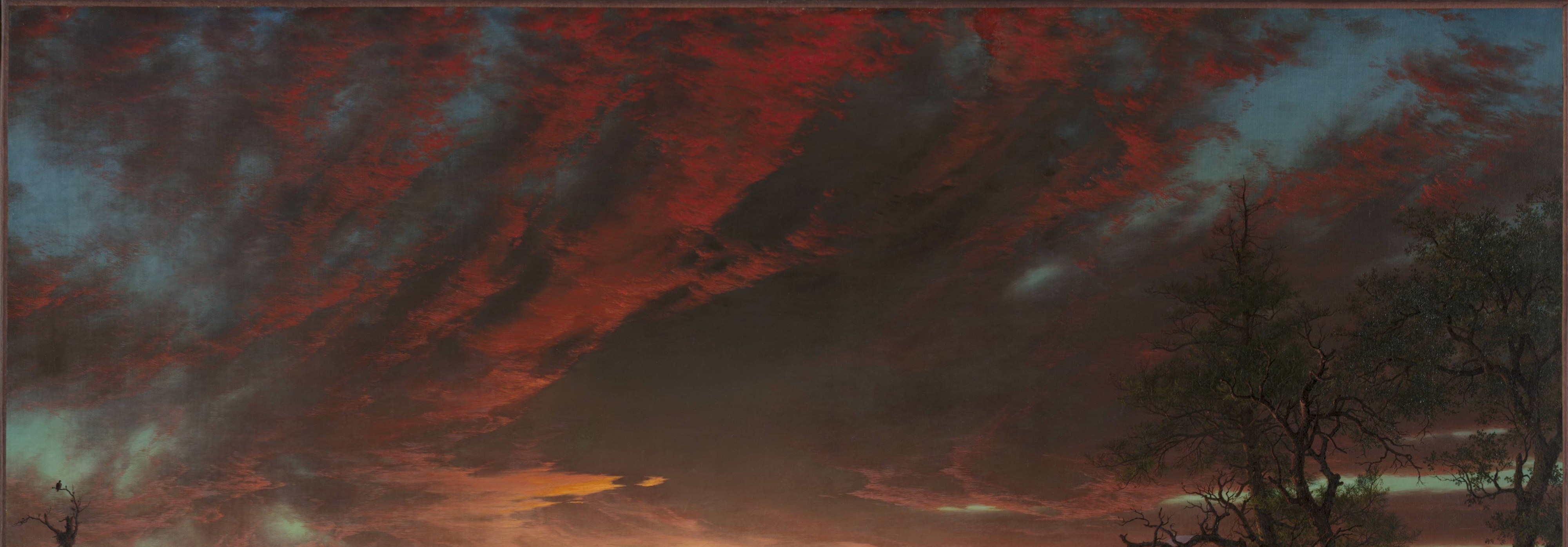
Church built his reputation on enormous, single-painting exhibitions where paying crowds sat on velvet benches and wept. For Twilight in the Wilderness, they filed into his Tenth Street studio in New York and faced a canvas ninety inches wide. The altocumulus clouds are the star of the show, a blazing passage of crimson and purple that took months of plein-air sky studies to get right.
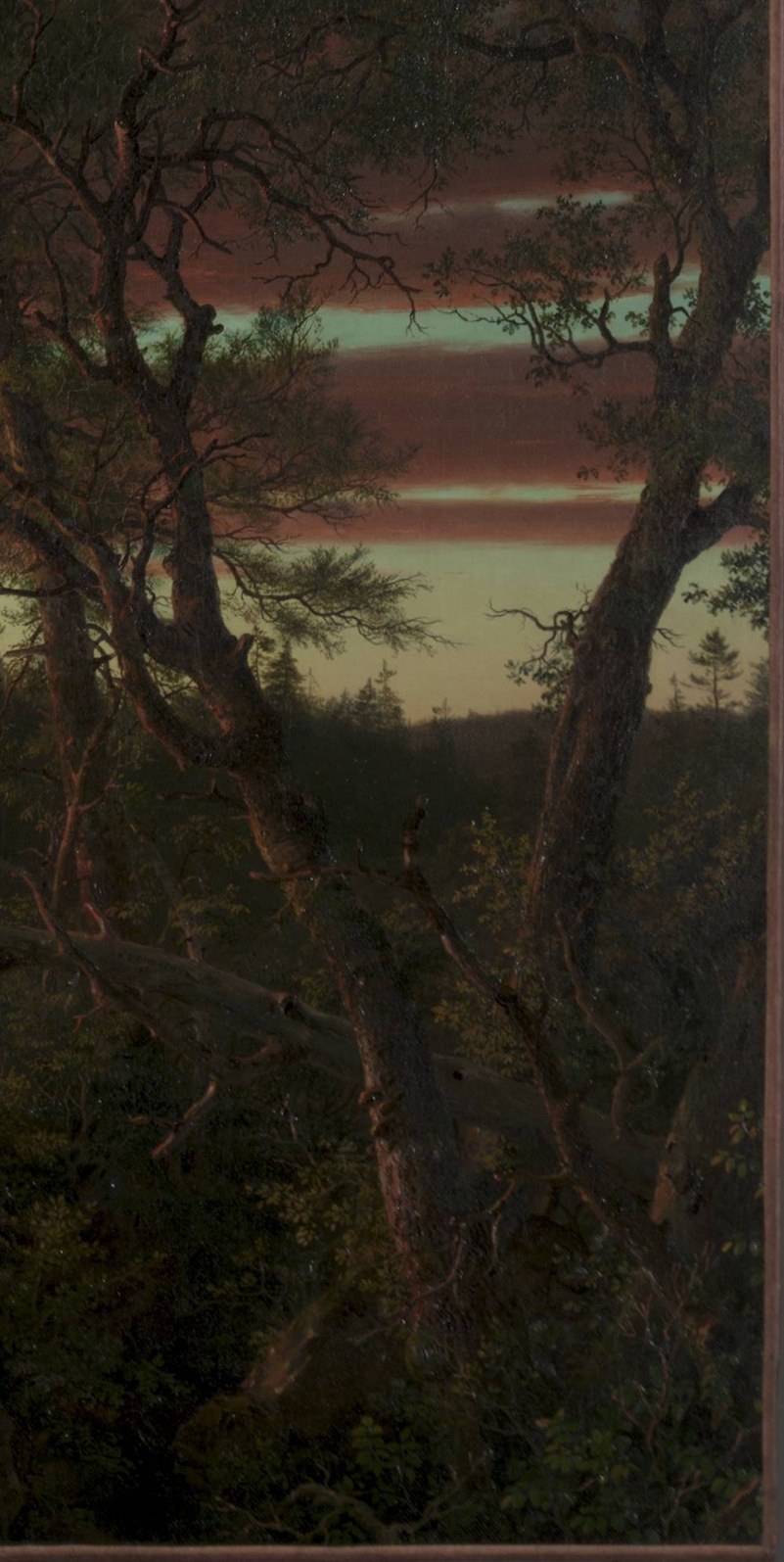
The dead tree on the right silhouette is the fulcrum. Church included it early in the sketch, and when the painting debuted, more than one reviewer saw it as a memento mori for the Union itself, a country burning its own forests. But Church refuses despair. The living forest presses in behind the skeleton branch, and the golden horizon offers no end, only an overwhelming stillness.
He called it an unsullied wilderness, and he meant it as a promise: beneath all the smoke, America was still, at its core, this. Do you think anyone who sat in that dark room in 1860 walked out unchanged?
Details


Transcript
On the eve of civil war, America was tearing itself apart. This painter looked away. He looked west. A dead tree stands against the dying light. The nation saw itself in this tree. Some critics called it a national funeral pyre. But look past it. The forest is alive, unbroken, pristine. A wilderness so sacred Church gave it a sunset that reads as a biblical vision. He held a single-painting exhibition in New York. A paying audience sat in silence. They understood. This was a cathedral made of clouds and light.