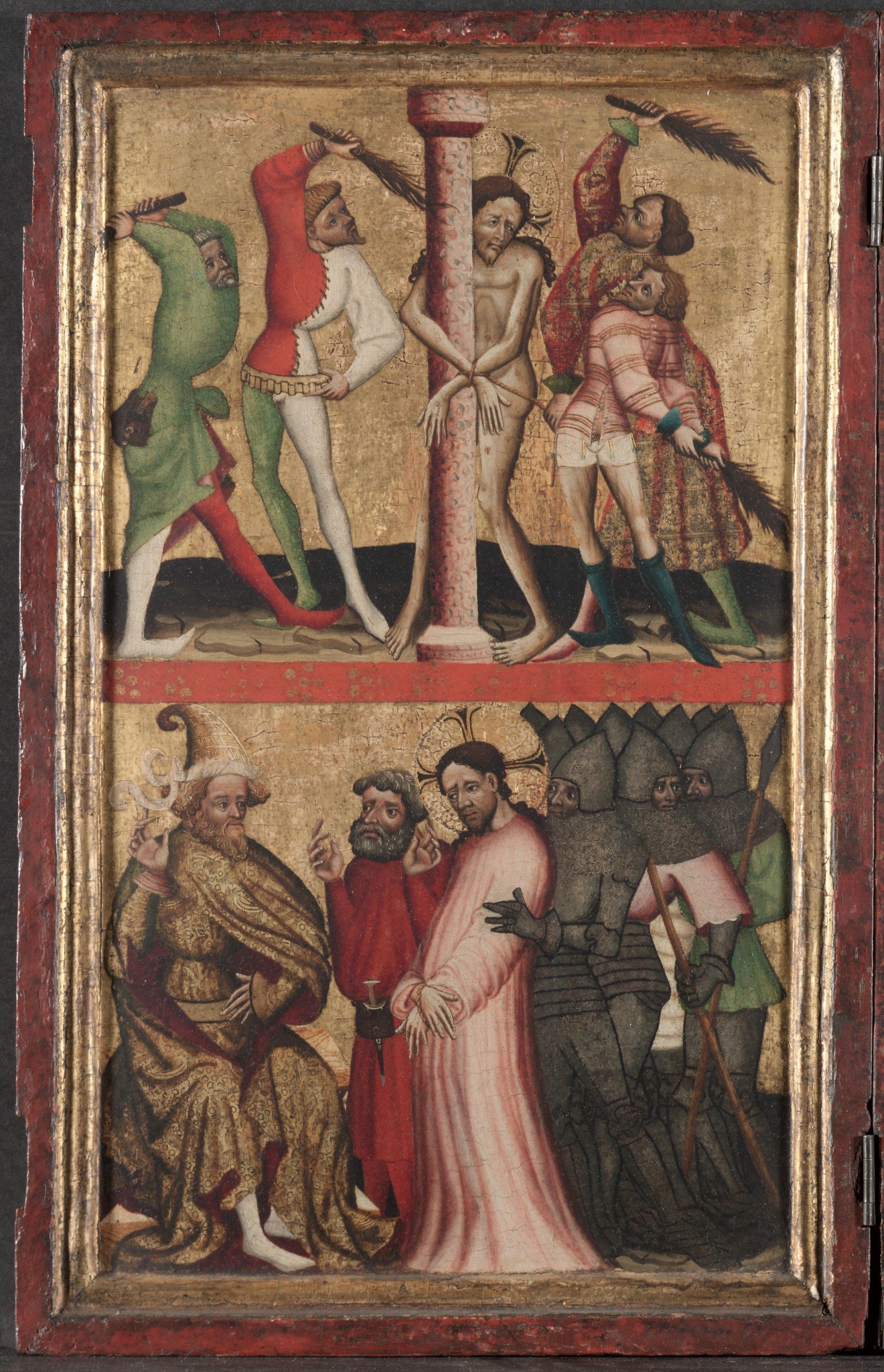
Diptych with the Passion of Christ (left wing):Flagellation and Christ Before Pilate by http://www.wikidata.org/.well-known/genid/e4e03fbed7ad4fcaf22047690fd301d7
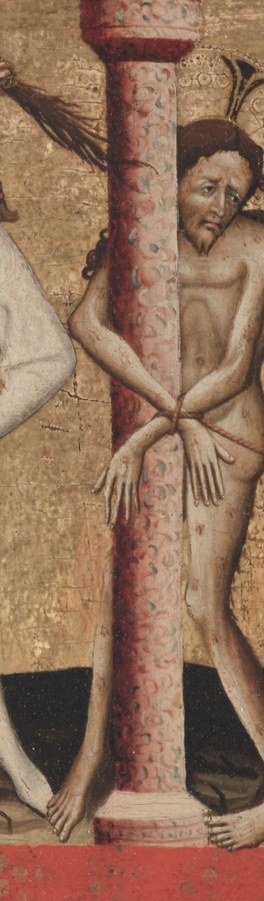
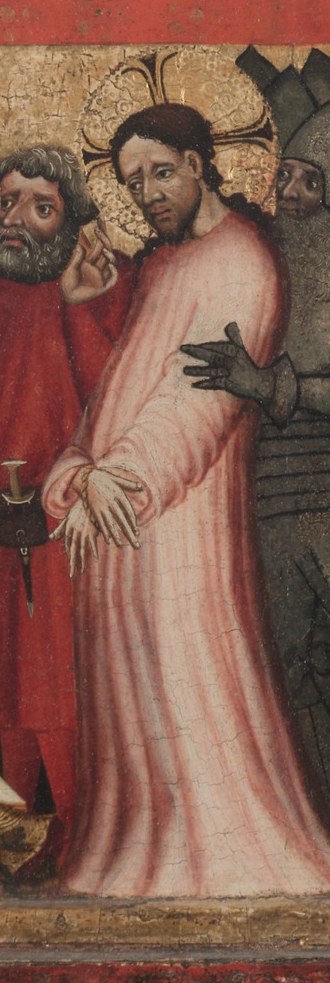
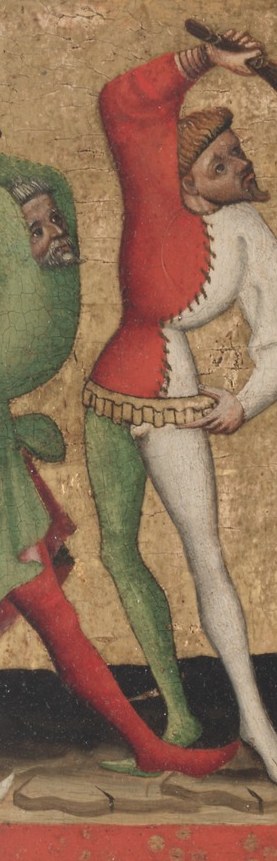
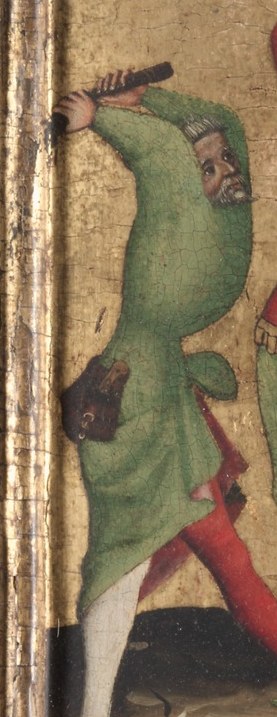
This powerful artwork, the left wing of a diptych from around 1400, visually recounts two crucial episodes of Christ's Passion: the Flagellation and Christ's appearance before Pontius Pilate. Its vibrant, unshaded colors and stark gold background remove the scenes from any earthly setting, focusing intently on the narrative and imbuing it with a sacred, timeless quality.
Look closely at the suffering in Christ's expression during the Flagellation and his resigned acceptance before Pilate. The gold background, a characteristic of early Renaissance devotional art, isn't just decorative; it abstracts the scenes, emphasizing their spiritual significance over realistic detail.
Likely created for private devotion, this panel would have been part of a pair, intended to facilitate personal contemplation of Christ's suffering and sacrifice. Such artworks served as visual aids for prayer, enabling viewers to engage intimately with central tenets of Christian belief.
These pieces remind us how art historically served deeply personal and spiritual functions.
Details
Transcript
This painting, from around 1400, shows two moments. Above, Christ is flagellated, enduring physical torment. Below, He stands before Pontius Pilate, who condemns him. The gold background elevates these earthly events. This work was part of a diptych, used for private prayer. It brought the viewer closer to the Passion of Christ.