Philip II offering the Infante don Fernando to the Heavens by Titian
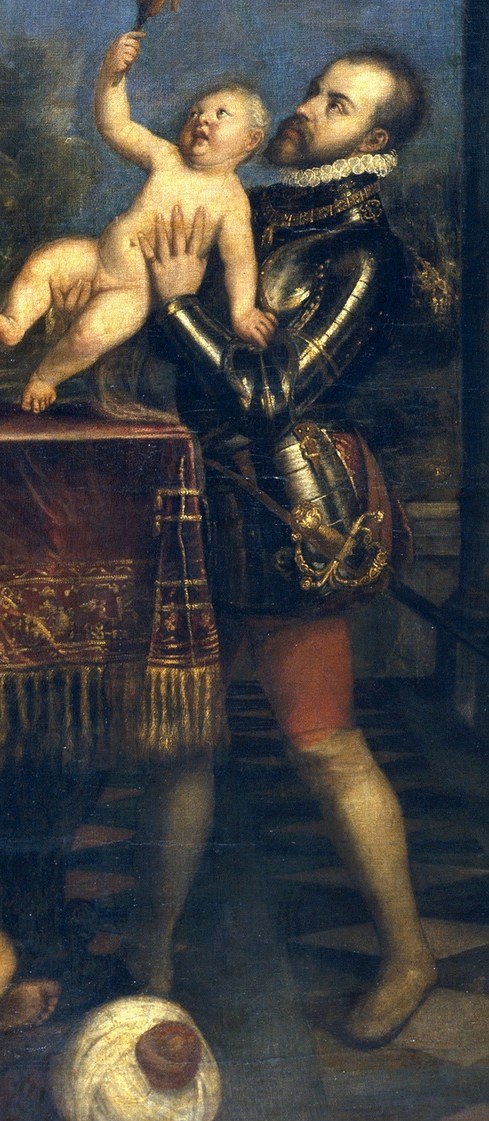
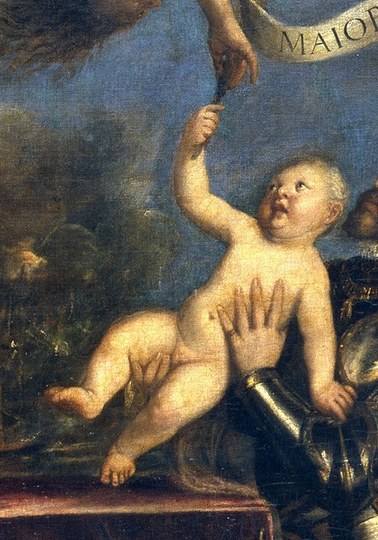
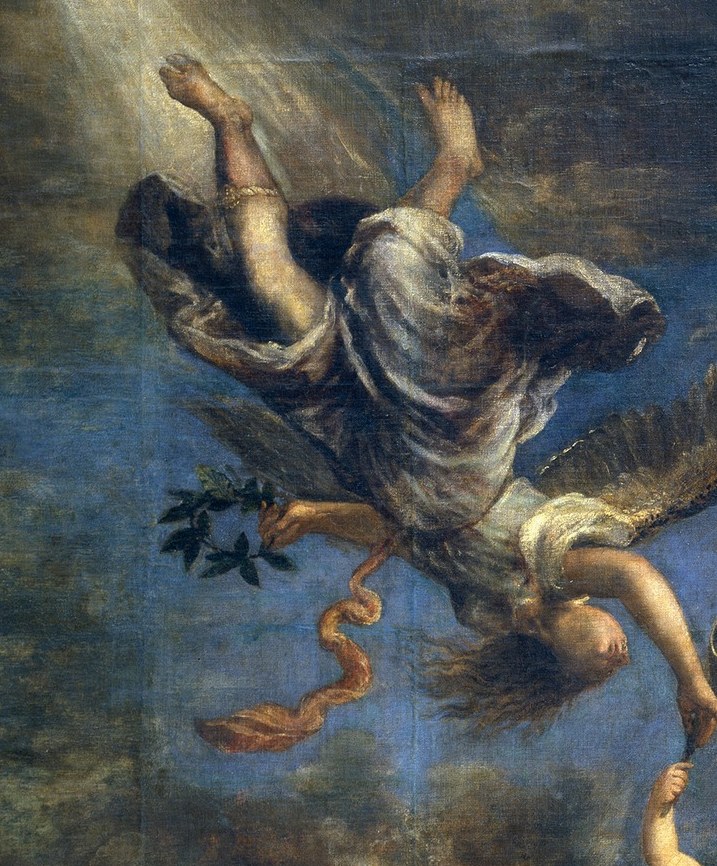
Titian's grand 1573 painting, "Philip II offering the Infante don Fernando to the Heavens," is an allegorical masterpiece housed in the Museo del Prado. It depicts King Philip II of Spain presenting his infant son, Fernando, to a celestial figure, symbolizing divine favor and dynastic succession.
The painting is rich with symbolism. While the primary figures and the banner with its Latin inscription "Maiora Tibi" (Greater things for you) convey messages of hope and future glory, a small, often overlooked detail on the floor adds another layer of meaning.
Look closely at the discarded turban. This element subtly but powerfully symbolizes the Spanish monarchy's dominance and subjugation of other cultures, grounding the celestial allegory in earthly political realities of the time. Titian's masterful use of such details reveals the full scope of his patrons' ambitions.
What other subtle symbols do you think could be hidden in allegorical paintings?
Details
Transcript
King Philip II presents his infant son to the heavens. This grand painting, from 1573, is an allegory of succession. The banner reads 'Maiora Tibi': 'Greater things for you'. But look at this small, discarded turban on the floor. It symbolizes the Spanish monarchy's dominion over other cultures. Even a small detail tells a powerful political story.