Farming Village at Twilight by Vincent van Gogh
In "Farming Village at Twilight," painted in 1884, Vincent van Gogh masterfully uses stark contrasts to create a powerful sense of depth and atmosphere. This early work, housed in the Rijksmuseum in Amsterdam, showcases his developing command of light and shadow.
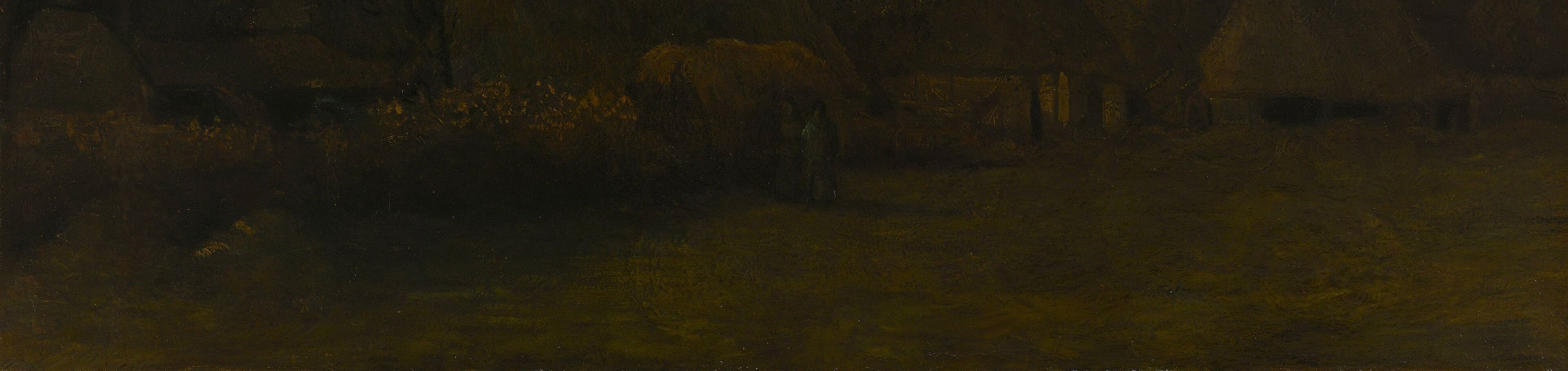
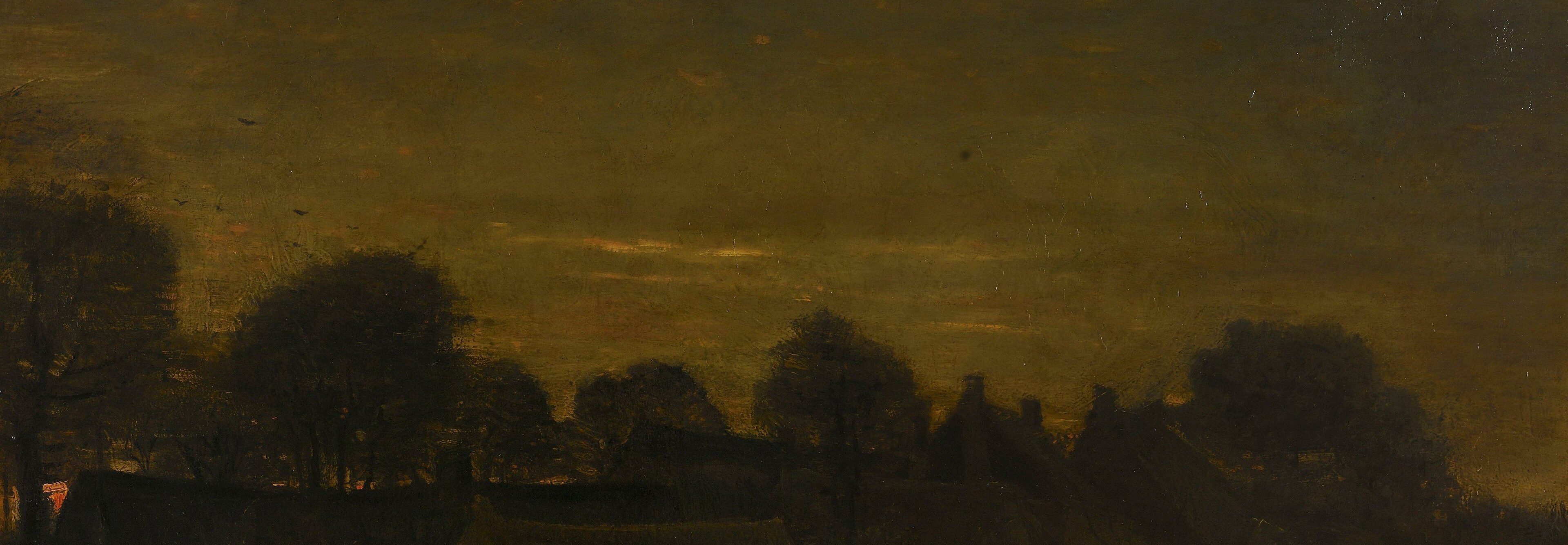
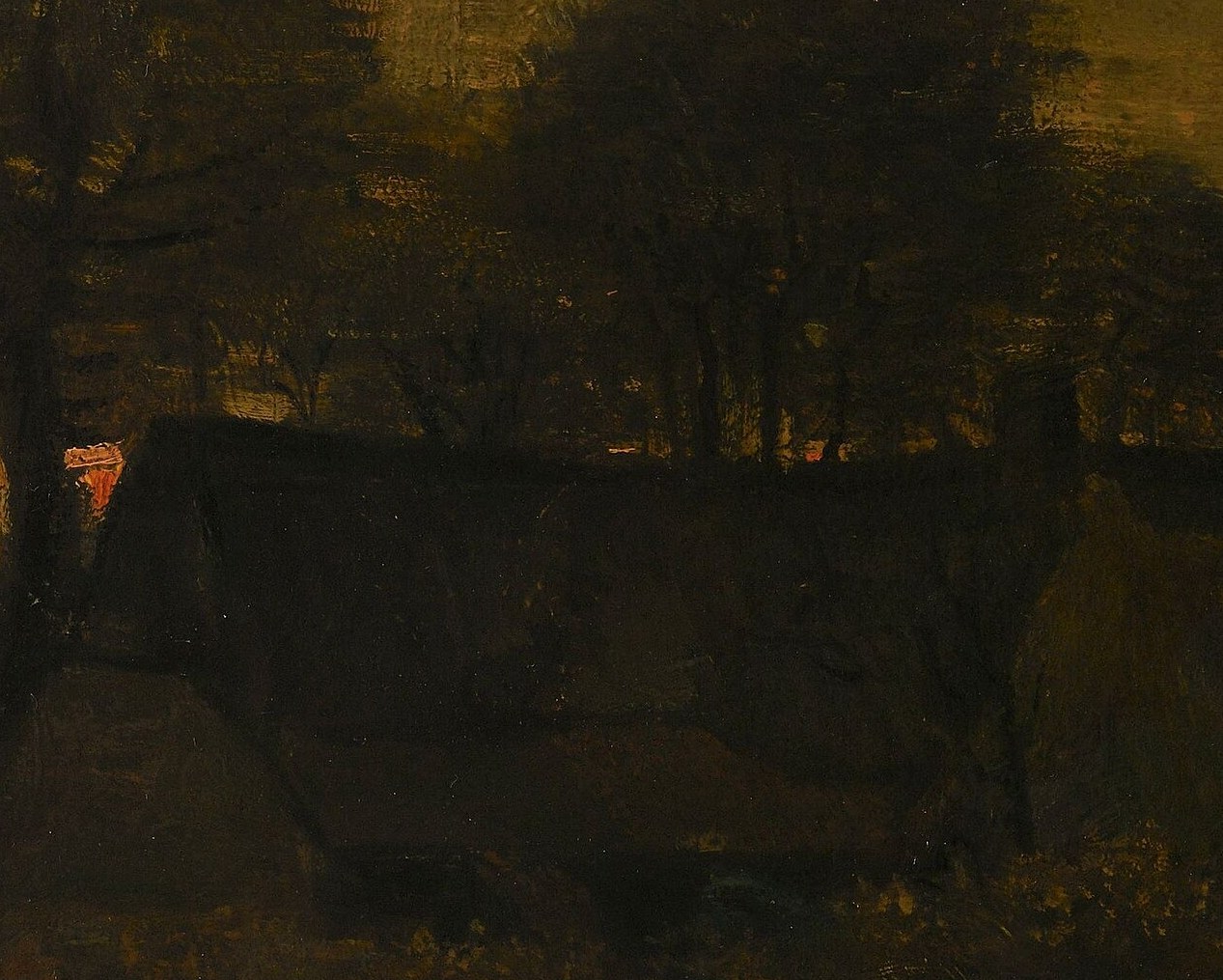
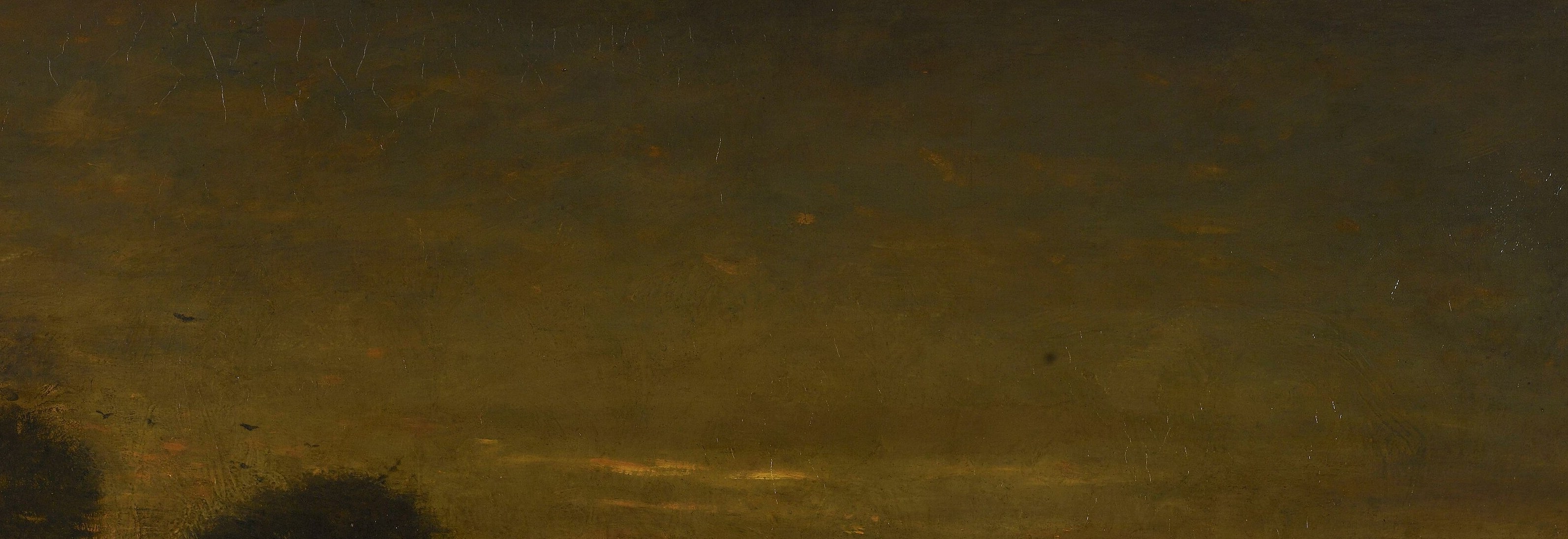
Notice how Van Gogh compresses the foreground earth, the treeline, and even the thatched cottage into near-black silhouettes. This technique pushes the luminous twilight sky into dramatic relief, making the glowing horizon feel intensely bright.
The painting reflects Van Gogh's deep interest in rural life during his formative years in the Netherlands. It's a testament to his early artistic explorations before the vibrant, expressive works that would define his later career. What strikes you most about this quiet scene?
This piece provides a fascinating glimpse into the artist's developing style and his ability to convey profound emotion through carefully balanced tonal values.
Details

Transcript
Van Gogh's early works used bold tricks of light. He compressed the foreground into near-black earth. He silhouetted the dense treeline against the sky. Even this cottage blends into the shadow. The heavy clouds close down on the luminous horizon. This trick makes the sunset glow feel impossibly bright. Just a tiny light shines from the window.