Game Piece with Hercules Slaying the Three-Headed Geryon by http://www.wikidata.org/.well-known/genid/b6b679a9563ac74d3f615e11909d9a7c
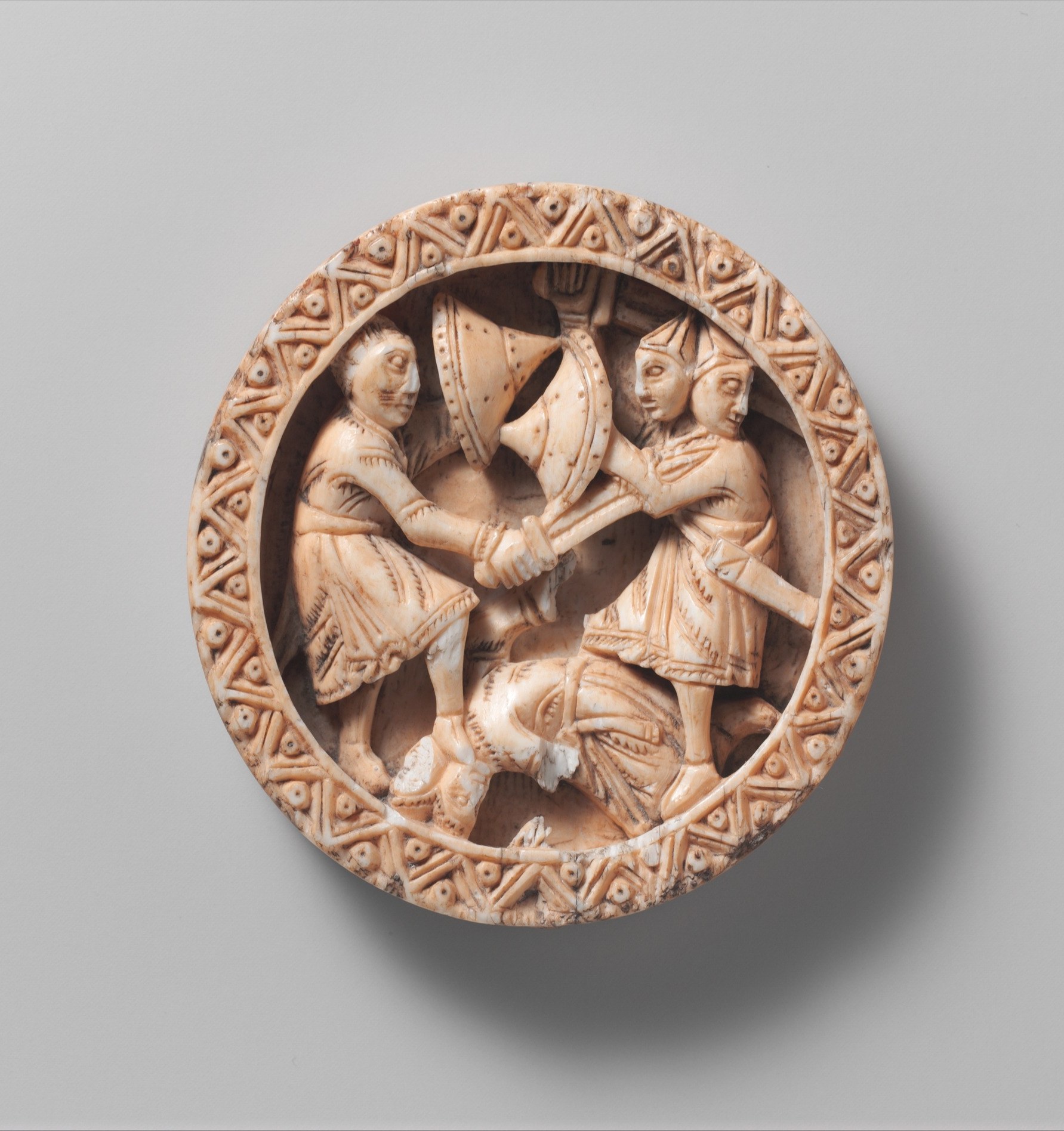
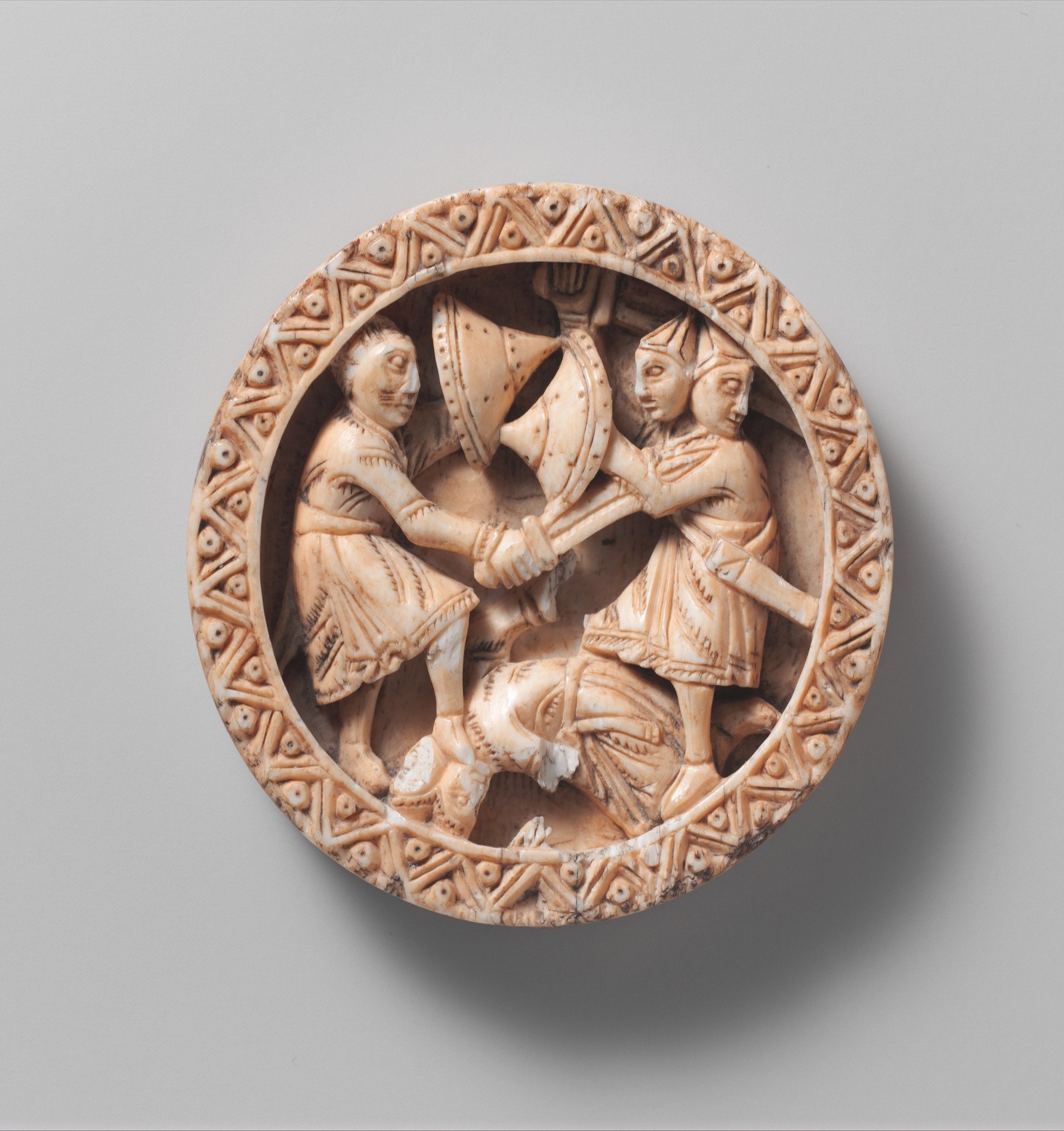
This is a gaming piece, carved from walrus ivory around 1150, now in the collection of The Met Cloisters. It shows Hercules killing the three-headed giant Geryon, one of the Twelve Labors, on an object small enough to lose in your palm. The violence of the myth is here reduced to a handheld token for strategy play.
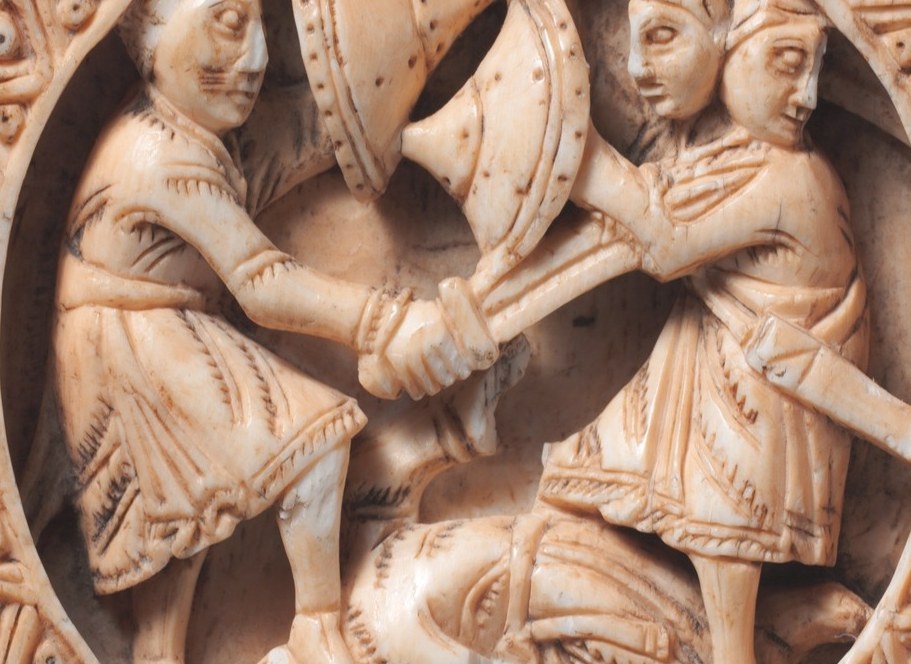
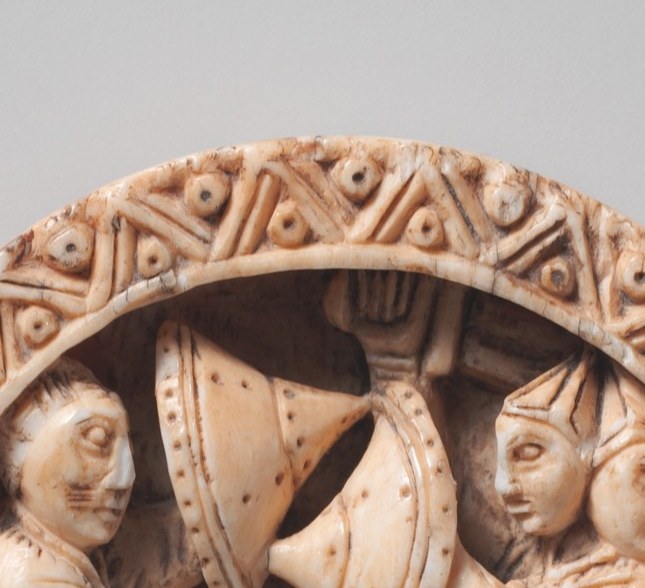
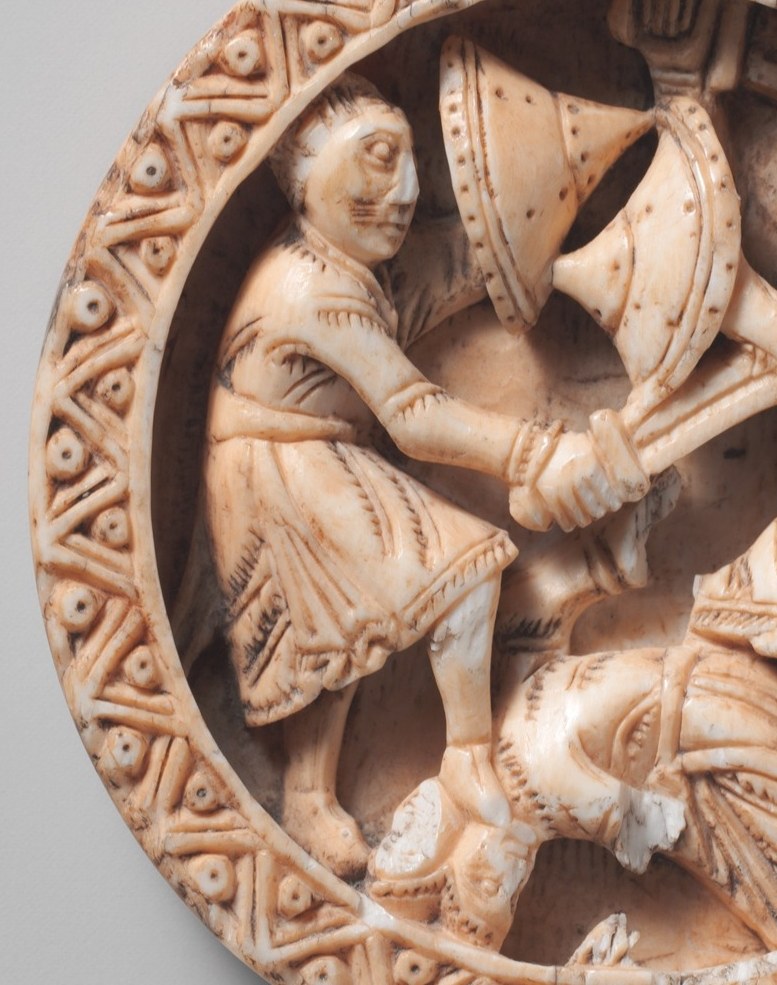
Look first at the top center, where three small heads cluster on one body. That is the single detail that identifies the myth: Geryon's defining excess. Then follow the tangle of arms and hands at dead center, where the carver has concentrated all the kinetic energy of combat into a knot of grasping limbs. Two flanking robed figures, perhaps Iolaus, perhaps divine witnesses, frame the struggle as something formal and heraldic, not chaotic.
The carved chevron border is a technical signature. That repeating triangular notch pattern is characteristic of 12th-century Romanesque ivory workshops in northern Europe, and it dates the piece as surely as a document would. The game piece was almost certainly part of a larger set, used for a strategic table game while also displaying a well-known classical story. It collapsed the distance between antiquity and daily life.
During the turmoil of the French Revolution, the piece was looted and eventually smuggled out of France. It passed through private collections for over a century before the Met acquired it. A myth about retrieving stolen cattle, carved on an object that was itself stolen.
Details
Transcript
A game piece. 12th-century Europe, carved from walrus ivory. It weighs almost nothing. You could flip it with your thumb. The border places it: those repeating notches are a Romanesque workshop signature. Inside the ring, a man drives his body into a monster. Three heads on one body. This is Geryon, and the labor is impossible. It was looted during the French Revolution and smuggled abroad. A heroic myth held in someone's hand while they thought about their next move.