The Villa Loredan, Paese by Francesco Guardi
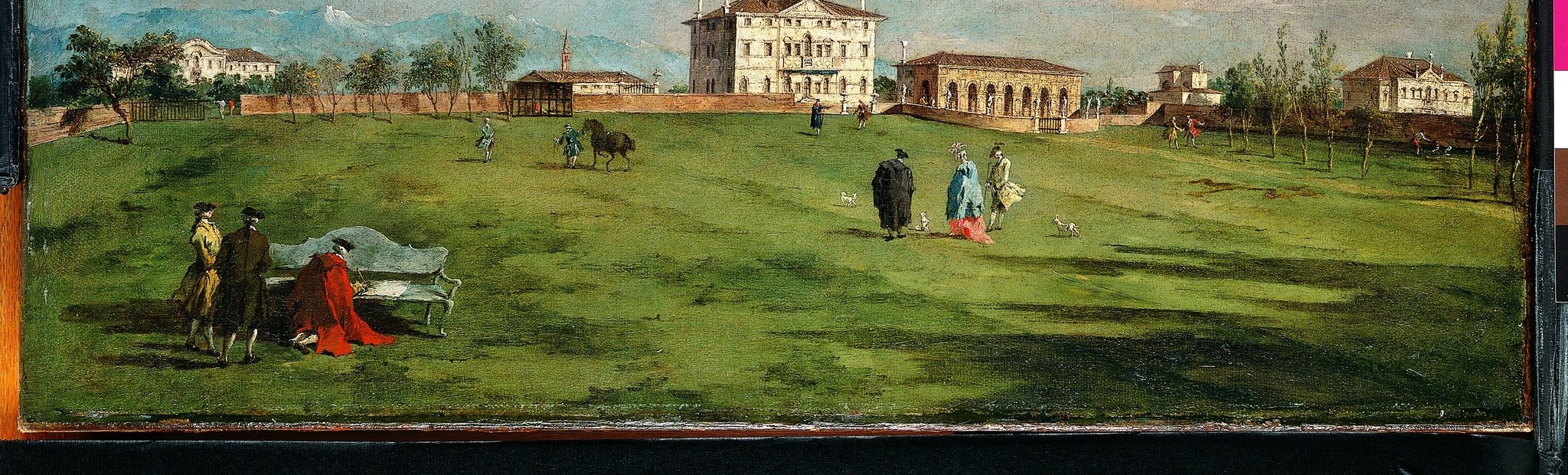
Francesco Guardi painted 'The Villa Loredan, Paese' in 1792, a year before his death. It hangs now at The Metropolitan Museum of Art. For most of his career, Guardi worked in the shadow of Canaletto, the undisputed master of Venetian vedute. Canaletto painted architecture you could measure. Guardi painted architecture you could feel.
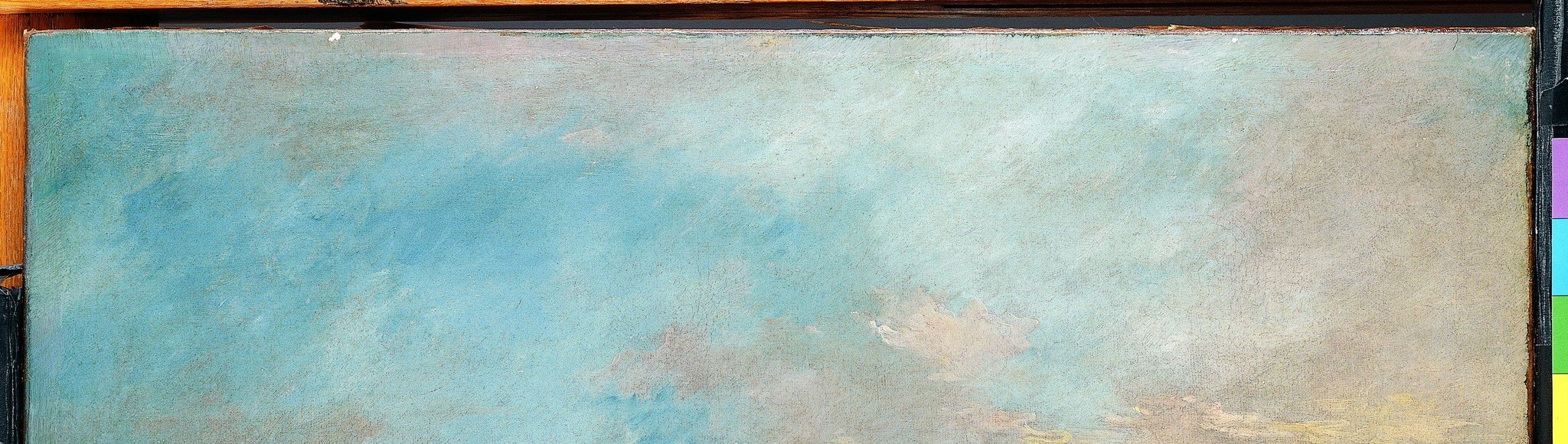
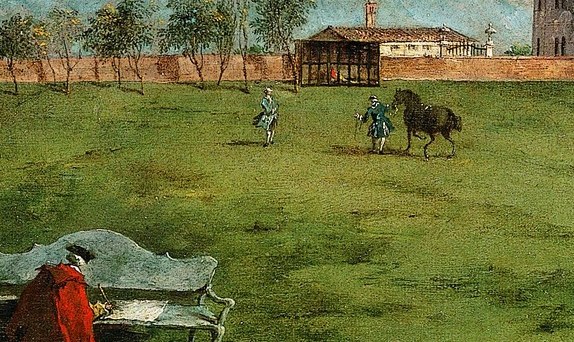
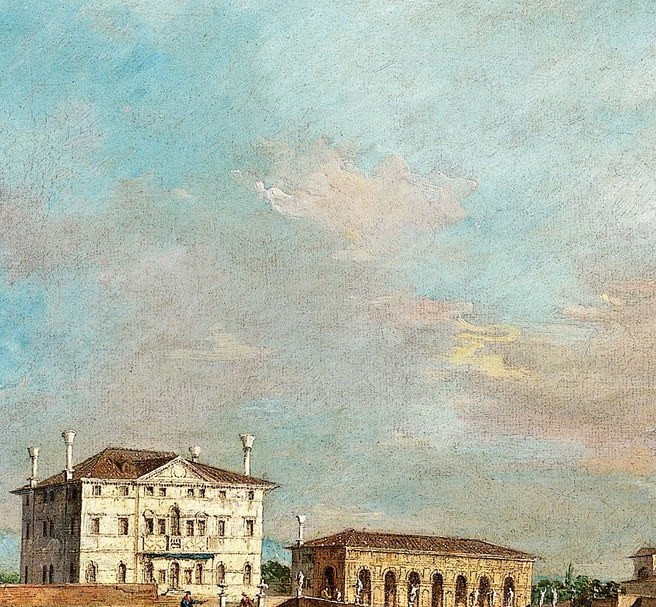
Stand close to this canvas and the villa nearly dissolves. The sky is built from fast, diagonal strokes of wet paint, laid down confidently and never smoothed over. The figures on the lawn are a few bright flicks of a brush. The small black dog near their feet is barely three marks. This is not imprecision. It is a painter who spent decades learning exactly how little information the eye needs to assemble a world.
Guardi was a Venetian nobleman who began his career painting religious works alongside his older brother Gian Antonio. Only after his brother died in 1760, when Francesco was already nearly fifty, did he turn to the landscapes that now define him. His late vedute show a man leaving precision behind for something harder: atmosphere, light, and motion captured in gestures so fast they feel alive.
What makes this painting work is the discipline underneath the looseness. Every stroke is placed, not random. The villa stands solid. The lawn breathes. And the sky, the most expressive passage, does what paint almost cannot do: it moves. Next time you see a Guardi, step forward until the image breaks. Then step back and watch it reassemble.
Details
Transcript
From a distance, a perfect neoclassical villa. Guardi painted this in 1792, near the end of his life. Now look at the sky. Those aren't careful clouds. They're loose, diagonal slashes of paint. Completely unblended. The people are the same trick. Just a few bright flicks of the brush. Even the dog is three dark strokes. It shouldn't work. But step back, and every loose mark locks into place.