Breton Girls Dancing, Pont-Aven by Gauguin, Paul
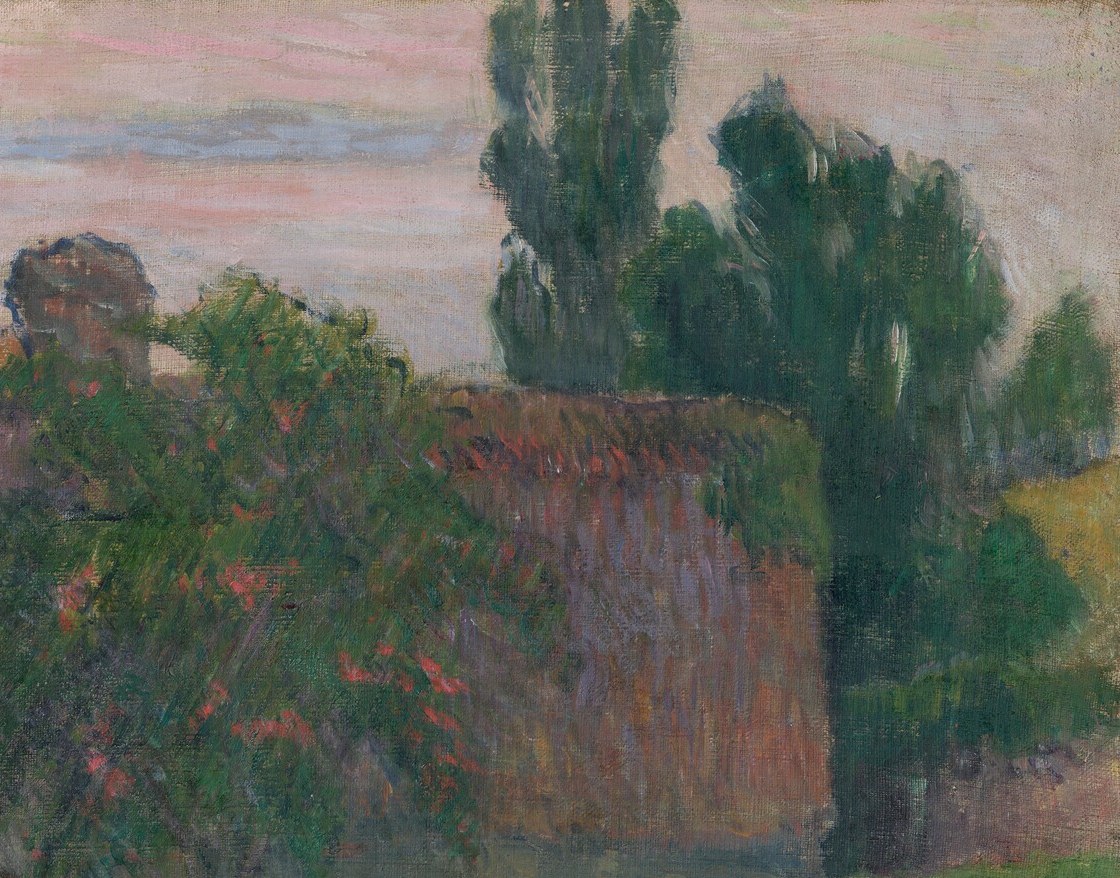
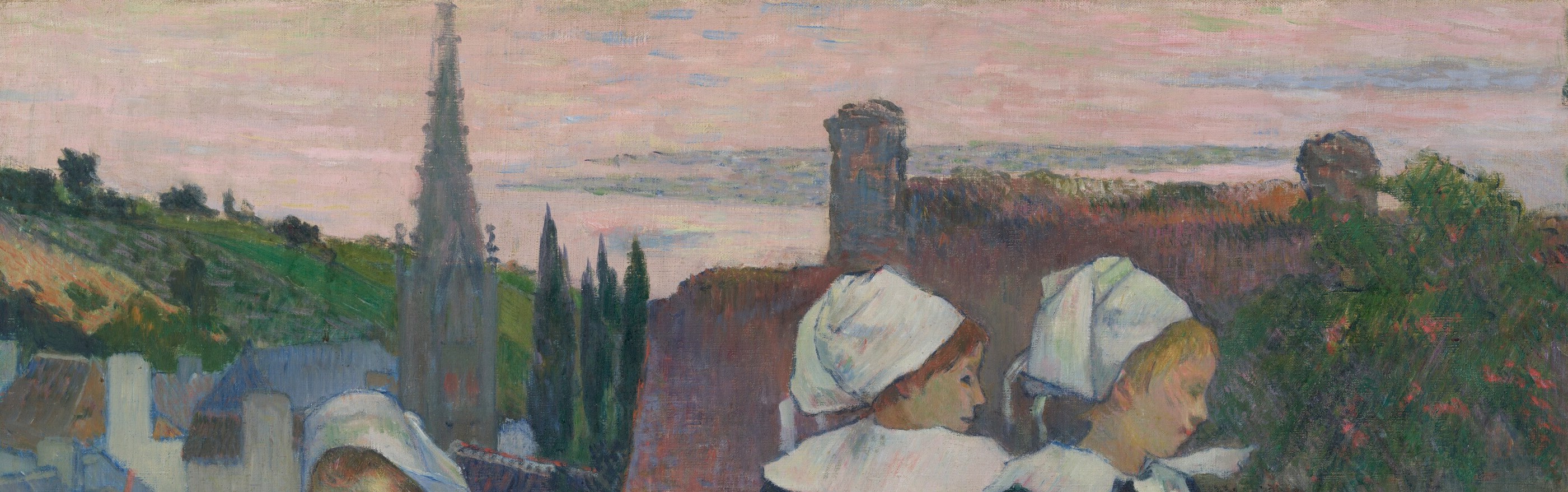
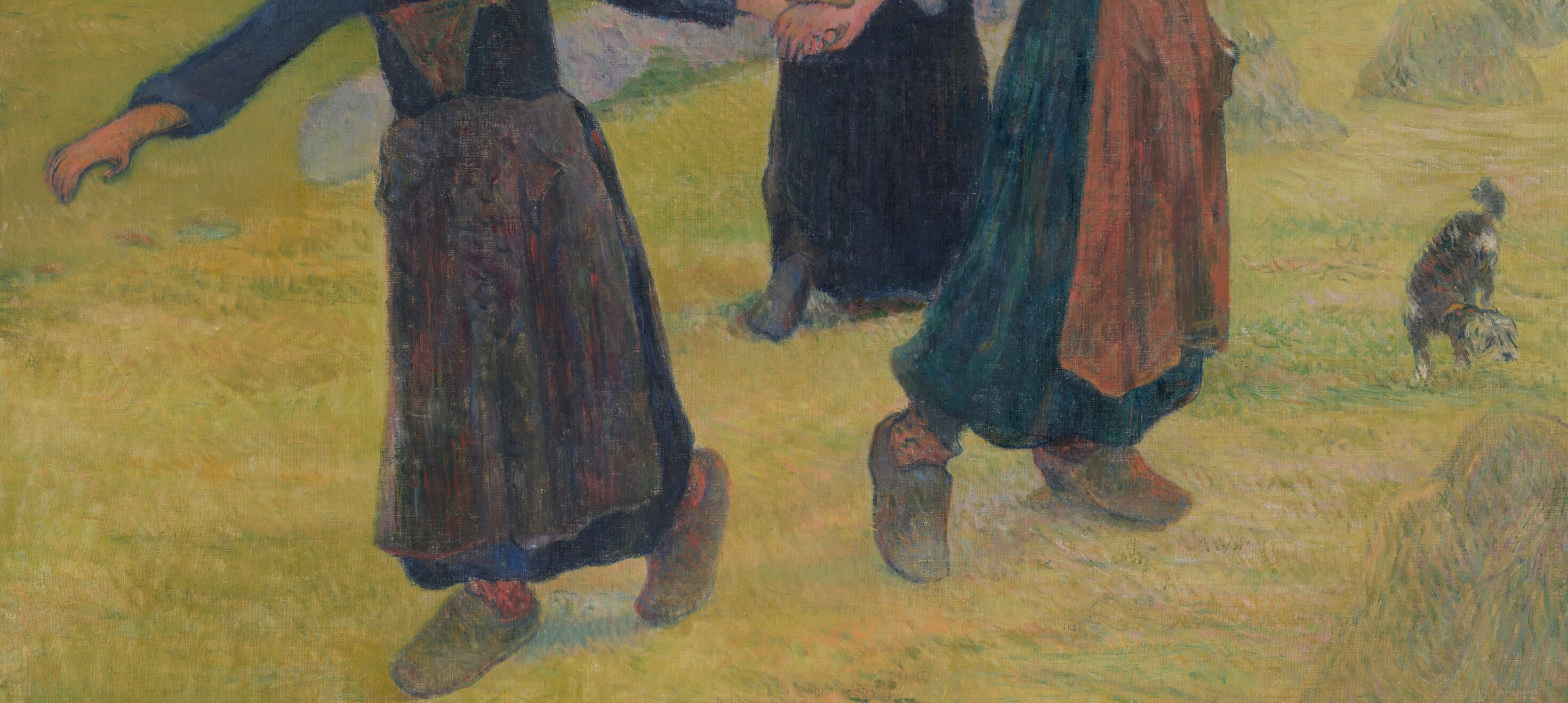
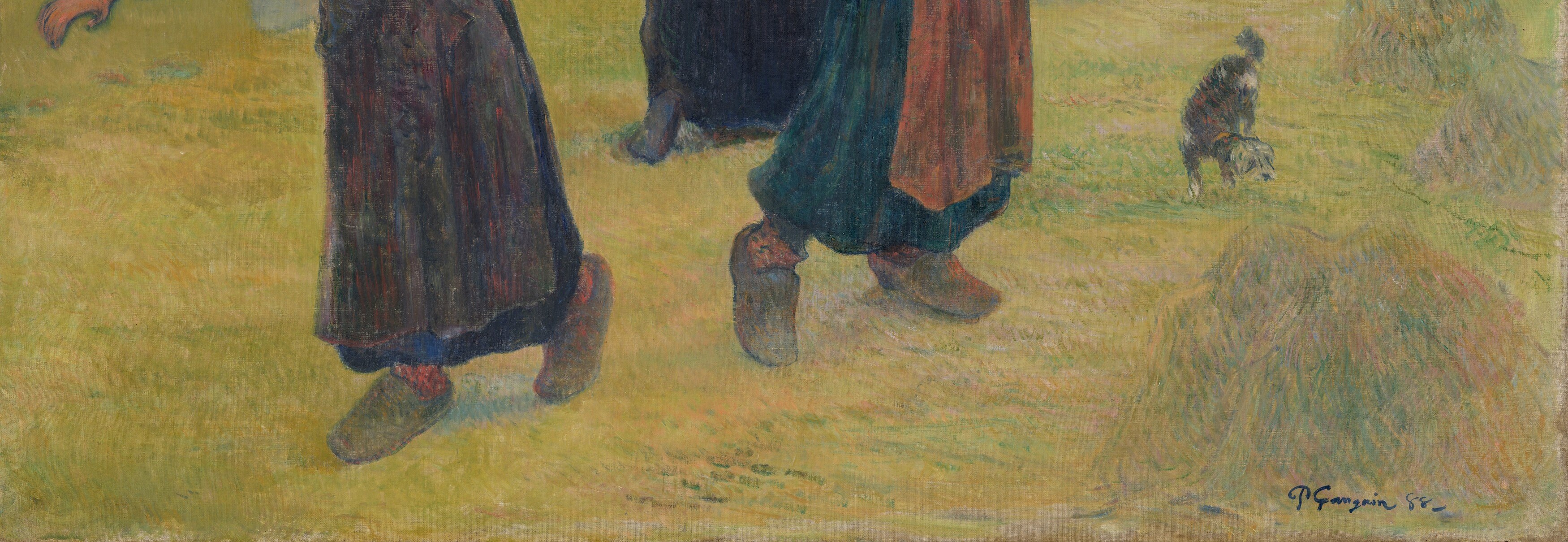
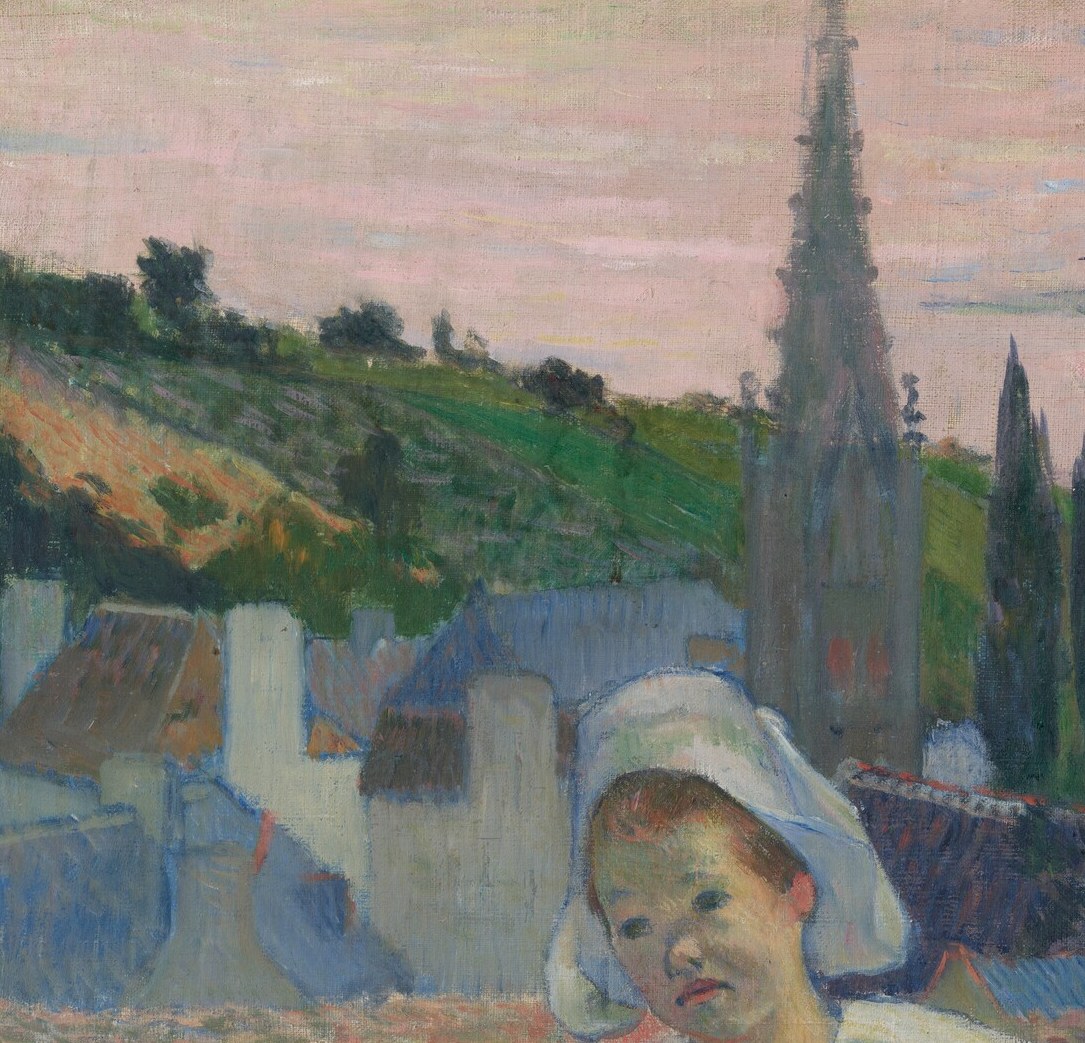
Paul Gauguin’s *Breton Girls Dancing, Pont-Aven* (1888) is a vivid example of his early engagement with local customs, painted while he lived in the rural village. This oil on canvas, housed in a private collection, captures the essence of Breton life through a revolutionary artistic style.
Observe the distinct white coiffes worn by the dancers; they are not merely decorative but serve as powerful symbols of Breton cultural identity. Gauguin’s treatment of the heavy dark skirts and the flat green meadow demonstrates his developing Synthetist style, characterized by bold, non-naturalistic colors and simplified forms that broke from Impressionism.
Gauguin's time in Pont-Aven, Brittany, was crucial for his artistic evolution. He immersed himself in the local culture, drawing inspiration from the distinct traditions and the perceived authenticity of the Breton people. This led him to explore a more expressive and less conventional artistic language, paving the way for his later contributions to modern art.
What aspects of traditional life do you think artists can best capture through their unique styles?
Details
Transcript
This painter moved to Brittany for its ancient culture. He found his subjects in the traditional life of the villagers. The girls' white coiffes are symbols of Breton identity. His flat color and bold outlines defined a new style. It was called Synthetism, a break from Impressionism. He captured the essence of local life, not just its appearance.