Kåde heste by Hans Michael Therkildsen
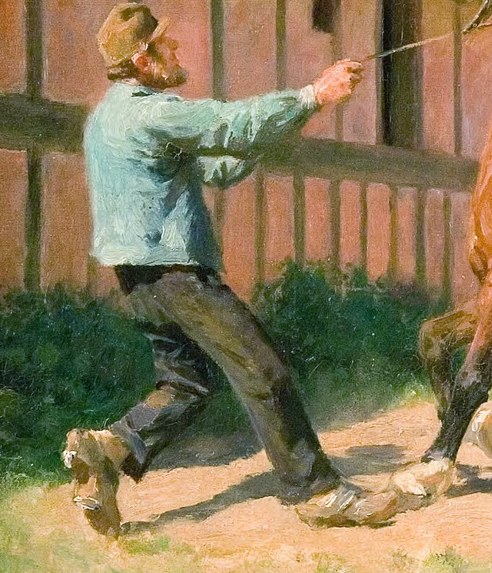
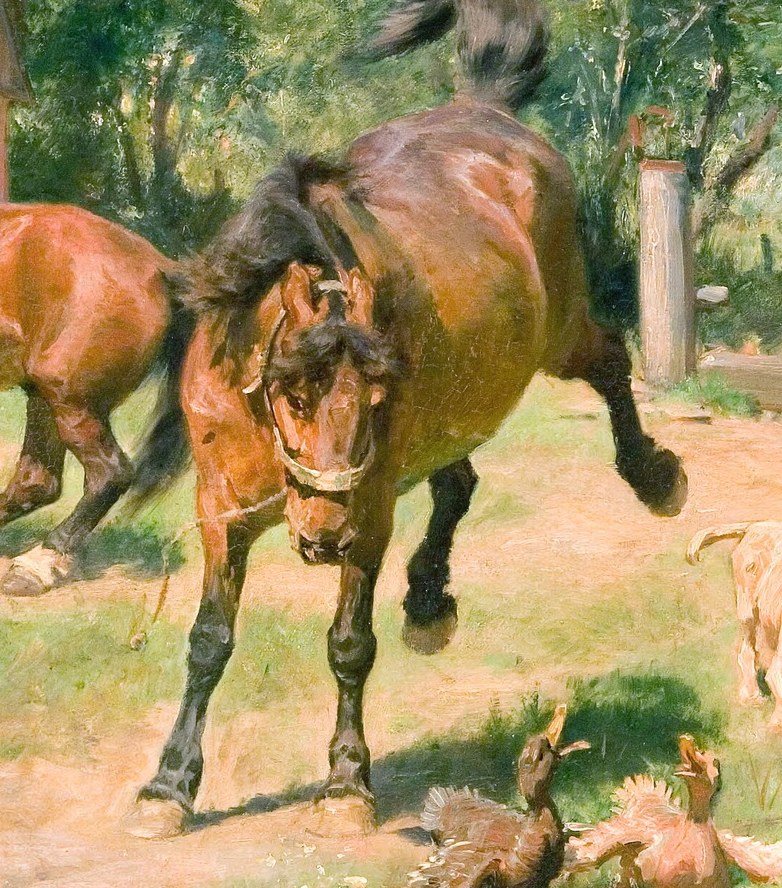
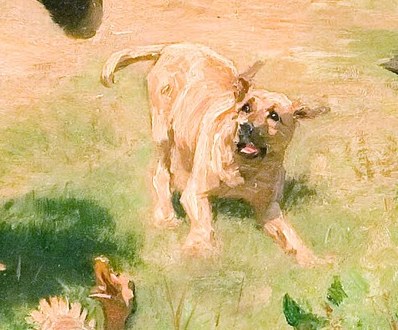
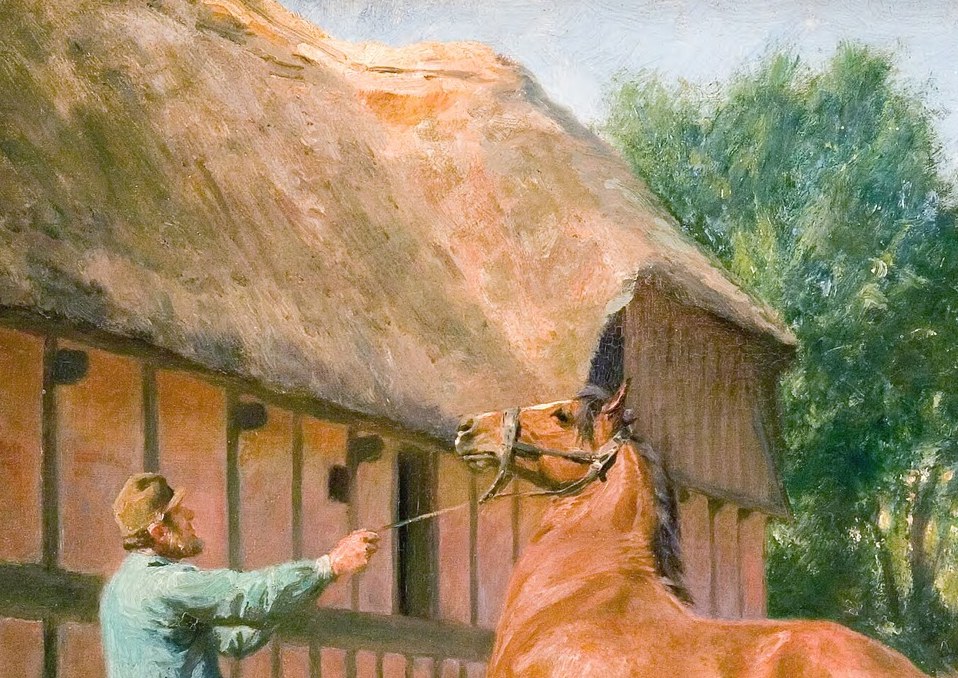
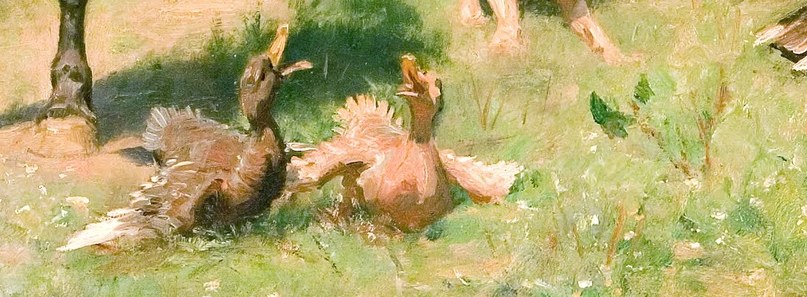
Hans Michael Therkildsen's 1894 painting, 'Kåde heste' (Playful Horses), captures a vibrant scene of rural life. This dynamic oil on canvas, held at the Statens Museum for Kunst in Denmark, showcases a man's struggle to manage two lively horses while a dog bounds energetically ahead and ducks scatter.
Look closely at the spirited dark horse rearing up, and the brisk, loose brushstrokes that give the entire scene a sense of immediacy and movement. The bright tones on the horses' flanks contrast with the muted palette of the dusty courtyard and thatched-roof building, highlighting the central action.
Created in 1894, 'Kåde heste' entered Denmark's National Gallery, reflecting a broader late 19th-century trend among Scandinavian artists to depict agrarian subjects and realistic observations of farm life. Therkildsen's focus on everyday labor and the unpredictable nature of working with animals aligns with this period's interest in national identity through rural narratives.
It's a wonderful glimpse into a moment of daily activity, captured with genuine energy. What part of the painting catches your eye the most?
Details
Transcript
This painter captures a lively moment of farm life. A man struggles to control these spirited horses. One horse rears up, full of energy and resistance. Loose brushstrokes give the scene a sense of immediate action. The little dog dashes ahead, adding to the commotion. Painted in 1894, this work entered Denmark's National Gallery. It reflects a national interest in depicting rural Danish identity.