The Baker's Wagon by William P. Chappel
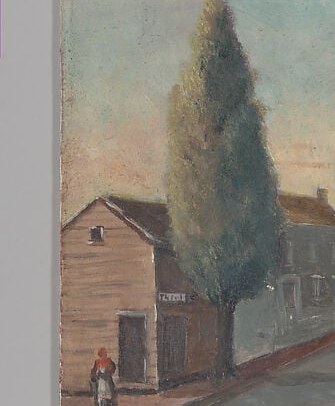
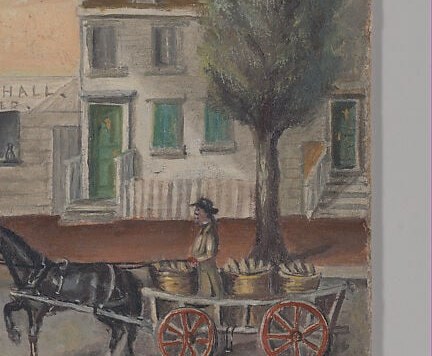
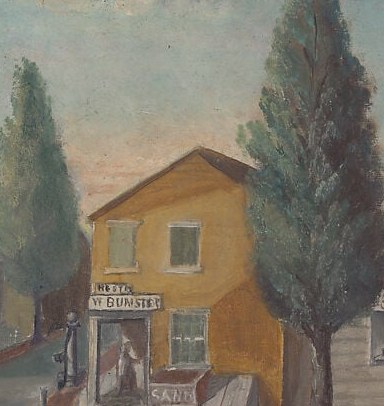
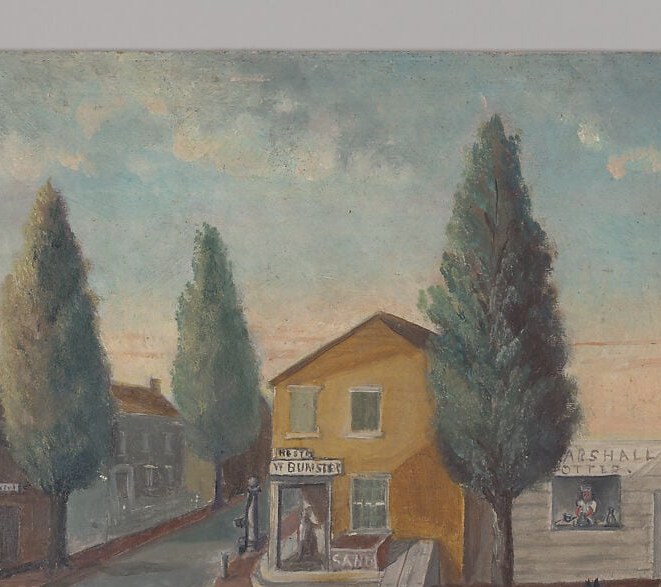
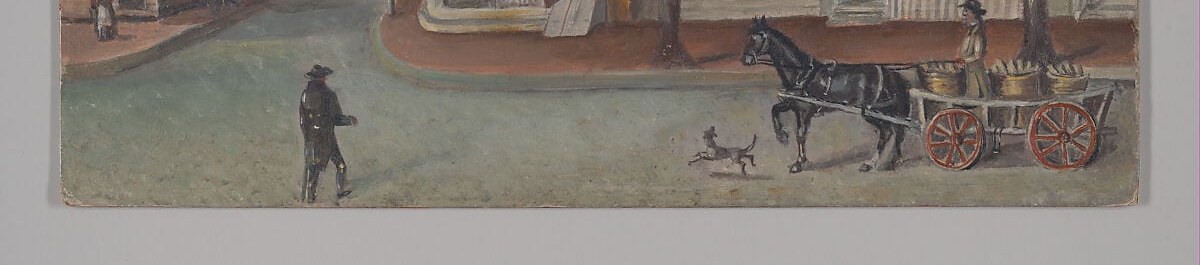
The Baker's Wagon, painted by William P. Chappel around 1874, is not just a quiet street scene. It is a witness. The block it depicts, a dirt road lined with poplars, modest wooden houses, and a working baker's delivery wagon, was entirely erased from New York City before anyone thought to photograph it. No map records the name of this street. No newspaper described its disappearance. This painting is the only surviving document of a place the city chose to forget.
Look at the central commercial building. A painted signboard is visible on its facade, possibly carrying the name of a business that once anchored this working-class block. The white-aproned baker leans against his wagon in a moment of patient stillness, while a small dog lingers near the wheels. Laundry hangs between the buildings. These are not monumental subjects. That is exactly the point. Chappel painted what no one else considered worth recording.
William P. Chappel (1801-1880) was a New York artist who spent his career documenting the city's unglamorous streets. He worked in an unusual medium: oil paint on slate paper. The chalky, fading quality it produces makes the scene feel like a memory already slipping away. In the 1870s, New York was racing toward modernization. Unpaved roads like this one were being paved over. Wooden houses were being torn down for brick. Chappel painted against the erasure.
The true crime here is not a theft from a museum. It is the systematic destruction of an entire urban landscape before it could be recorded. Chappel's painting is an act of preservation, done in the knowledge that nothing else would survive. The poplar trees, the draft horse, the solitary pedestrian, every element here is testimony. The next time you walk a paved New York street, ask yourself: what was here before the city paved it over?
Details
Transcript
This street no longer exists. Not a single building here still stands. The baker, the horse, the poplar trees: all gone. The city erased this block without a photograph. Only this painting remembers what was here. William Chappel painted it on a piece of slate paper. He knew this world was already vanishing.