Madonna Adoring the Sleeping Child by Giovanni Bellini
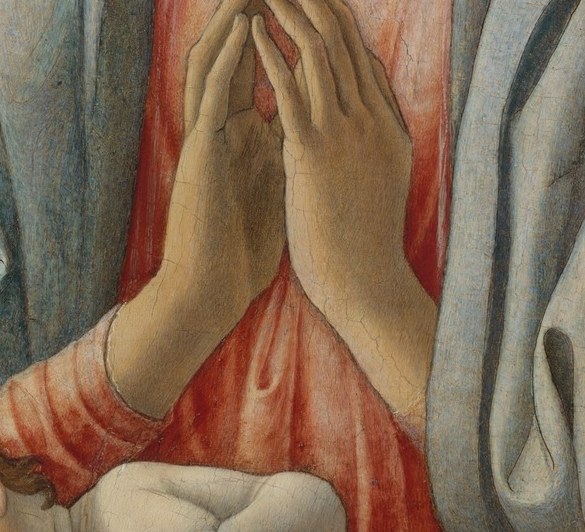
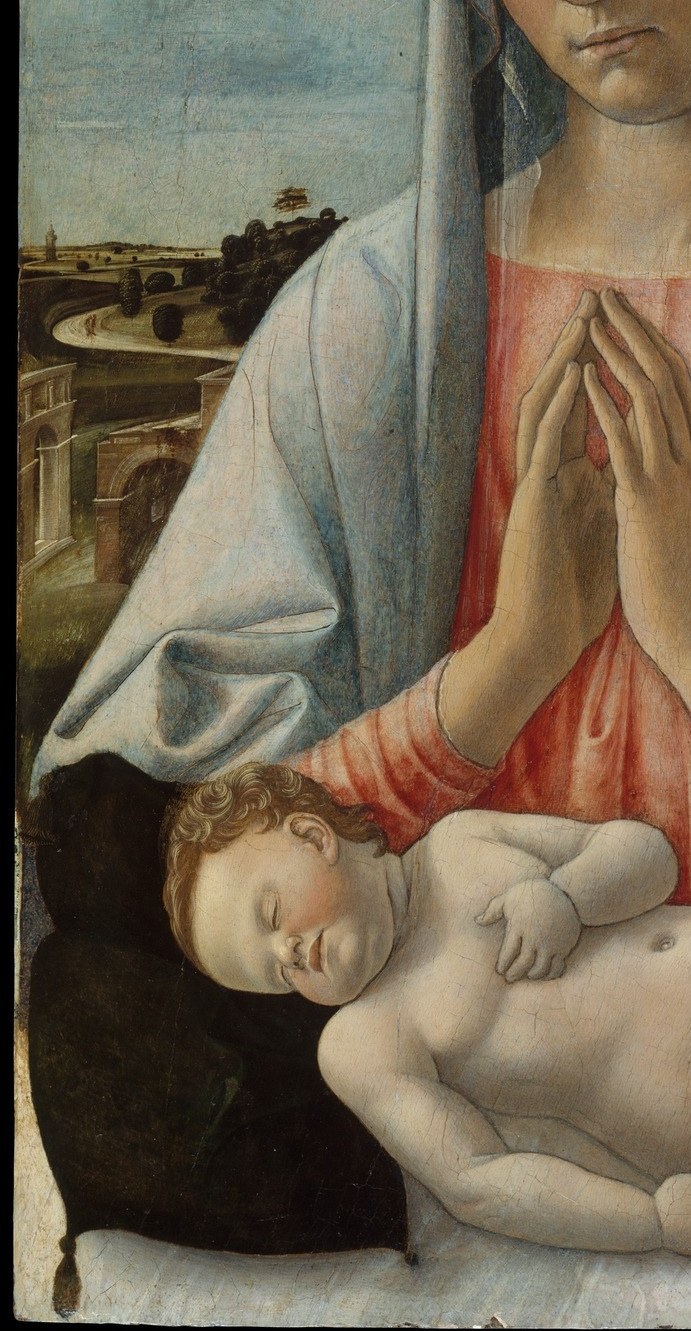
Giovanni Bellini painted Madonna Adoring the Sleeping Child in 1455, and the painting is held at The Metropolitan Museum of Art. It is a small tempera panel from the very beginning of the Venetian Renaissance, and it holds a threshold moment inside its surface: the old sacred icon pressing against the observable world for the first time.
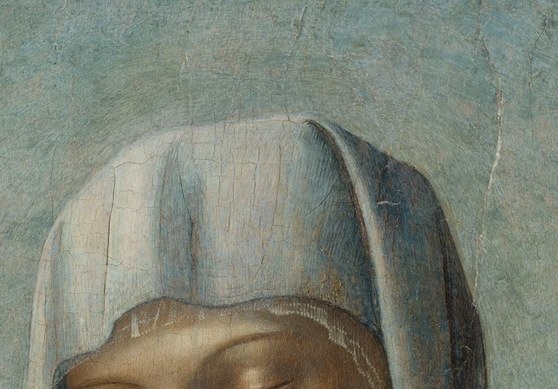
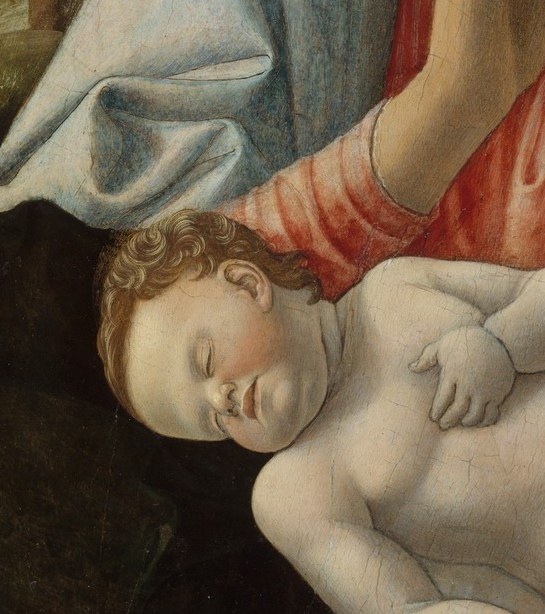
Start with the face of the sleeping infant. A real baby, observed from life, the specific slackness of sleep, the curled hands. Then find the white veil. Bellini is working in tempera, a medium that usually produces flat, linear saints, but here the linen folds fall through graduated shadow. The paint is beginning to describe weight and depth it was never designed to carry.
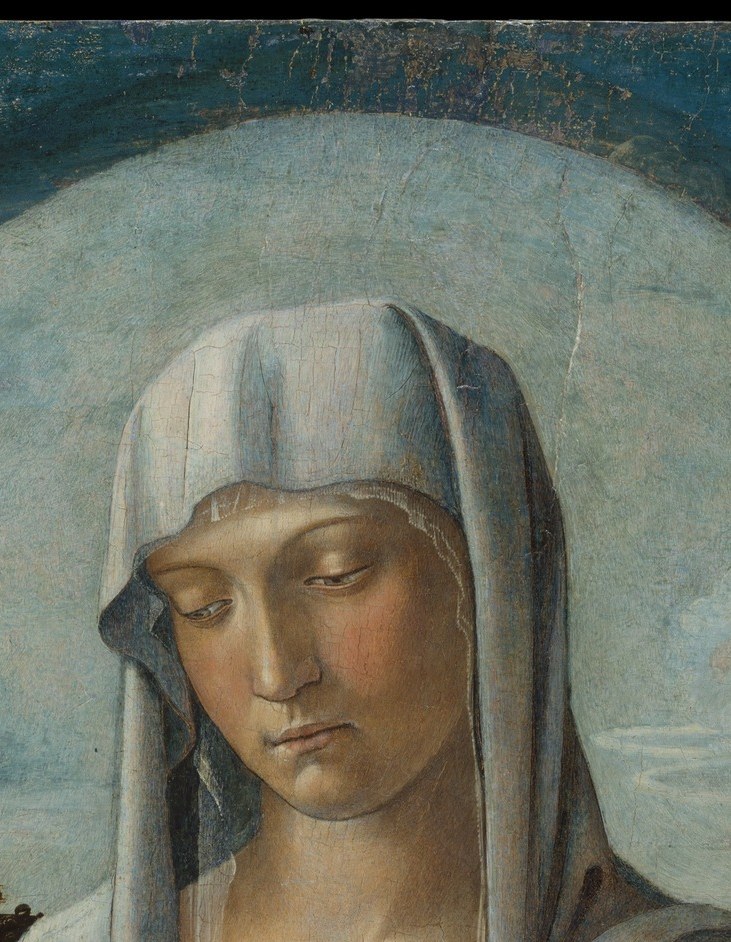
The Madonna's blue mantle is ultramarine from lapis lazuli, the costliest pigment on a Renaissance palette. Using it draped across a simple Mary was at once theological and a patron's declaration of wealth. And behind her, to the right, is the real break. A naturalistic landscape, hills, trees, open sky, where a solid gold ground used to be. The semicircular arch still frames her head like a Byzantine halo, but it is architecture now, not heaven. Look in the upper-left corner and you will see sky pushing past the edge of the gold. The world has already entered the painting.
Bellini was around twenty-five when he made this. His brother-in-law was Mantegna, his students would be Giorgione and Titian. But it all starts here: a young painter looking at a sleeping child, looking at light on linen, looking at a landscape through an open window, and deciding to paint what he saw.
Details
Transcript
She doesn't hold the child. She prays over him. Her eyes are sealed. This is not for us. A real sleeping baby. Bellini painted from what he saw. The white veil is tempera. Look at the shadows in the folds. That blue cost more than gold. Lapis lazuli, ground to dust. Now look past her. A landscape. In 1455, this was a radical act. The gold arch is the last ghost of Byzantium. The sky has already won.