The Rope Dance by Léonard Defrance
View the artwork: The Rope Dance →
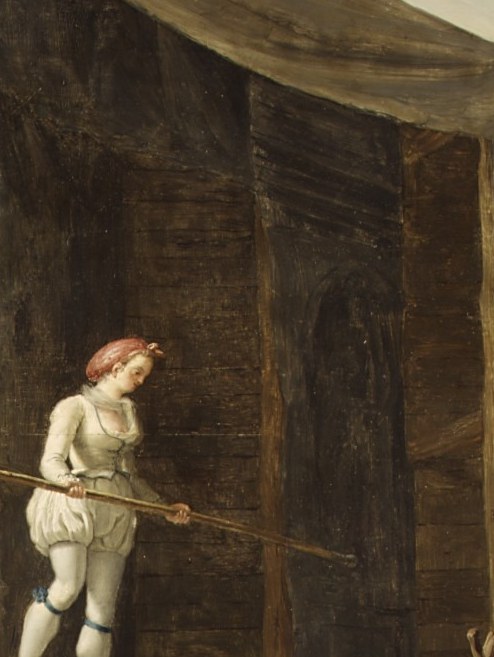
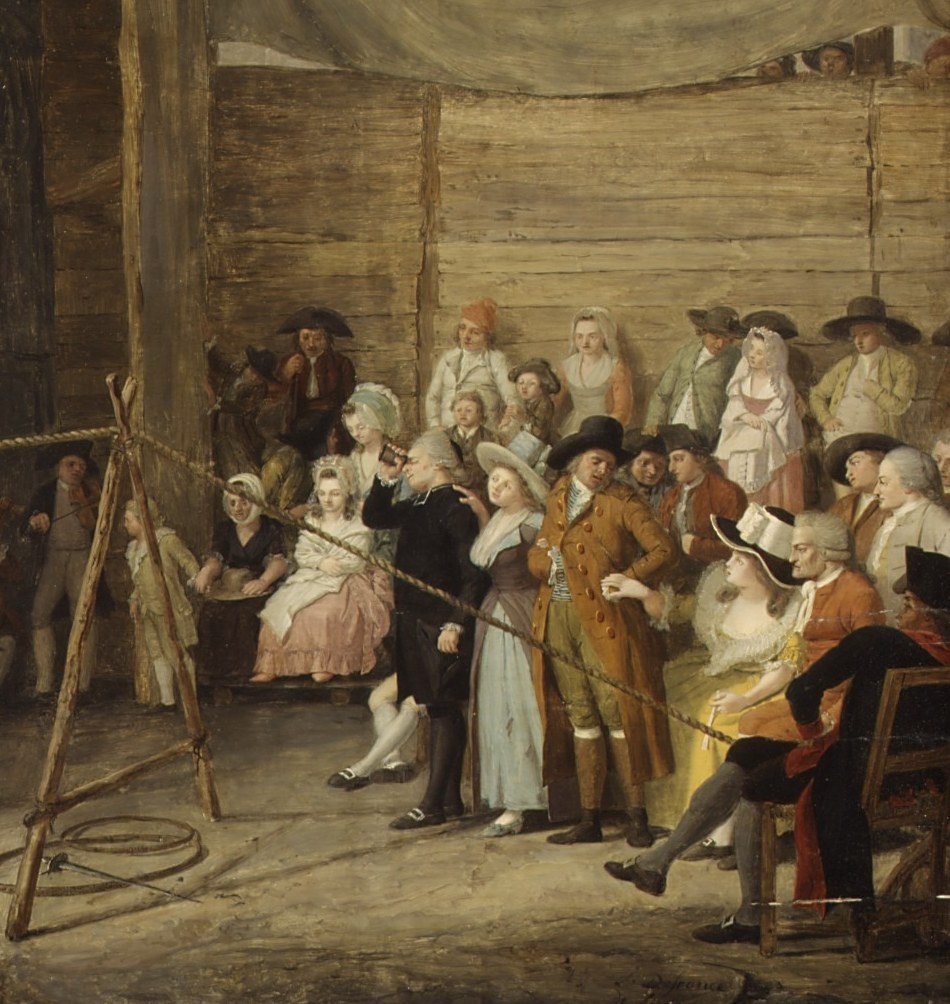
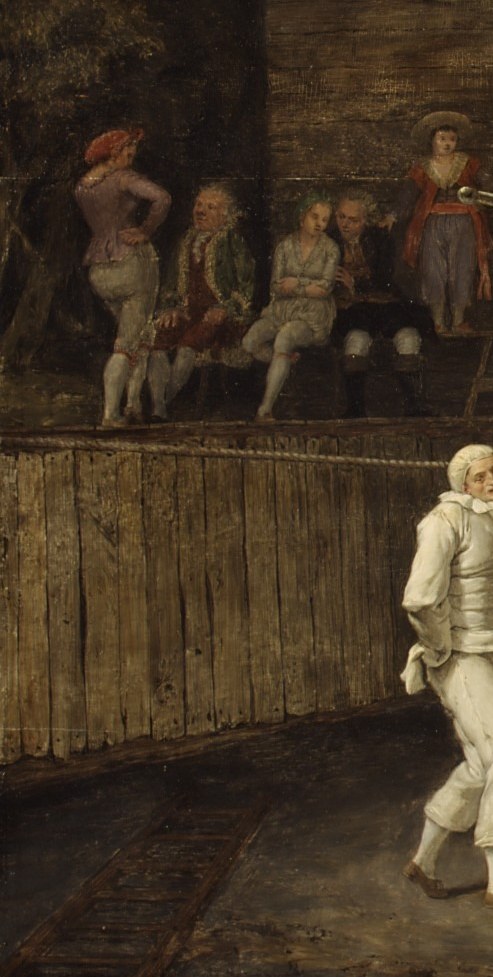
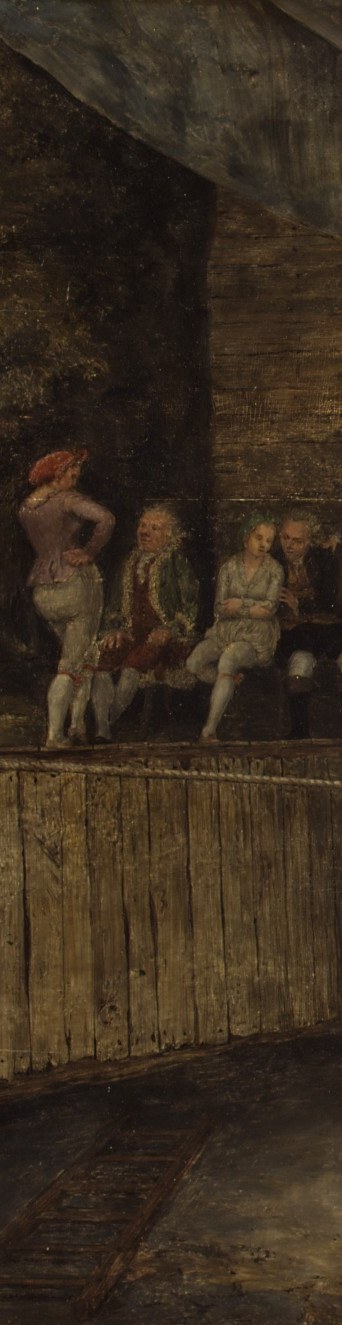
This is Léonard Defrance's "The Rope Dance," a small oil on wood panel from around 1785, now in the Metropolitan Museum of Art. What looks at first like a cheerful genre scene is, on closer inspection, a deeply solitary image. One white-clad figure balances on a thread, entirely surrounded and entirely alone.
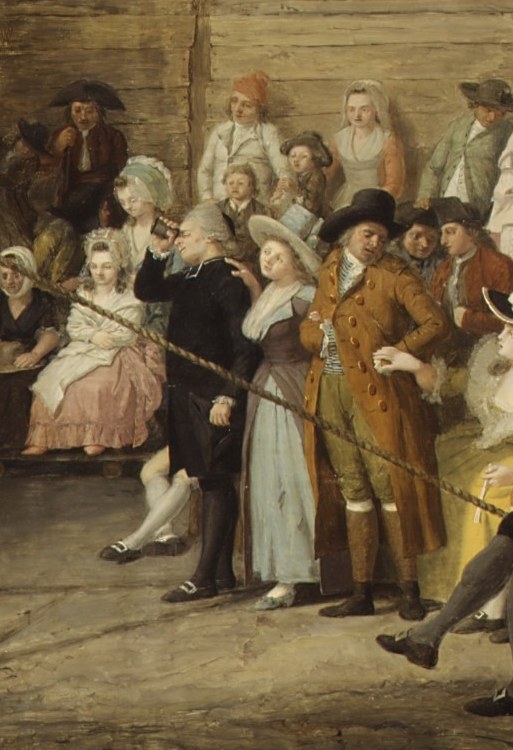
Watch where the painter directs your eye. The dancer is luminous, centrally suspended, while the crowd is a dark, compressed mass in the galleries above and the seats to the right. Defrance, a professor of design at the Academy of Liège, does not paint the fairground as a lesson in perspective but as a study in isolation. The tent architecture pins her in place, and the watching faces offer no connection, only observation.
The painting belonged to Baron de Heusch in Belgium and was sold at auction in Brussels in 1870. It fetched 600 francs, twice what a Dutch Golden Age genre piece earned in the same sale. The dealer Étienne Le Roy passed it through Paris to William T. Blodgett, who donated it to the Metropolitan Museum of Art in 1871, the year the museum first opened its doors. It has been there ever since.
We don't know the performer's name. We only know that Defrance thought her worth painting, suspended in that breath of time when a whole room holds still.
#arthistory #genre #18thcentury
Details
Transcript
She balances high above a packed tent. A single misstep and she falls. The rich sit. The poor stand packed above. Every face watches. But hers is unreadable. The painter taught at the academy, but he kept documenting the fairgrounds. This panel once sold for double the price of a Dutch old master. And it has been in New York since the day the Met opened.