Madame Frederic Breyer by Gustave Courbet
Gustave Courbet's "Madame Frederic Breyer," painted in 1858, is a prime example of the Realist movement, focusing on the unidealized depiction of contemporary individuals. This portrait, housed at The Metropolitan Museum of Art, offers a fascinating look into the social presentation of a woman in mid-19th century France.
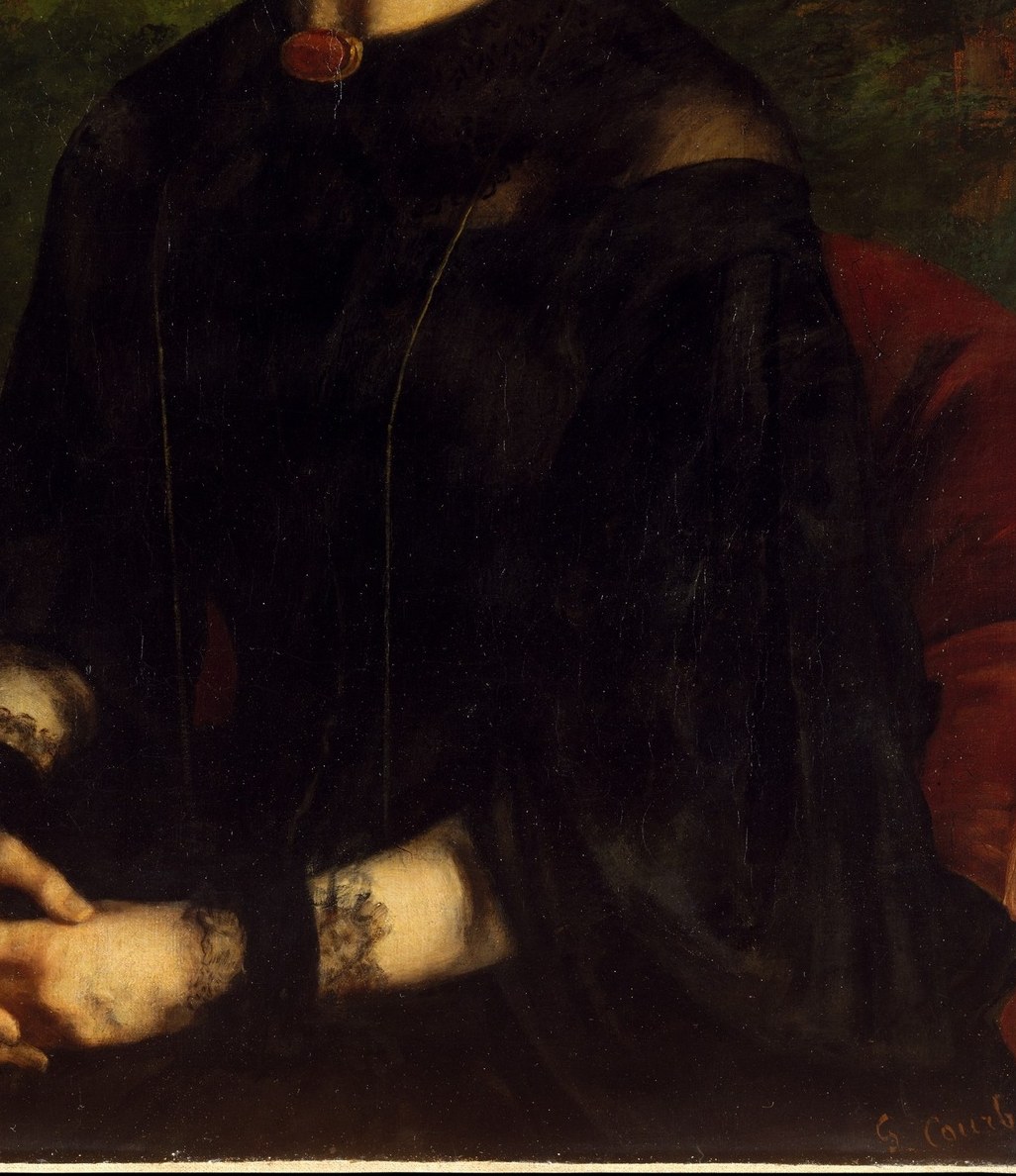
Notice her elegant, dark dress, which at first appears simple. A closer look at the delicate lace on her cuffs reveals a subtle, refined luxury. Her understated necklace also emphasizes her form, while her clasped hands convey a sense of quiet composure.
Courbet was a leading figure in French Realism, moving away from the dramatic narratives of Romanticism. He was committed to painting what he could observe, presenting real people and everyday life rather than idealized subjects. His independence influenced future movements like Impressionism.
What details do you notice in her attire that speak to the fashion of the time?
Details

Transcript
In 1858, this painter captured a woman of French society. Her plain, dark dress suggests a quiet elegance. But intricate lace cuffs reveal a touch of luxury. She wears a simple necklace, drawing attention to her neck. Her clasped hands convey composure, yet also vulnerability. This artist rejected grand themes, preferring real people.