Untitled by Pannalai
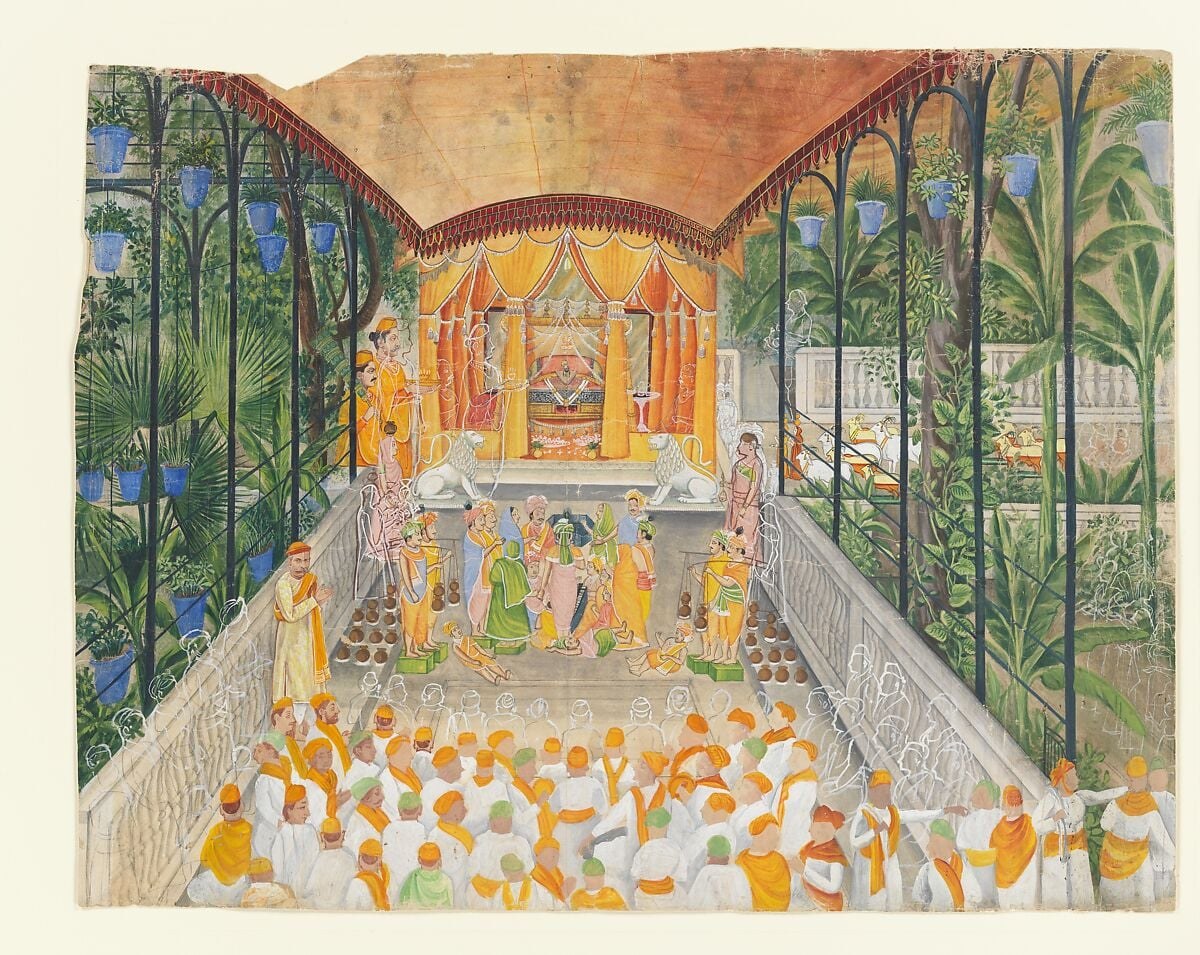
This striking untitled work by Pannalai, painted in 1917, is a page from a royal hunting album originating in Rajasthan, India. Created with ink, opaque watercolor, and gold on paper, it captures a hunting expedition with remarkable restraint.
The painting depicts a horseman, two bears, and a pack of dogs. Notice how the artist deliberately avoids showing any violence or active struggle. Instead, the figures are frozen in a moment of suspended animation, emphasizing atmosphere and the potential of the encounter rather than a dramatic climax.
This compositional choice transforms the scene from a record of a hunt into a formalized tableau of courtly life and power. It reflects the continuation of traditional Mughal and Rajput manuscript painting techniques into the early 20th century, serving as a document of aristocratic leisure and artistic patronage during the British colonial period.
What do you find most interesting about this stylized approach to a hunting scene?
Details
Transcript
In 1917, an artist named Pannalai painted this hunting scene. It was made for a royal album in Rajasthan, India. The scene shows bears, dogs, and a horseman. But look closer, there is no blood or struggle. The rider sits calmly above the implied chaos. This stillness makes it a tableau of courtly power, not a hunt.