雪村周継筆 山水図|Landscape with Rocky Precipice by Sesson Shūkei
View the artwork: 雪村周継筆 山水図|Landscape with Rocky Precipice →
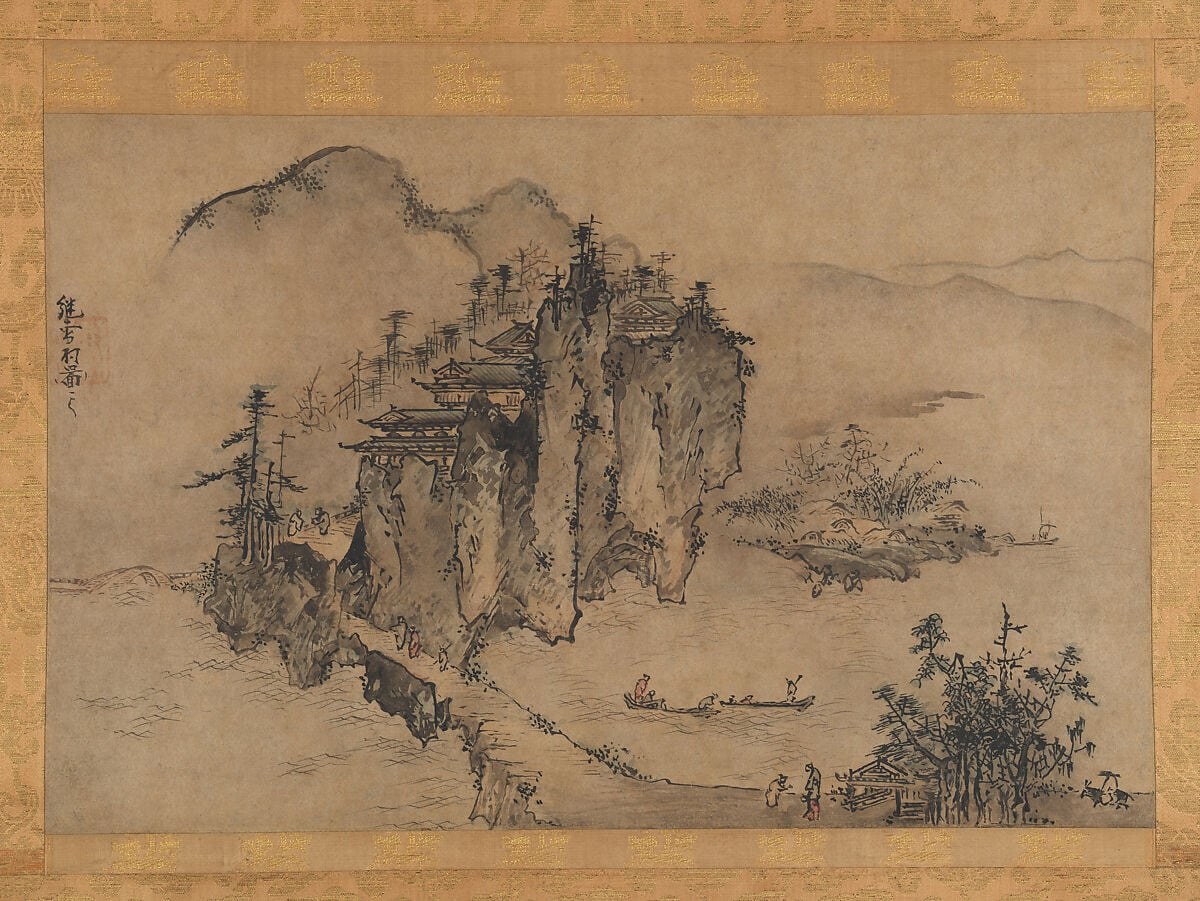
This hanging scroll is "Landscape with Rocky Precipice," by Sesson Shūkei, a Zen monk and painter of Japan's Muromachi period. It was made in the 16th century, somewhere in the eastern provinces, far from the cultural capital of Kyoto. The Met received it in 2015 as part of the Mary Griggs Burke Collection, one of the most important assemblies of Japanese art outside Japan.
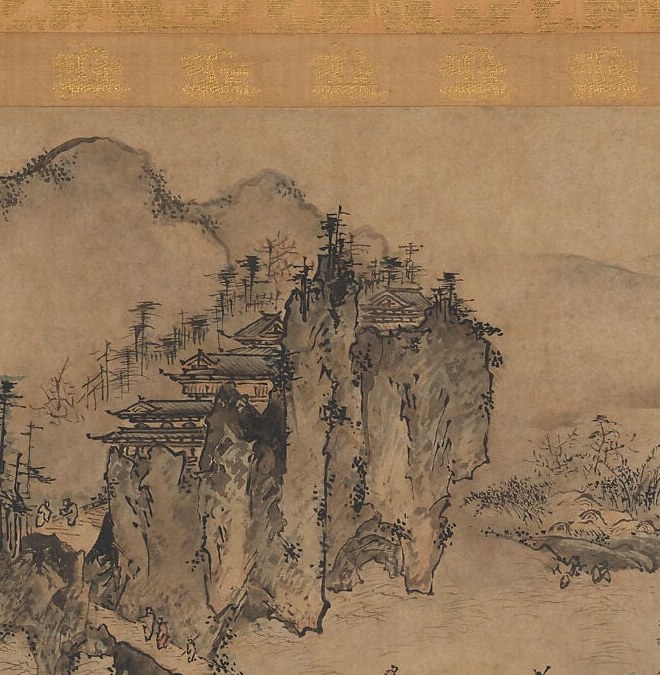
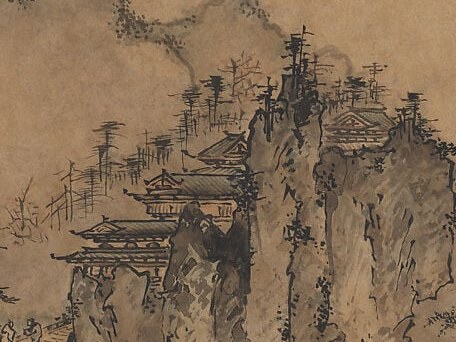
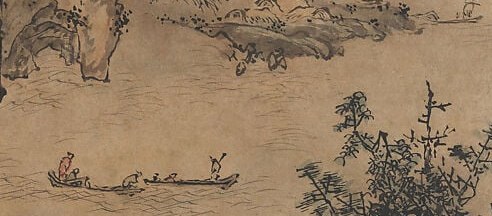
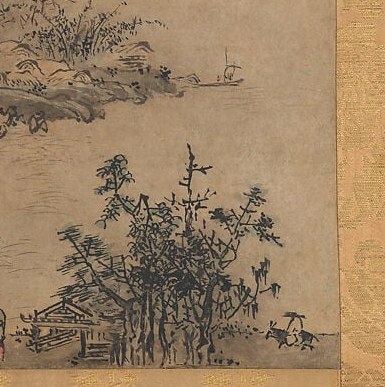
The first thing to notice here is the texture of the rock. Sesson built these cliffs with diagonal, almost splintered brushstrokes. They crackle. That energy extends to the twisted pines on the right bank and the dark, compressed forest on the cliff top. He was not a painter of gentle mists, though the mist is present. He was a painter of raw, angular force.
Sesson was born Satake Heizō into a samurai clan, but he was disinherited and entered religious life. He worked in the Kantō and Tohoku regions, developing a style that was highly individualistic. He took the name Sesson in tribute to the earlier master Sesshū Tōyō, which led to the saying "Sesshū of the west, Sesson of the east." But his hand was entirely his own, and the small travelers on the path below read almost as self-portraits of the solitary, wandering artist.
A signature and a red "Shūkei" seal in the upper left confirm this is a late work. One of the rarest things in art history is a painter who learned from a tradition and then chose his own sharp, strange path.
#arthistory #japaneseart #muromachi
Details
Transcript
He was a Zen monk, disinherited by his samurai clan. So he moved east, far from Kyoto, and painted alone. Look at those cliffs. He drew them with diagonal, crackling strokes. Kyoto's masters were all soft edges. He made rock feel jagged. He was called Sesson, after the great Sesshu, but he copied no one. Those tiny travelers? That was him, a wanderer, dwarfed by a world he painted his own way.