Triptych with the Crucifixion by http://www.wikidata.org/.well-known/genid/5db1f029904b8e2b86b0b52b60ee24bc
This is the Triptych with the Crucifixion, painted around 1460 by an unknown late medieval master. Every object in this three-panel work is a coded theological message, the painter built it to be read, not just seen.
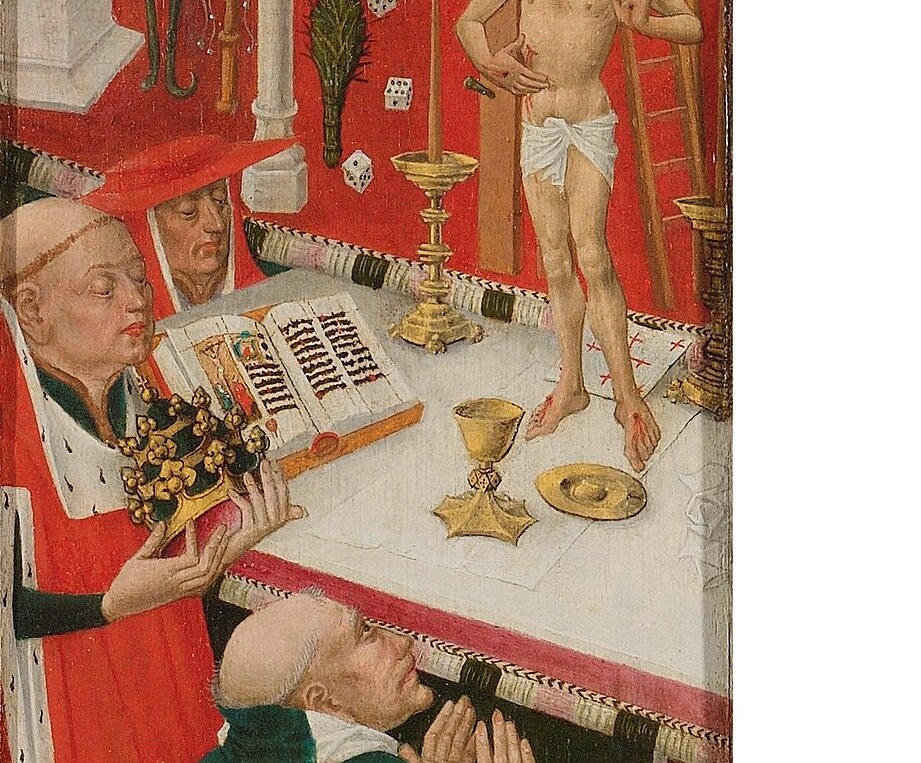
Start at the foot of the cross, where a human skull and bone sit on the ground, the oldest symbol in the painting. It means death is not the end. Above Christ's head, three letters: E-R-I, the fragment of the sign that called him a king. In the left panel, a chalice on a table stands for the Last Supper. In the right, a crown of thorns marks the suffering that led here. A rooster on a red column recalls Peter's three denials.
Triptychs like this were devotional machines, hinged altarpieces made to guide the eye and the mind through the story of Christ's Passion. Oil paint was still a relatively new medium in northern Europe in 1460, prized for the depth and shadow it could hold. The shared horizon linking all three panels was deliberate: these scenes, though separate, belong to one unfolding argument.
Every object pulls you back to the center, to the body on the cross. The next time you see a skull or a chalice or a rooster in a Renaissance painting, look closer. It is probably not decoration. It is a sentence.
Details
Transcript
1460. A painter built this triptych to be decoded. A skull at the cross means death is not the end. E-R-I: the sign that called Christ a king. This rooster marks Peter's three denials of Christ. The chalice on this table is the Last Supper. The crown of thorns: the suffering before the cross. Every object was placed to guide you here.