The Dormition of the Virgin by Ioannis Moschos
Ioannis Moskos painted The Dormition of the Virgin around the turn of the 18th century, a Greek painter who had left Crete for Venice and never went back. The painting lives at the Metropolitan Museum of Art in New York, gifted by Mrs. Henry Morgenthau in 1933.
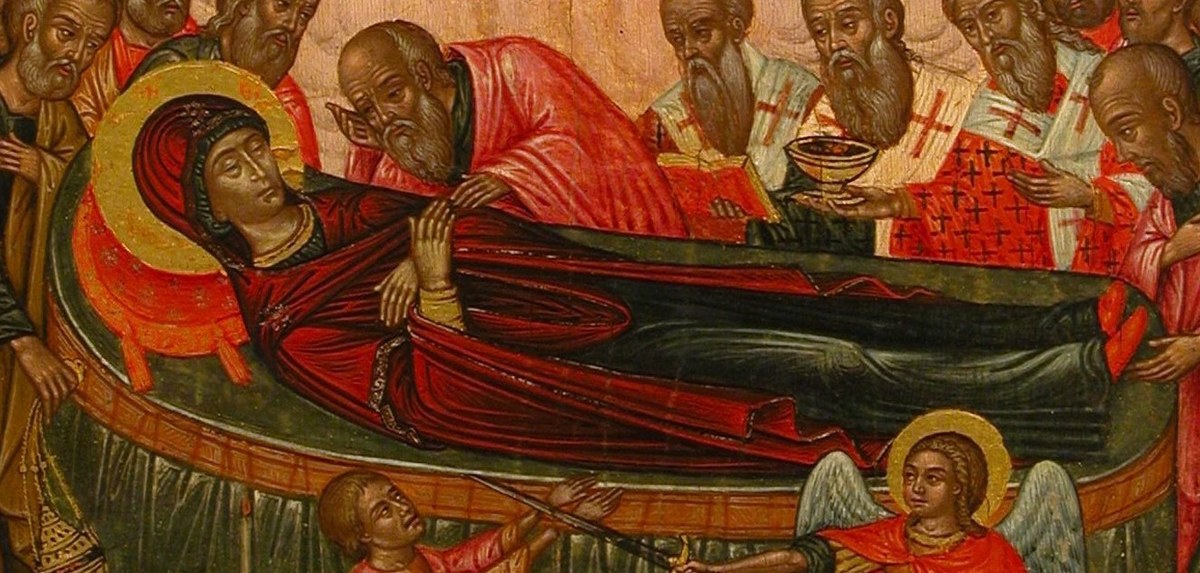
Start at the lower left. A man in red crouches beneath the bier. That is Jephonias, a figure from apocryphal tradition. He was sent by the Sanhedrin to guard Mary's body against claims of resurrection. He tried to upset the funeral bed; an unseen angel stopped him. Moskos paints him not as a villain but as something more honest: a man who cannot believe what he suspects is true.
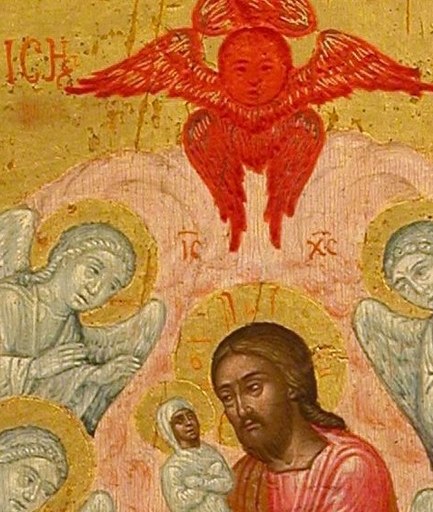
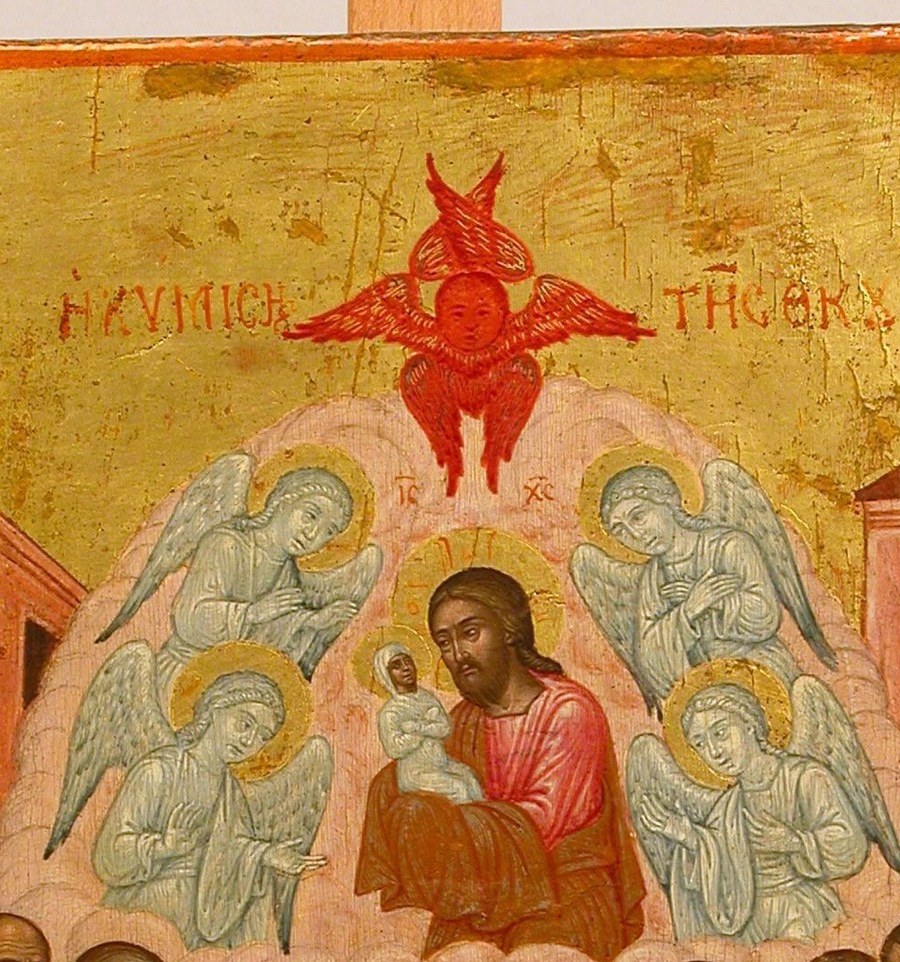
Then look up. Christ stands in a mandorla of blue light, cradling a tiny swaddled figure. It is Mary's soul, rendered as a newborn. The image collapses birth and death into a single gesture; the visual logic says that entry and exit are the same door.
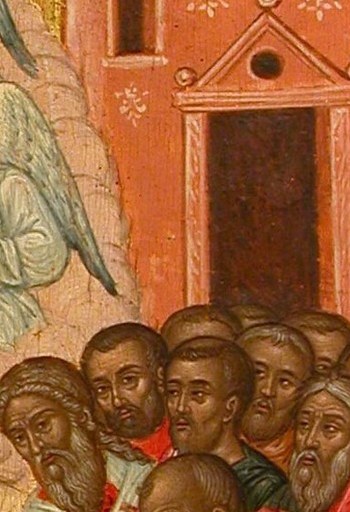
Moskos belonged to the late Cretan school, painters who carried Byzantine iconographic formulas into Italian cities. He completed over forty works, many for San Giorgio dei Greci in Venice, the same church where he married. The architecture framing the scene, the pink-ochre towers, is pure Venice. The gold behind Christ is not sky. It is the uncreated light of heaven, and the man who painted it understood living between two worlds.
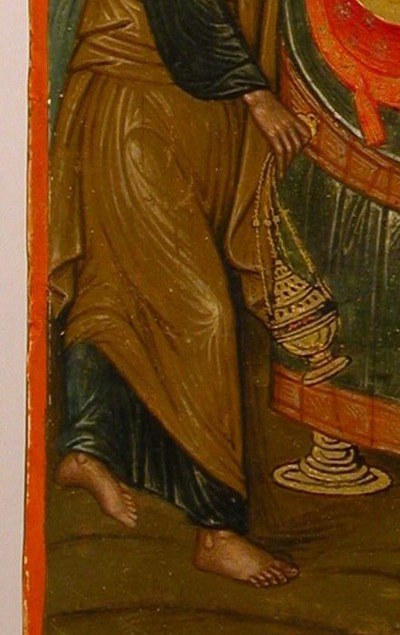
Details
Transcript
They came to mourn a death. But the story goes deeper. At the lower left: a man in red, crouching. His name is Jephonias. He tried to overturn her bier. He feared the body would vanish. And he was right. Above her, Christ cradles a small white figure. It is Mary's soul, shown as a newborn child. In this theology, death is simply a birth reversed. The painter knew grief. He worked far from home, in Venice.