Portrait of Isabella d'Este by Titian
Titian’s "Portrait of Isabella d'Este" (circa 1535), housed in the Kunsthistorisches Museum in Vienna, depicts a woman often identified as one of the most significant cultural and political figures of the Italian Renaissance. However, a fascinating scholarly debate persists regarding whether the sitter is indeed Isabella d'Este, the influential Marchioness of Mantua.
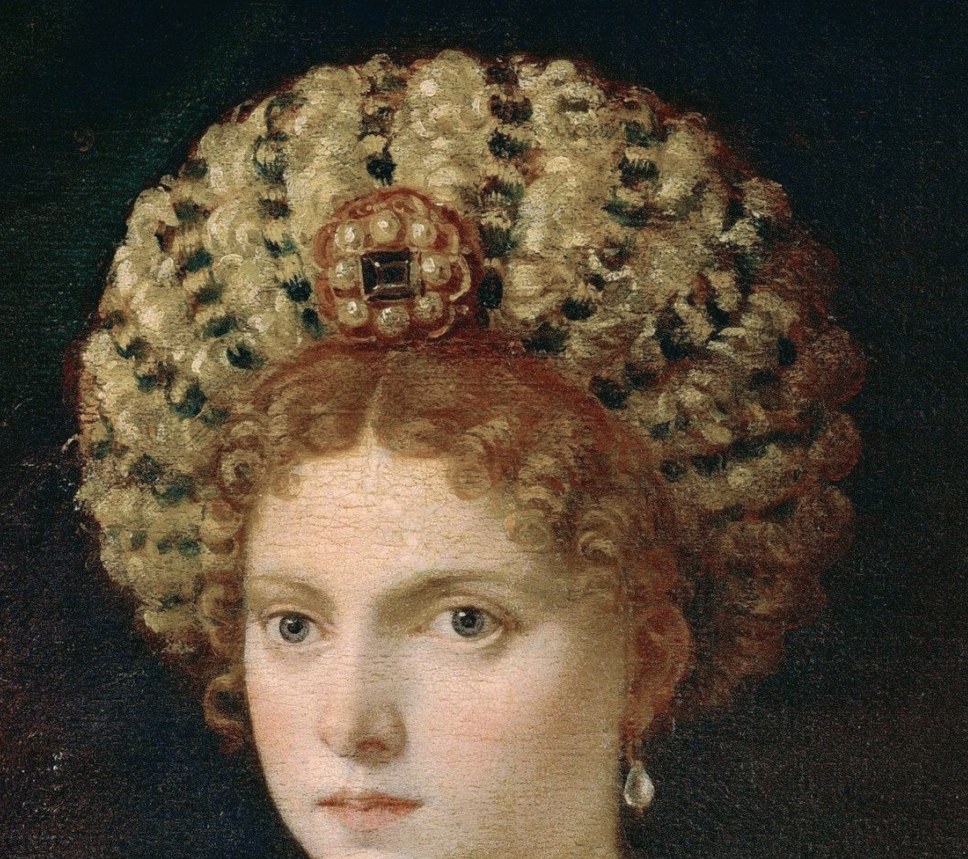
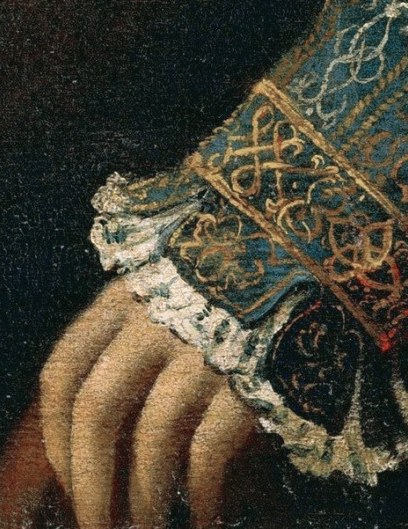
Look closely at her confident gaze, the elaborate balzo headdress, and the prominent pearl earring. These elements, along with the luxurious fur trim and intricately embroidered sleeves, speak volumes about her aristocratic status and cultivated elegance, which align perfectly with what is known of Isabella d'Este's persona and patronage of the arts.
Titian, at the height of his career when he painted this work, masterfully used oil on canvas to create deep, velvety tones and luminous skin, techniques that influenced generations of Western artists. The painting’s provenance is well-recorded within the museum, but the enduring question of its subject adds an intriguing layer to this Renaissance masterpiece. What do you think, is this Isabella d'Este?
Details

Transcript
This woman, Isabella d'Este, was a powerful Renaissance patron. She led one of Italy's most influential courts. But scholars still debate if this is truly her. Her elaborate headdress and jewels signal high status. Even this large pearl earring speaks to her wealth. The painter, Titian, captured her refined composure. His mastery of color made him sought by princes.