The 9:45 Accommodation by Edward Lamson Henry
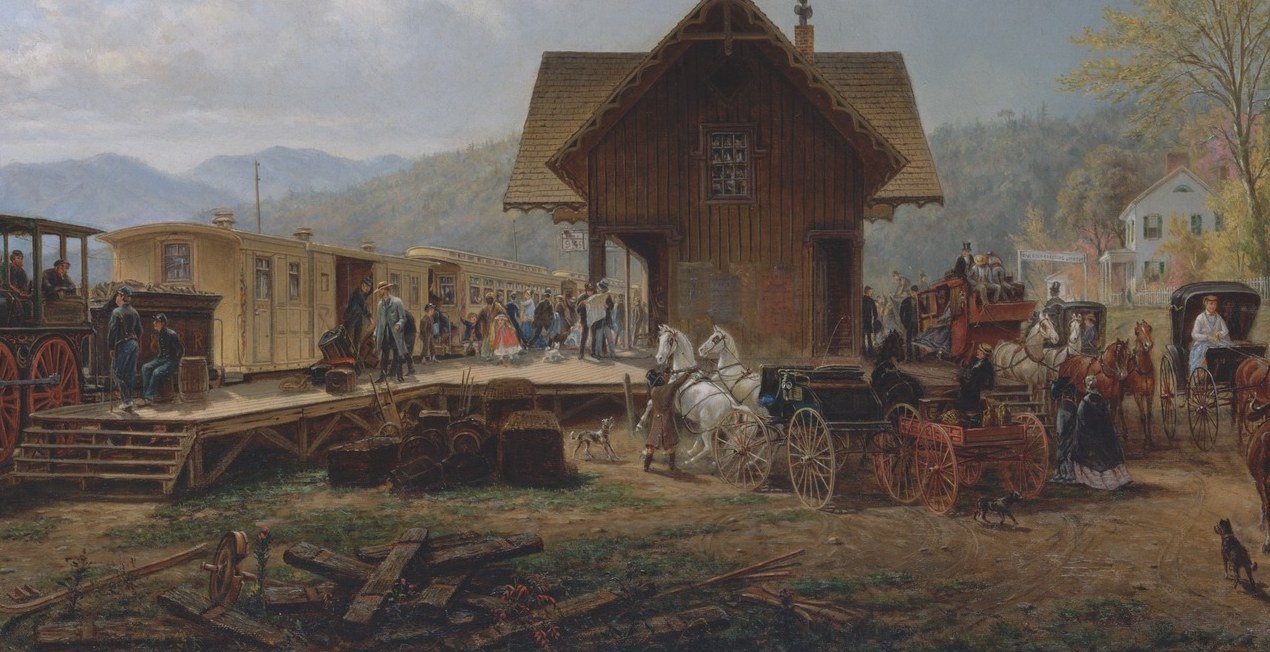
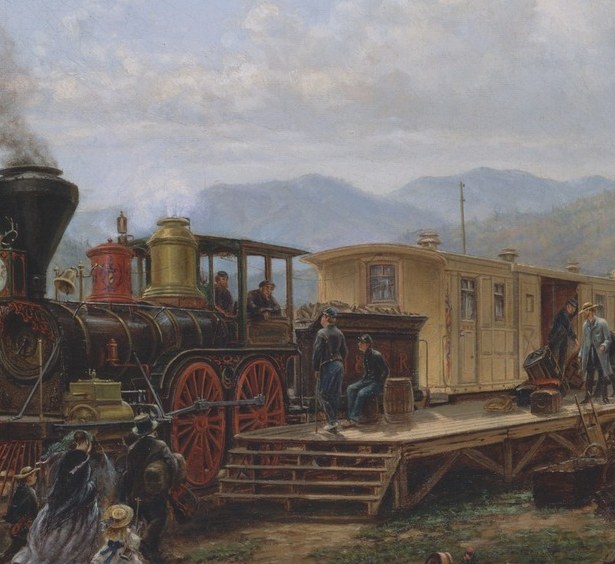
This is a small-town American morning in 1867, captured in oil on canvas. Edward Lamson Henry painted "The 9:45 Accommodation" repeatedly, and this version, now in the Metropolitan Museum of Art, is his most resolved. The "accommodation" was the local train that stopped everywhere, connecting a nation stitching itself back together after the Civil War.
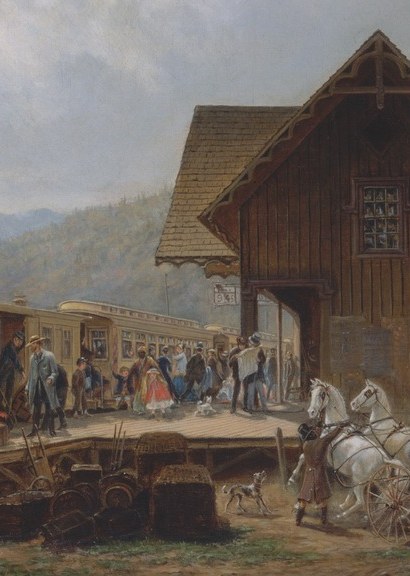
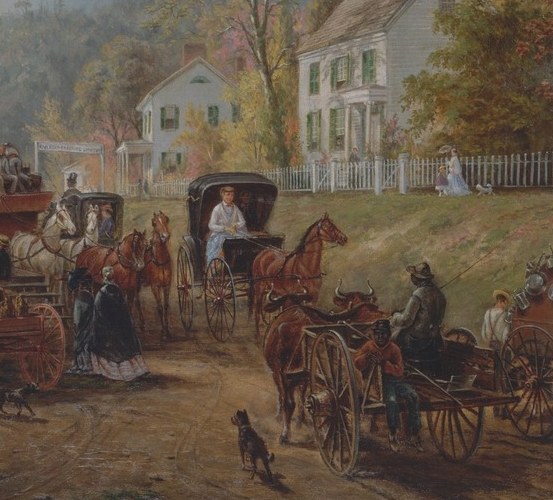
Look at the platform. Henry crowds it with a cross-section of society: a man in a tall top hat signaling prosperity, women in the wide crinolines that precisely date the scene to the late 1860s, laborers near the baggage. At the frame’s right edge, a horse-drawn cart sits beside the locomotive. Henry shows two centuries sharing a single moment.
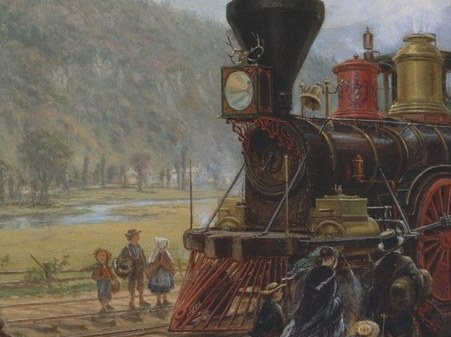
Henry was a meticulous genre painter who built his scenes from sketches and props collected on his travels. His eye was documentary. The wooden depot, a vernacular type now almost entirely vanished, is recorded here with architectural precision. The locomotive’s bright red driving wheels were a point of genuine craftsmanship pride on American engines of that era.
This is not a grand narrative of progress. It is a quieter thing: a painter noticing the exact texture of a world tipping from horses into steam, and setting it down before it was gone.
Details
Transcript
Look at the crowd. Everyone is here. The top hat of a prosperous man. A horse-drawn cart, still the way things moved. And the red wheels of the future. The 9:45 Accommodation was a local train, a lifeline. It connected small towns to a nation remaking itself after the Civil War. A whole society stepped onto one platform.