明 佚名 舊傳刁光 叢簧集羽 卷|River Scene with Birds and Bamboo by Diao Guang|Unidentified artist
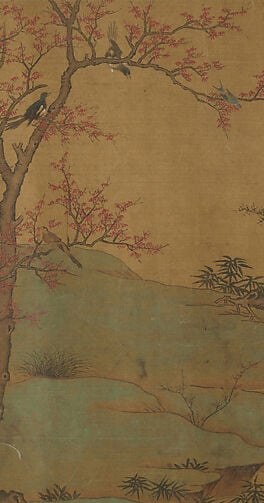
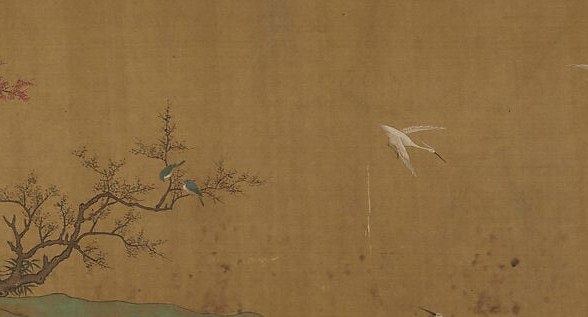
This is "River Scene with Birds and Bamboo," a handscroll from 1639, painted in ink and mineral color on silk by an unidentified artist of the Ming Dynasty. The work has survived nearly four centuries with its pigments so vivid they appear almost wet.
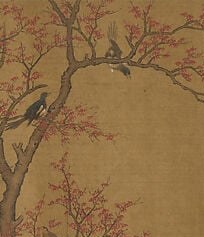
Look first at the mass of red leaves on the left. From a distance, it reads as a single canopy. Up close, the crown breaks apart into hundreds of distinct stroke-decisions. Each dot is a leaf made with one touch of the brush.
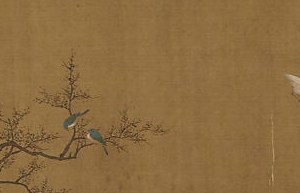
Then find the lead egret in flight. The painter used opaque white mineral pigment for the body and fine ink lines for the primary feathers. He achieved this on absorbent silk with no room to erase or correct. The bare silk around the bird becomes the river itself, a negative-space economy that defines this tradition.
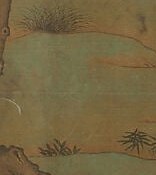
The artist's name is lost. An old attribution to Diao Guang was never confirmed, so the scroll stands on the evidence of the brush alone. That evidence is everywhere: in the tapering ink branches, the layered malachite banks, the birds frozen mid-beat with absolute control.
A painting like this asks a fair question: does a name matter when the hand is this present?
Details
Transcript
No signature. No seal. Six centuries, anonymous. But look at the red leaf canopy, up close. Every single leaf is a distinct, separate brushstroke. Now watch the egret's white feathers against the bare silk. No correction is possible on this surface. Every stroke is final. A brush this precise and this confident is a signature in itself. Whoever he was, he left his hand everywhere.