Young Woman with a Pearl Necklace by Rembrandt
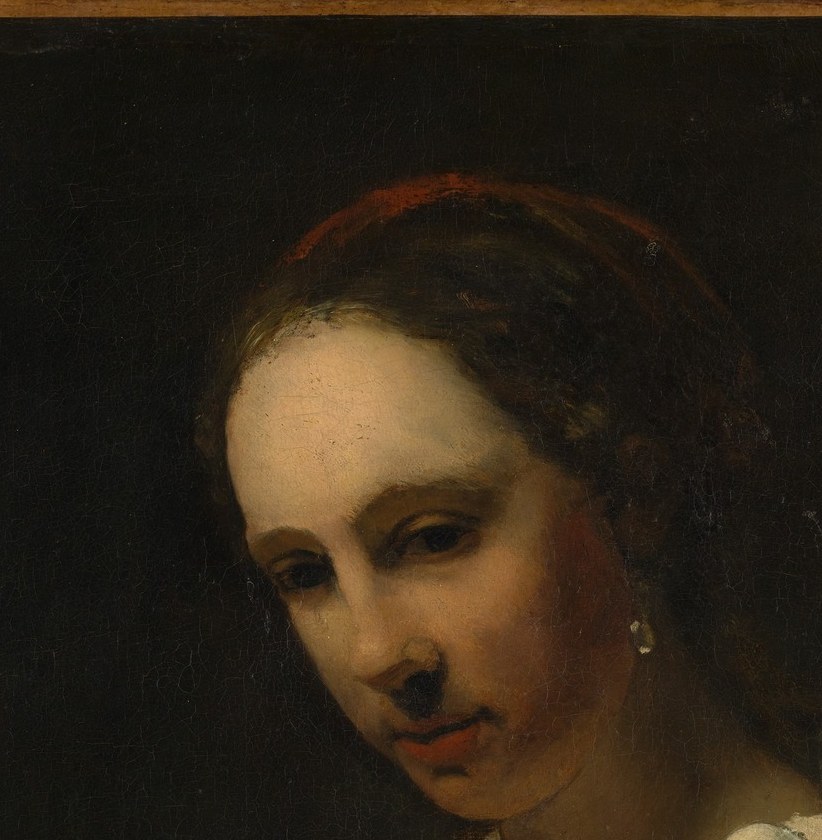
This is "Young Woman with a Pearl Necklace," painted after 1655 by an unknown artist working from a composition by Willem Drost. It hangs today in the Metropolitan Museum of Art. The painting is a ghost story: a luminous, intimate portrait stripped of its famous name.
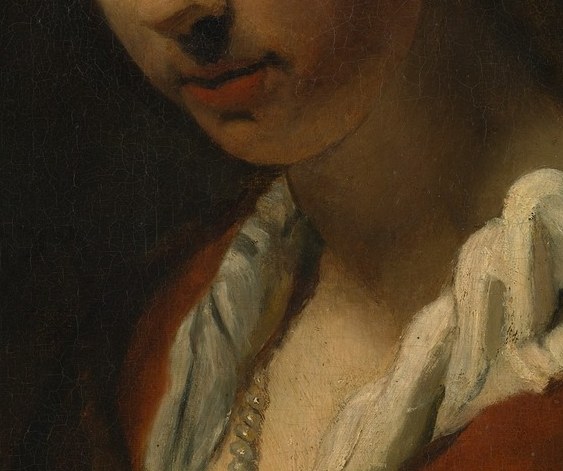
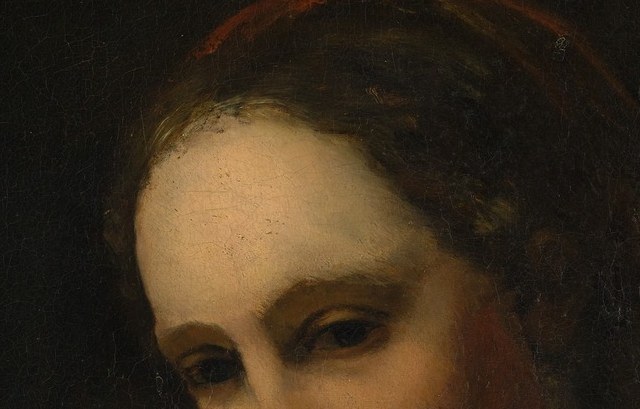
Look at her hands. She is not posing with her pearls; she is in the middle of fastening them around her wrist. Her bodice is open, her chemisette is parted, and her bare chest catches the light. The painting doesn't announce wealth, it shows a private ritual of dressing, interrupted. The directness of her gaze, combined with that suspended, mid-gesture hand, makes the viewer the interruption.
When the painting arrived at the Met in 1913 as part of the Benjamin Altman bequest, it was celebrated as a Rembrandt. The great scholar Hofstede de Groot believed the sitter was Rembrandt's partner, Hendrickje Stoffels. For decades, experts argued. The attribution was downgraded to a copy after Rembrandt, then a copy after Fabritius, and finally, in 1991, Walter Liedtke settled the label we have today: a copy after Willem Drost. The Rembrandt identity was gone.
With that loss came a strange gain. She was no longer the mistress of a master, painted by a genius. She became a woman whose name we do not know, captured in a moment of quiet self-regard by a painter whose name we do not know either. All that remains is the suspended glance, and the light on the pearls.
Details

Transcript
She was caught mid-dressing. Her right hand is still fastening the pearls. This is not a posed display of wealth. Her eyes find the viewer anyway. Once, the world believed this was Rembrandt's wife. Historians argued over it for half a century. The attribution was taken away. We still don't know her name.