The Pie Wagon by Carl Gaertner (American, 1898–1952)
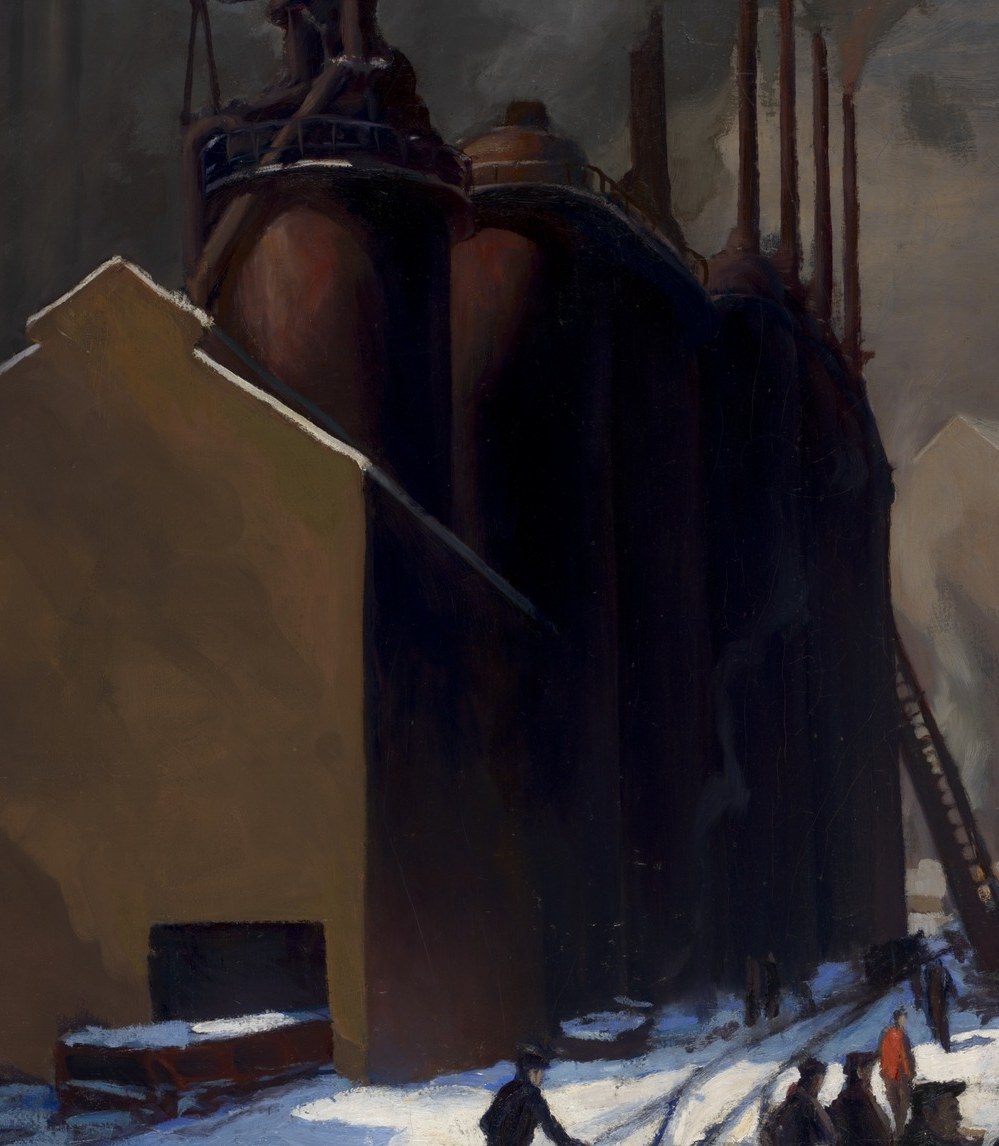
Carl Gaertner, a Cleveland-born artist, captured the resilience of urban life in his 1926 oil painting, *The Pie Wagon*. This work is a testament to the regionalist movement, focusing on everyday scenes within specific locales, and is held in the collection of The Cleveland Museum of Art.
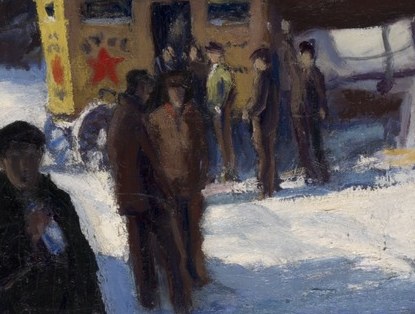
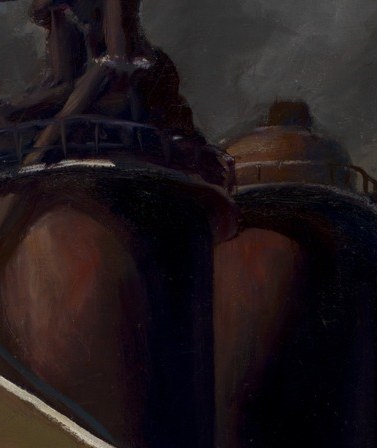
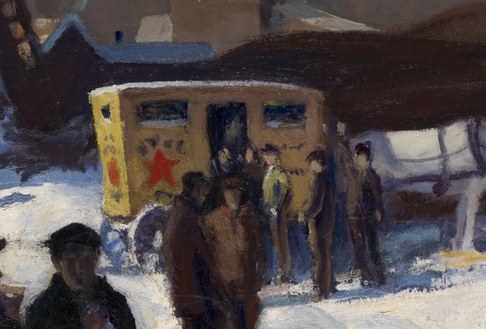
Notice the stark contrast between the industrial backdrop of the factory building and smokestacks, and the bright yellow pie wagon, a symbol of persistent commerce. The figures, though minimally detailed, give a sense of the daily grind and interaction within this wintry, urban landscape.
Gaertner studied and later taught at the Cleveland Institute of Art, finding endless inspiration in his native city's industrial scenery. His work often highlighted the quiet strength of working-class life, even amidst harsh conditions, a theme he revisited throughout his career.
What details in this painting make you feel the cold winter air?
Details
Transcript
This painter was fascinated by Cleveland’s industrial might. He captured the everyday resilience of its working life. Even in winter, the factory churned, smoke billowing from stacks. This vibrant yellow wagon was a constant sight. It was painted by Carl Gaertner, a regionalist artist. He taught at the Cleveland Institute of Art for decades.