Ascension in an Initial V by Niccolò di Ser Sozzo Tegliaccio
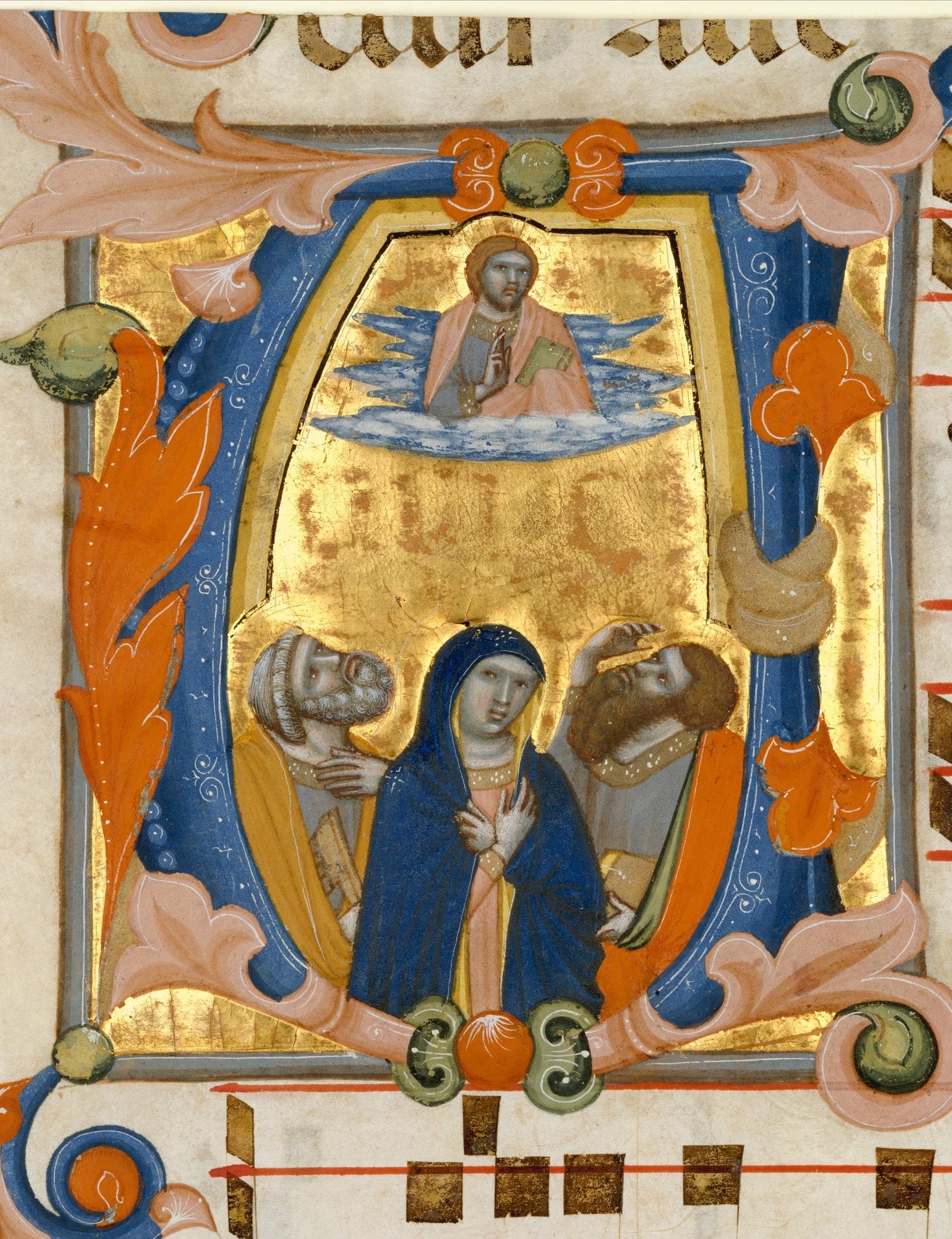
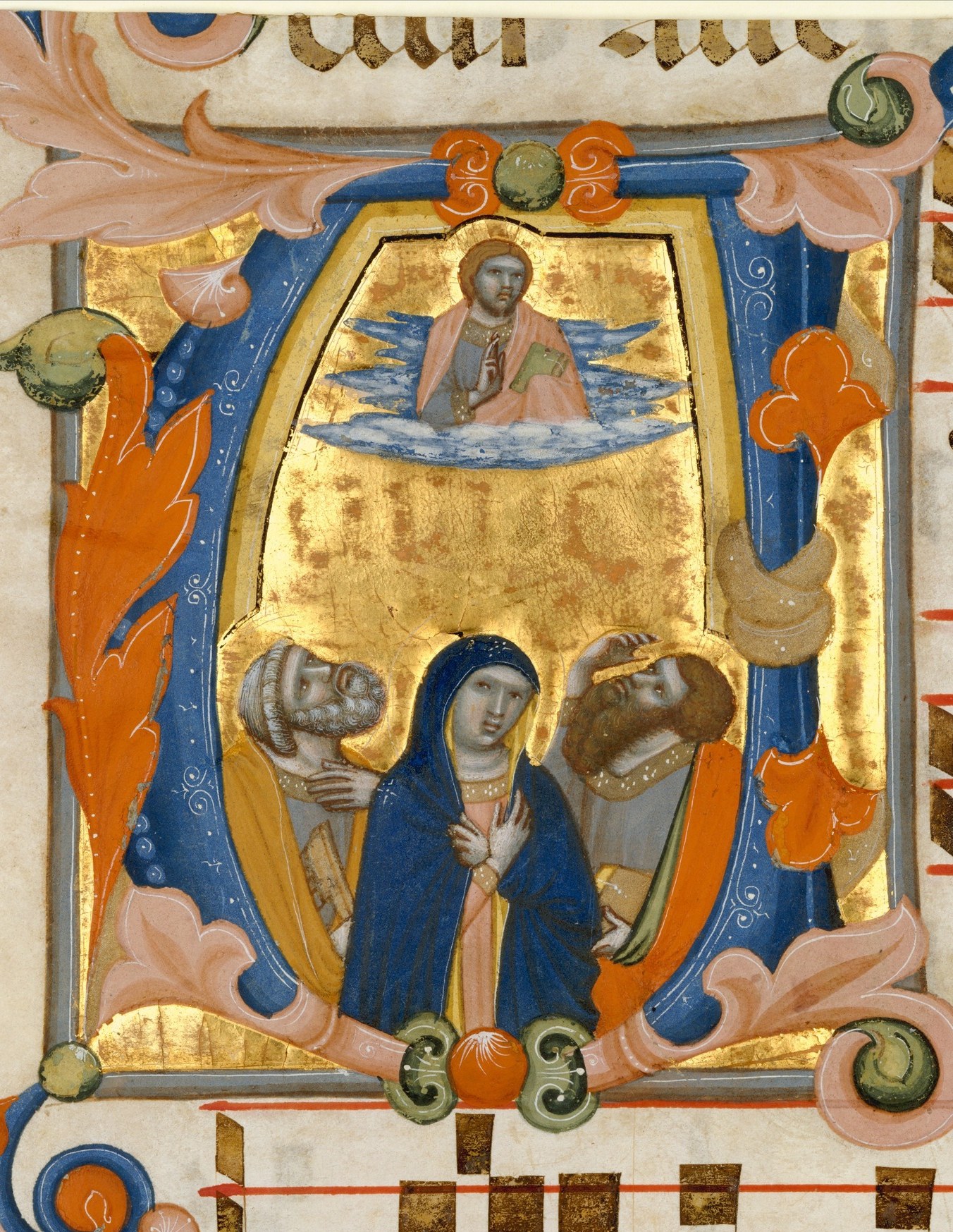
Ascension in an Initial V was painted in 1342 by the Sienese artist Niccolò di Ser Sozzo, and it lives now at The Metropolitan Museum of Art. It is not a framed panel but a single illuminated initial from a lost choir book, made to be seen by candlelight as voices rose beneath it.
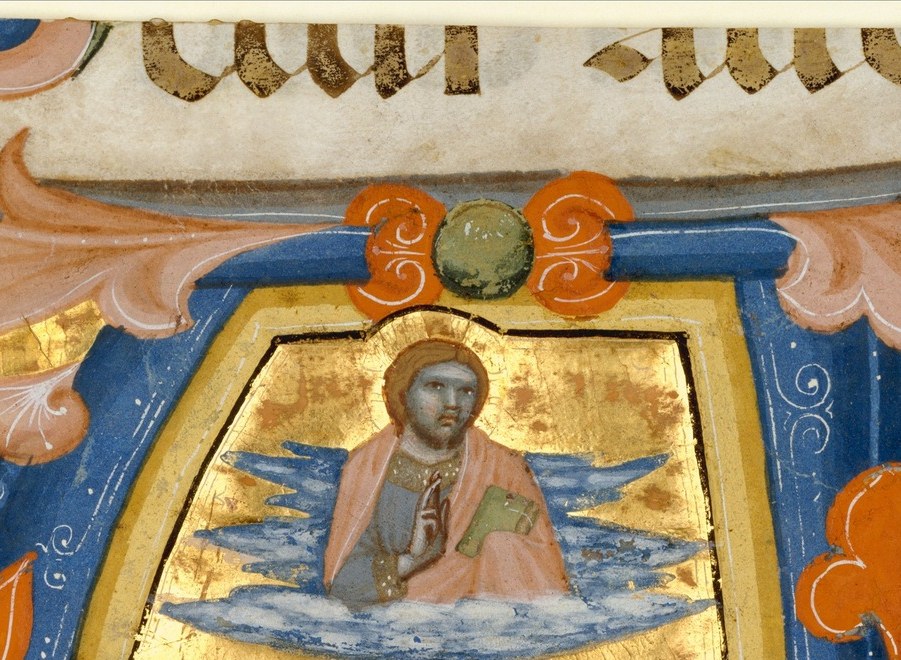
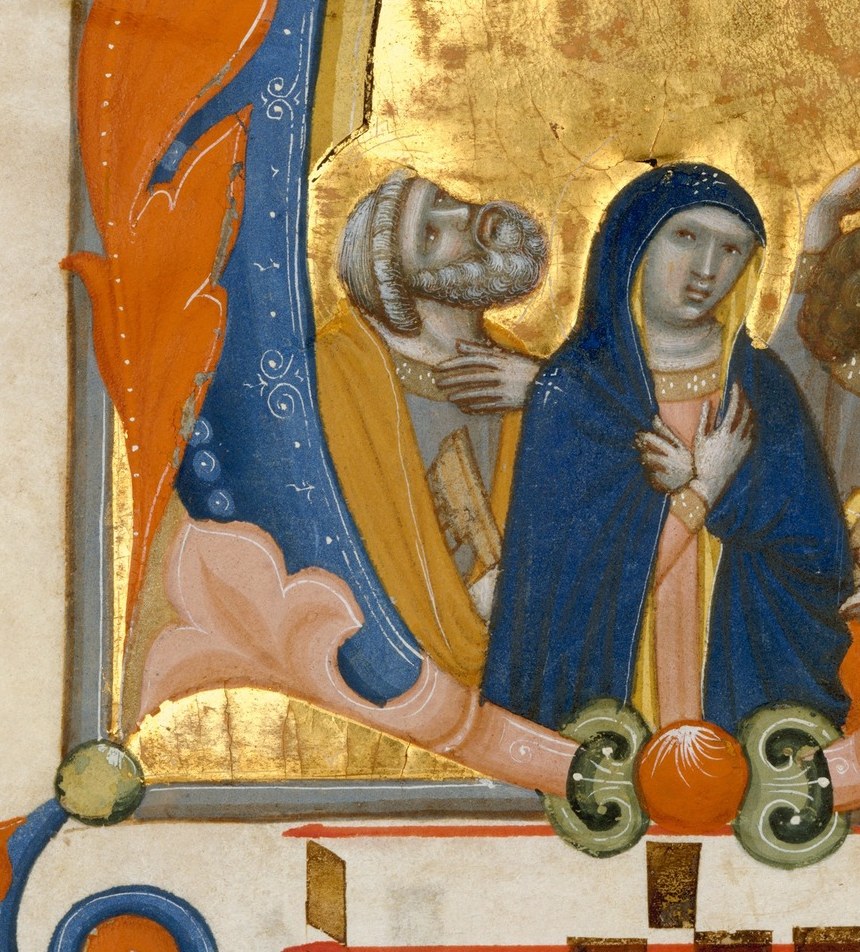
The letter V does the theological work. Its two arms divide the scene into heaven, where Christ ascends in a golden mandorla, and earth, where the Virgin Mary and Saint Peter look upward. The Virgin wears a robe of ultramarine blue, the most costly pigment a 14th-century patron could commission. Her halo cuts into the letter stroke itself; the illuminator chose her legibility over geometric perfection.
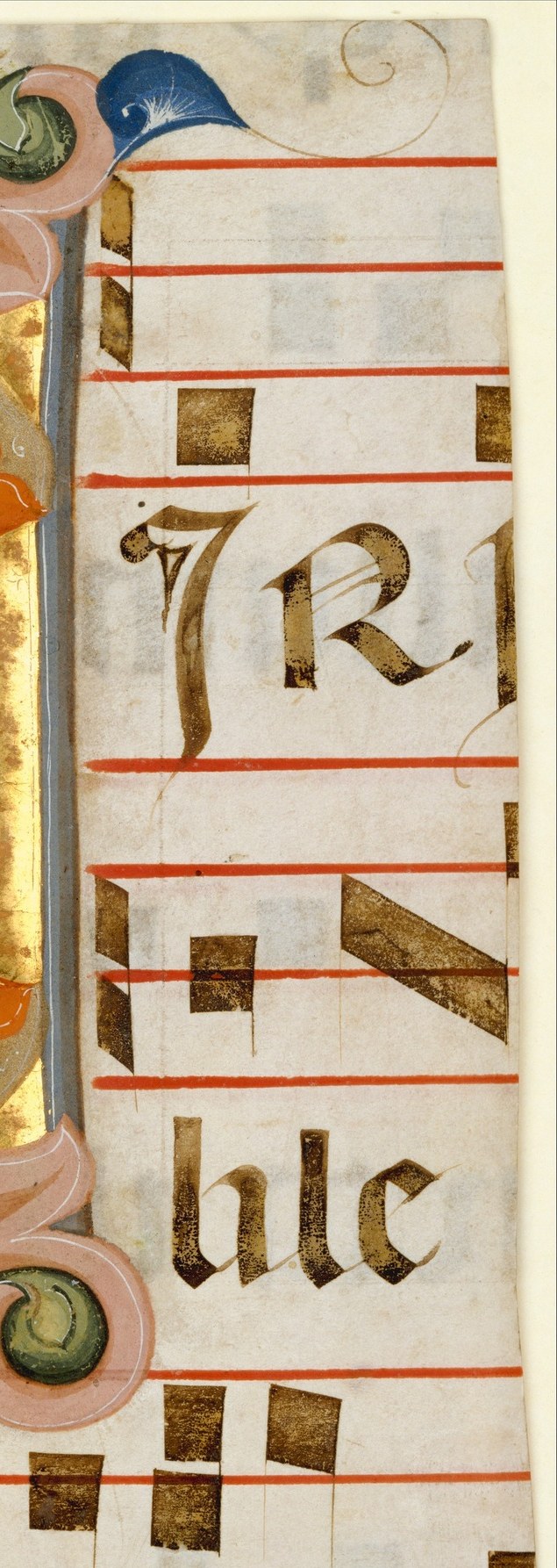
Niccolò di Ser Sozzo was one of the leading miniaturists in mid-century Siena, working in the wake of Simone Martini and the Lorenzetti brothers. His earliest documented masterpiece, the Caleffo frontispiece of 1334, survives in the Sienese state archive. This smaller work was part of a liturgical book, its red-ruled musical staves confirming it was sung during the Ascension feast. The burnished gold ground was not decorative excess, it was designed to catch and return candlelight, making the image glow during Mass.
At this miniature scale, the Virgin's upturned face holds the whole scene together. She is not dramatic. She simply watches. And the gold, across seven hundred years, still catches the light.
Details
Transcript
This isn't a painting for a wall. It's a choir book. These notes were sung. The letter V itself becomes the story. Heaven above. Earth below. All in one letter. Her robe is ultramarine. The most expensive pigment. She watches him leave. The gold catches candlelight. It was meant to glow. Niccolò di Ser Sozzo painted this in 1342. A choir sang beneath it.