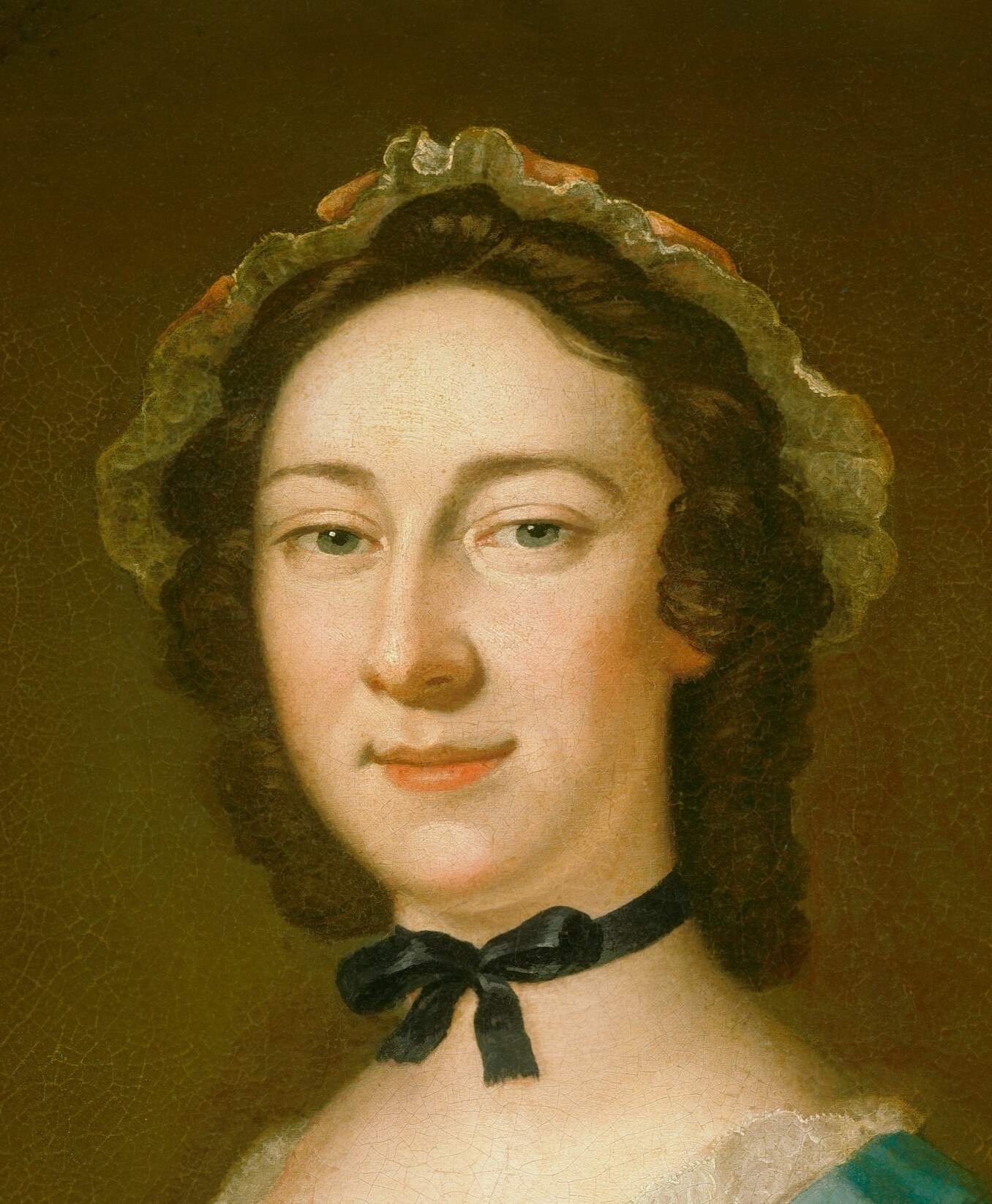
Mary Walton Morris by Wollaston, John
This is a portrait of Mary Walton Morris, painted around 1750 by John Wollaston, who was for a time the most sought-after portraitist in the American colonies. His current fame rank is 3,060 out of roughly 241,000 tracked artists, which places him in the top 1.3% globally, though his name is far less known today than his imitators.
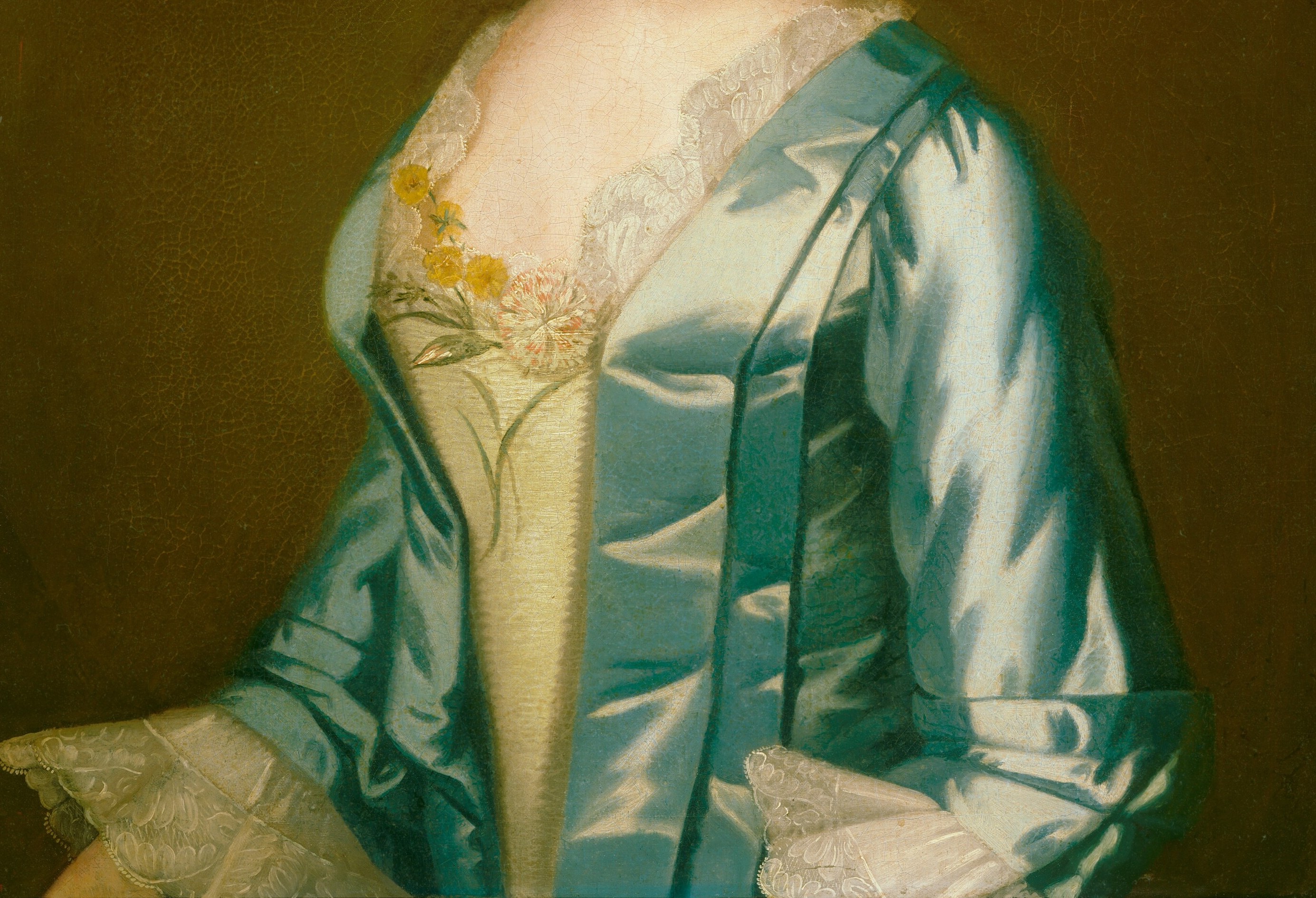
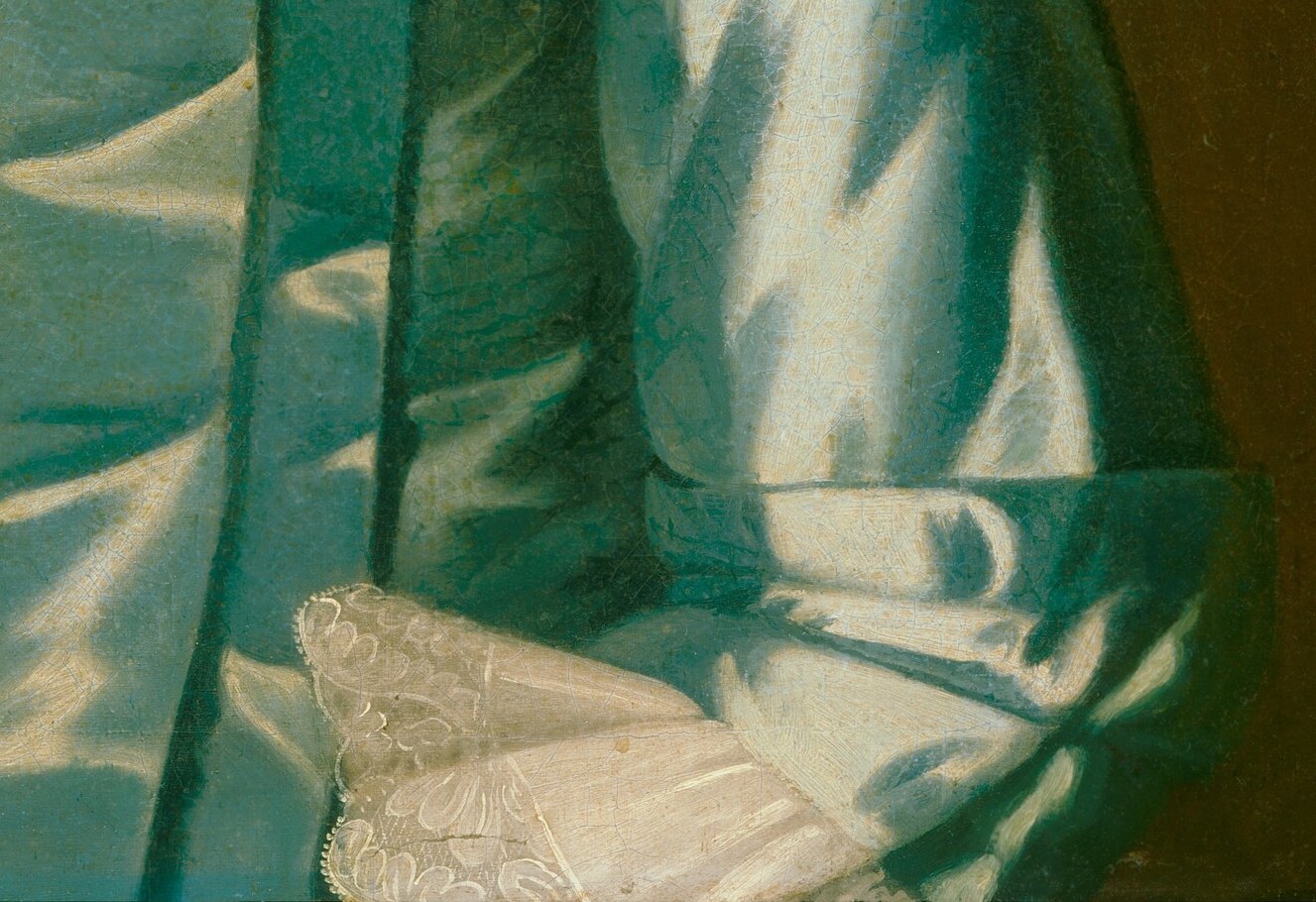
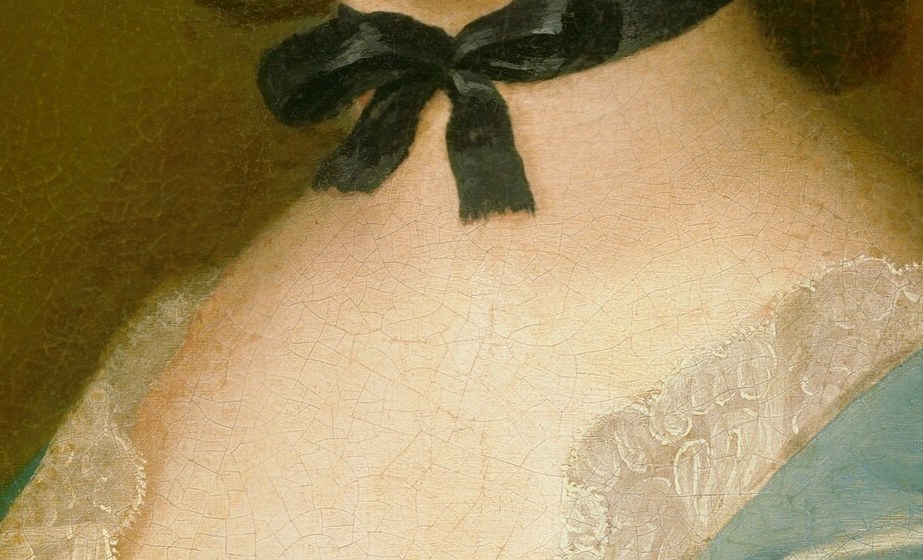
Wollaston had a formula and he stuck to it. First, the fabric. The cool blue-gray satin here is a textbook example of what made him famous: broad, confident strokes that catch the light on every fold, signaling wealth more clearly than any coat of arms. The lace at the neckline is rendered with equal attention.
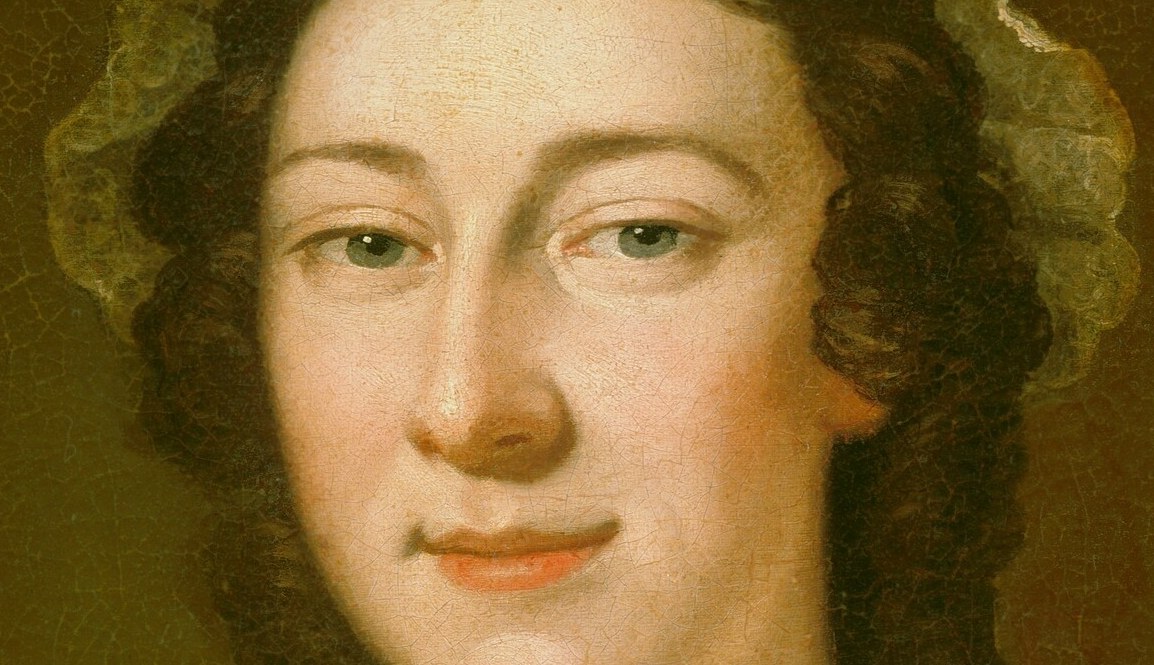
The formula had its shortcuts. Wollaston's hands are famously weak, often tapered into vague, boneless shapes when he could get away with it. Here, the hands in her lap are barely more than a suggestion. And the eyes, that elongated, almond-shaped, slightly unfocused stare, appear on nearly all of his dozens of colonial sitters. It became his unintended signature.
Wollaston traveled through New York, Philadelphia, and the Chesapeake in the early 1750s, painting the local elite before returning to England. He gave his clients what they wanted: visible status and a fashionable likeness, even if the hands never quite looked right. Next time you stand in front of a colonial portrait, check the satin first. If it gleams and the eyes drift, you are looking at a Wollaston.
Details
Transcript
She could afford the best portrait painter in the colonies. His name was John Wollaston. He was famous. Look at the satin. He painted a fortune in a single sleeve. Now look at her hands. They are barely finished. And the eyes. He gave every sitter these same glassy eyes. For decades, colonial gentry paid for the satin. They accepted the stare.