Virgin and Child Enthroned by http://www.wikidata.org/.well-known/genid/ad2fcb490688ce60fcd2db28463b307a
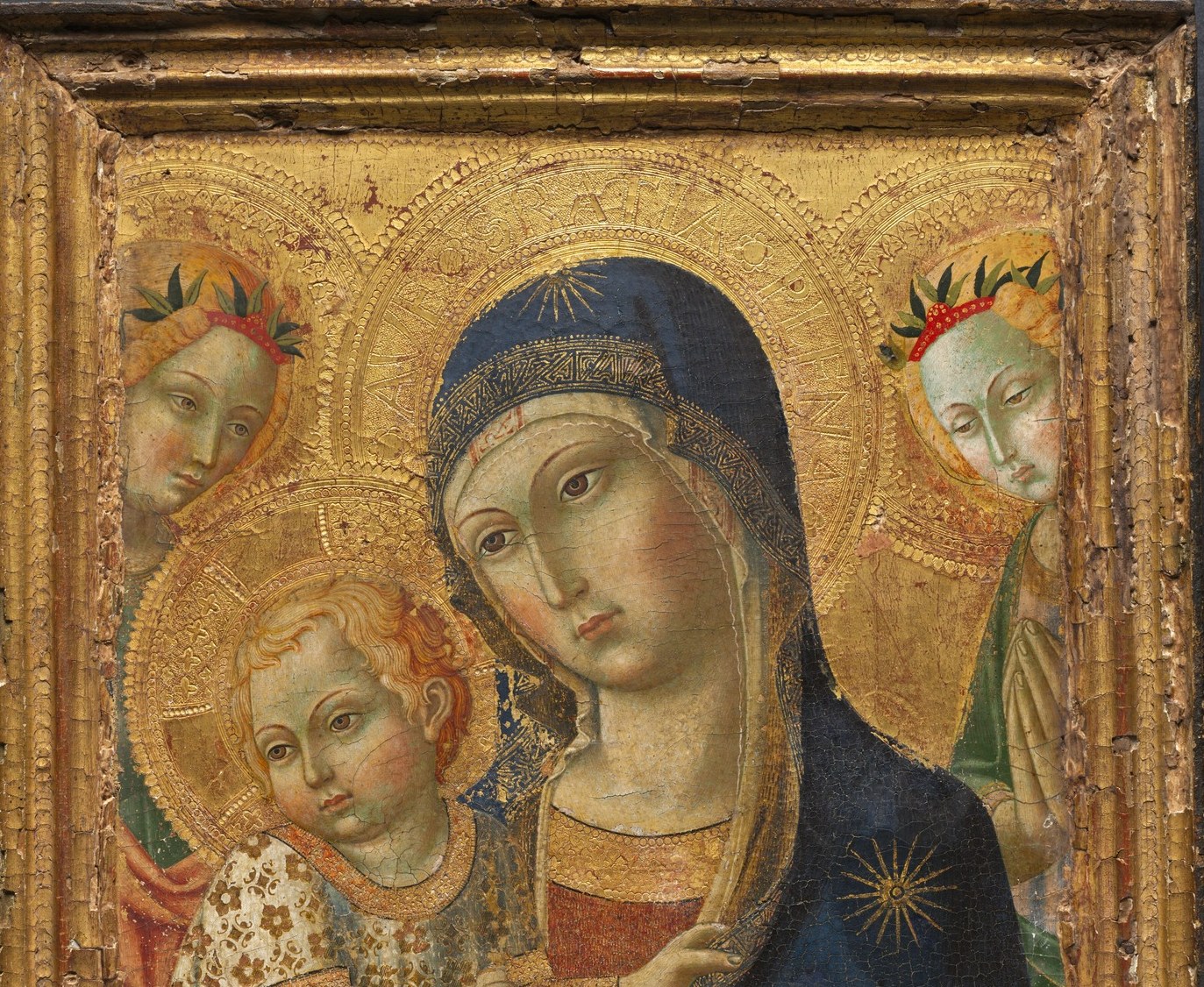
This is "Virgin and Child Enthroned" by Friedrich Overbeck, completed in 1849 and now in the collection of the Musée du Louvre. It was painted in the age of the locomotive and the telegraph, but Overbeck chose to work in a visual language that was already archaic when Giotto was a boy.
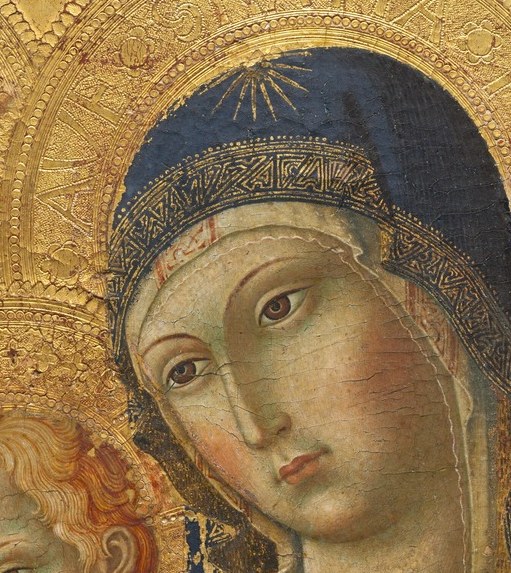
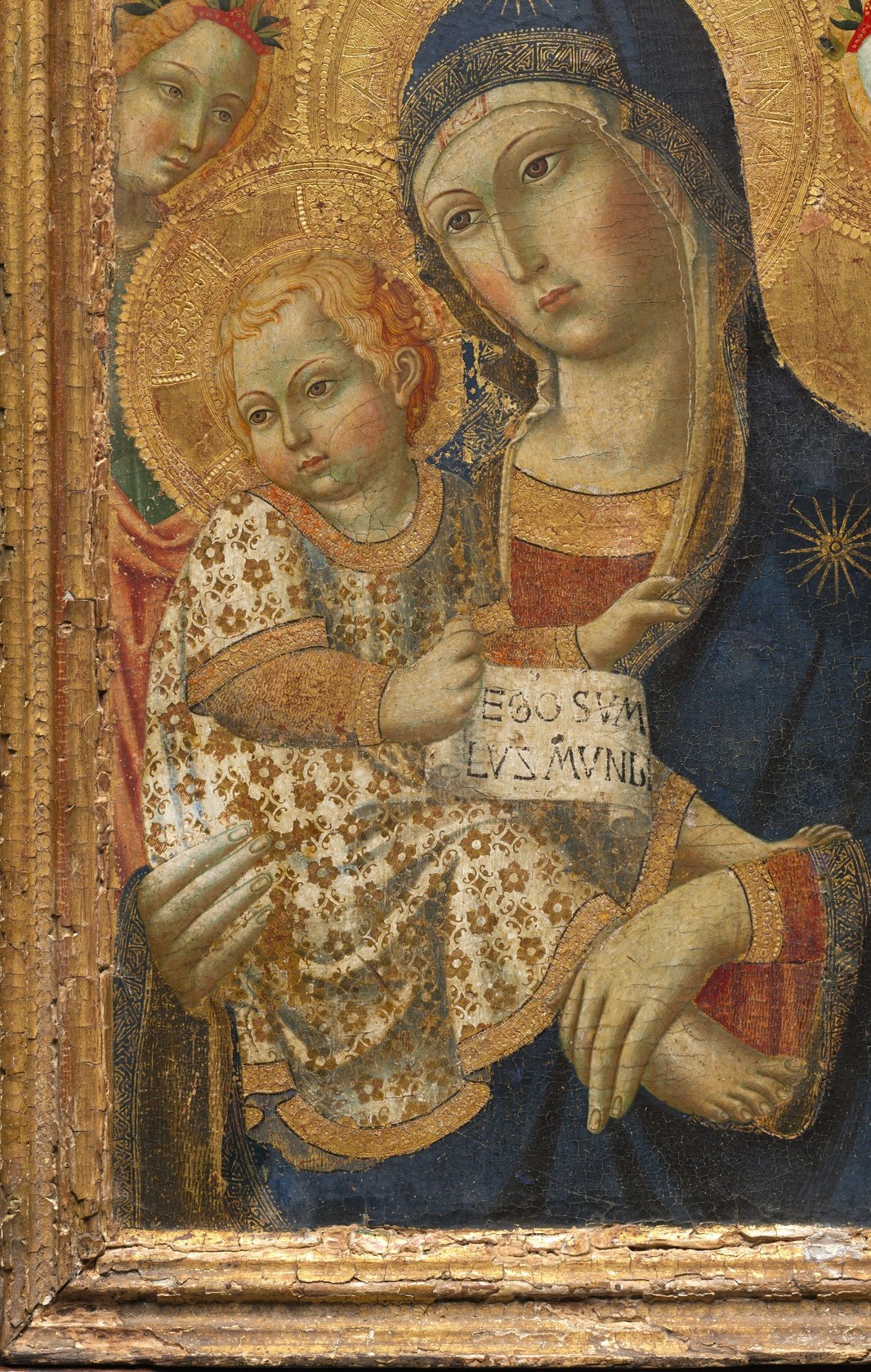
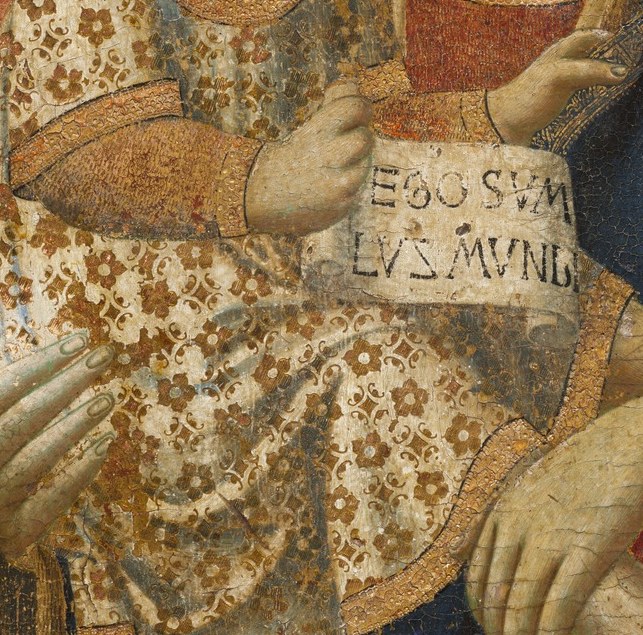
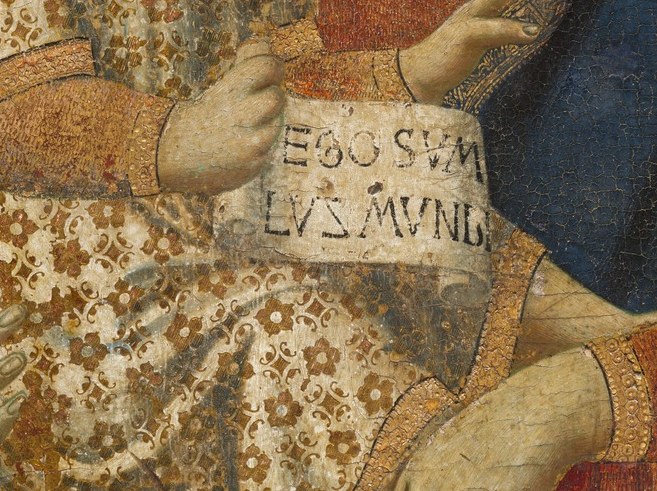
Look first at the deep ultramarine of Mary’s mantle, made from ground lapis lazuli. It was the single most expensive pigment a 19th-century painter could buy, and Overbeck insisted on it because medieval panel painters had used it to signal her supreme sacred status. Then look at the Latin scroll she holds: the text identifies Mary as the woman prophesied to crush the serpent’s head, a militant image of victory the painter deliberately restored at a moment when religious art had gone sentimental.
Overbeck was a founding member of the Nazarenes, a group of young German artists who moved to Rome and lived almost monastically, believing that post-Renaissance art had traded holiness for virtuosity. He spent years on this panel, reviving gold leaf, flat halos, and the Byzantine benediction gesture in Christ’s raised right hand. The two angels in the background are so easy to overlook that most visitors walk past without noticing them.
Overbeck was only 29 when he finished this painting. He would live another twenty years, but he never returned to the country or the century he was born into.
Details
Transcript
She looks like a medieval icon. But this was painted in 1849, in the age of the steam engine. A young German artist looked back six centuries to find something he thought art had lost. The lapis lazuli blue alone cost more than most painters made in a year. Her hands: a theologian wrote that she presents the child, she does not clutch him. Now look at the scroll. The Latin words identify her as the woman who will crush the serpent's head. He gave the symbol back its steel.