The Judgment of Midas by Hoecke, Jan van den
View the artwork: The Judgment of Midas →
Jan van den Hoecke’s The Judgment of Midas (c. 1640) is a textbook example of how a Flemish Baroque painter could embed an entire moral argument inside a single crowded scene. The canvas hangs in a private collection, but its visual language belongs to the public tradition of Rubens’ workshop, where van den Hoecke trained. Every object and figure here is a coded message about the cost of bad judgment.
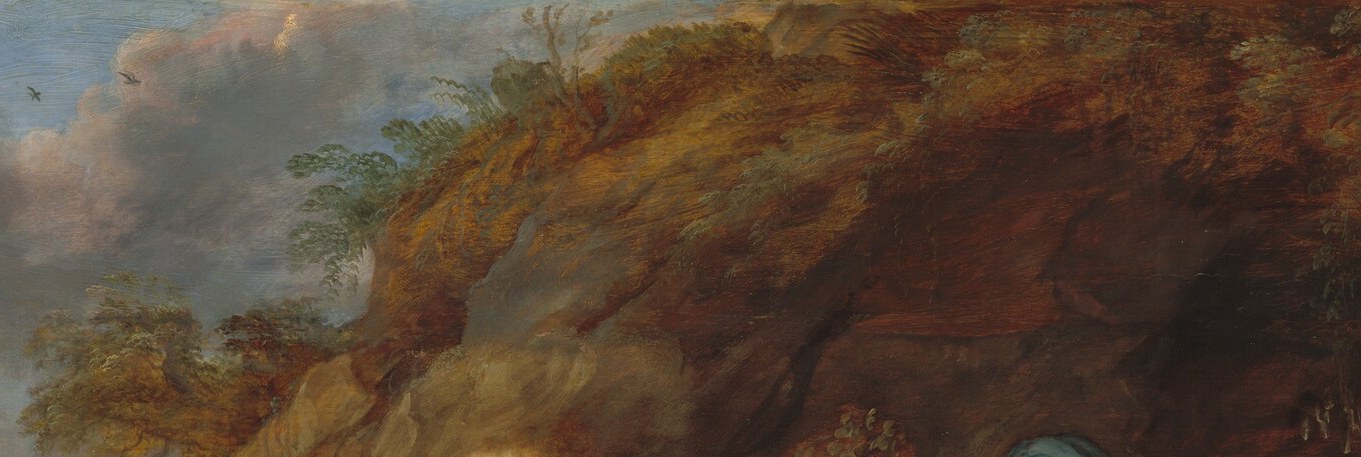
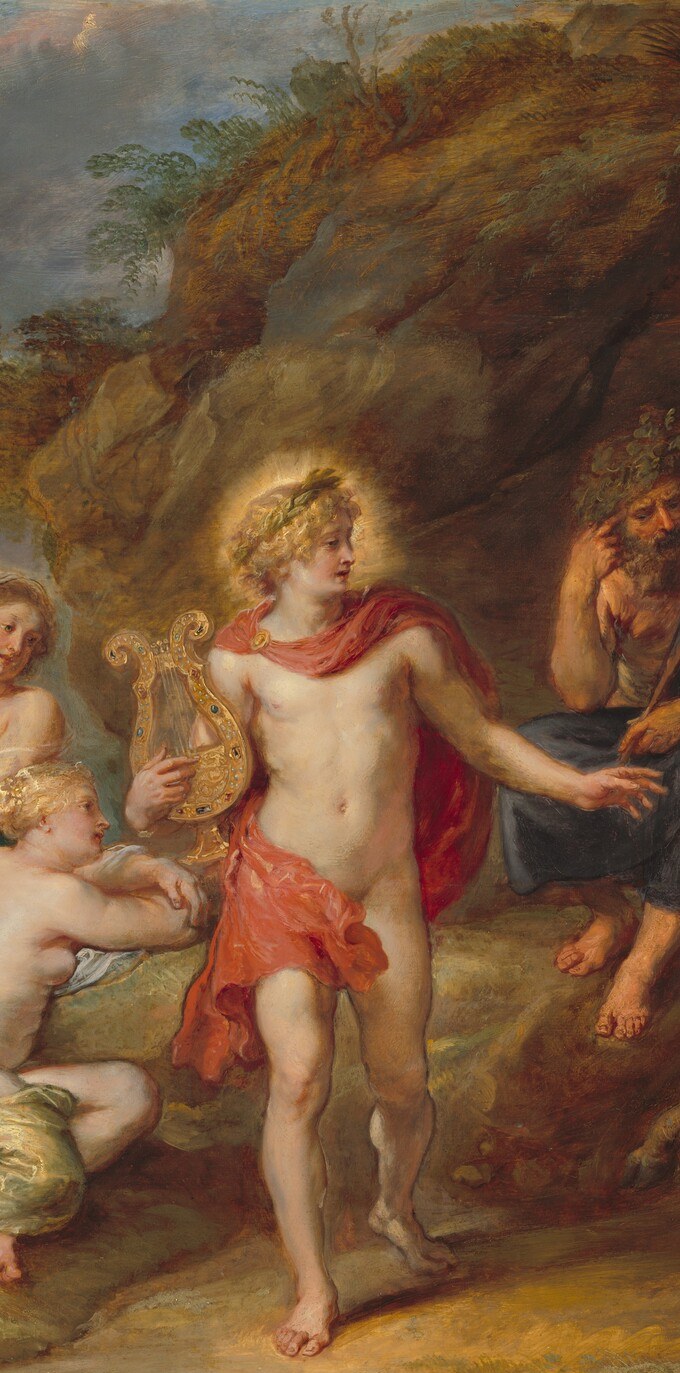
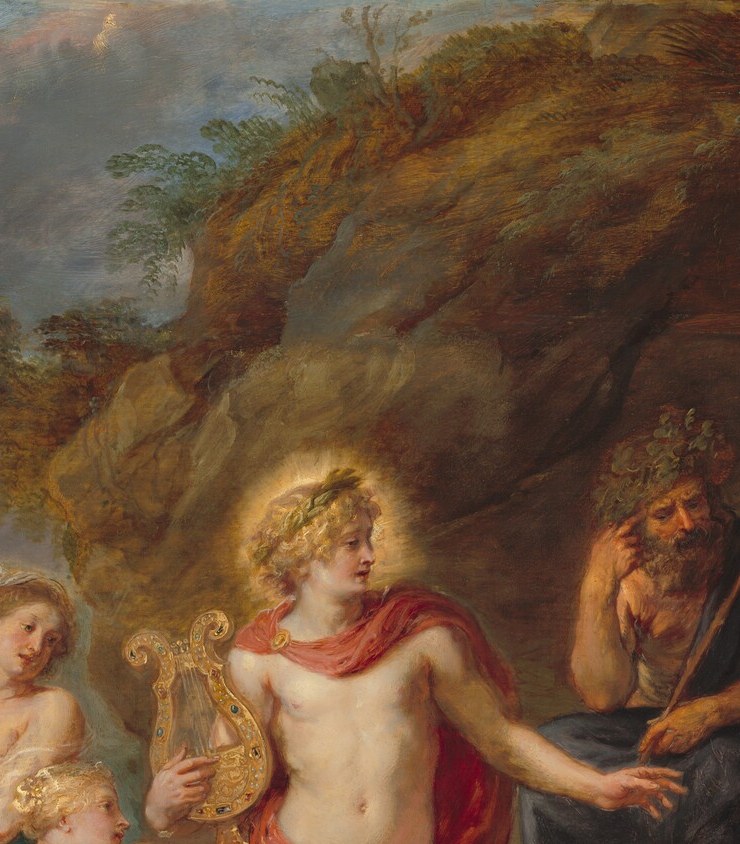
Start with the light. Apollo is not standing in a beam of sunlight; the golden radiance emanates from his own body. This is divine self-generation, made visible by paint alone. The only natural light in the composition sneaks through the trees at the upper right, which immediately reframes the whole scene: Apollo is the true sun, and everything else is shadow. Follow that light as it lands on Midas. A crowned king is on his knees, his face contorted with terror. The crown has no weight here. The verdict has been delivered.
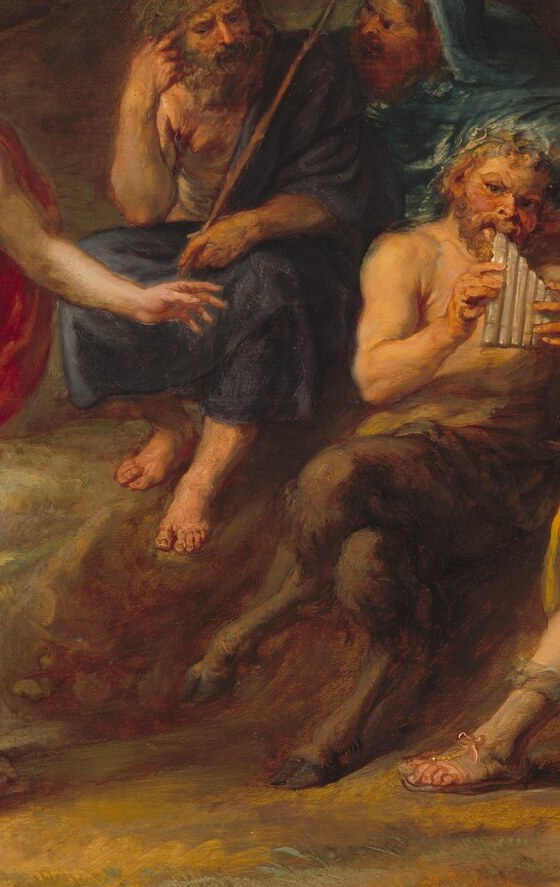
The myth itself is straightforward: Apollo, god of music and reason, competed against Pan, the wild satyr who played reed pipes. Midas, acting as judge, preferred Pan’s raw, instinctual music. Apollo gave him donkey’s ears as payment for his foolishness. Van den Hoecke captures the moment just after that verdict, when the consequence is dawning on Midas’s face. Pan lurks to the right, his bestial form a visual argument against everything Apollo’s golden perfection represents. The painter is staging a debate between civilization and raw nature, and the lighting tells you who wins.
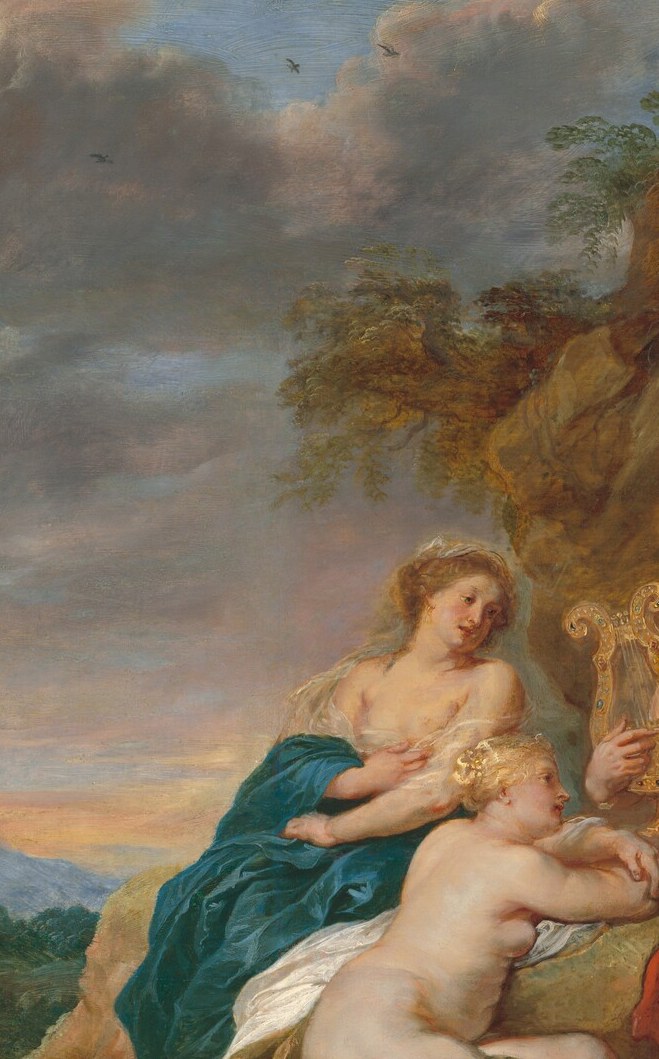
What makes the painting remarkable is that the argument is entirely visual. You do not need to read the myth to feel the imbalance of power. Apollo’s pointing hand sentences Midas more effectively than any text. The witnesses at the far right stand in shadow, watching without intervening. Even the possible Pegasus at the lower left nods toward the Muses and divine inspiration, elevating this from a simple contest into a fight over the nature of art itself.
#arthistory #baroque #mythology
Details
Transcript
A god, a king, and a verdict no one wants. Apollo generates his own light here. The painter makes divinity itself the source. That light exposes Midas, a mortal king. His crown means nothing here. He chose the wrong winner: Pan, the wild satyr. The code adds up: choose raw instinct over reason, and lose everything.