Christ on the Road to Emmaus by American 18th Century
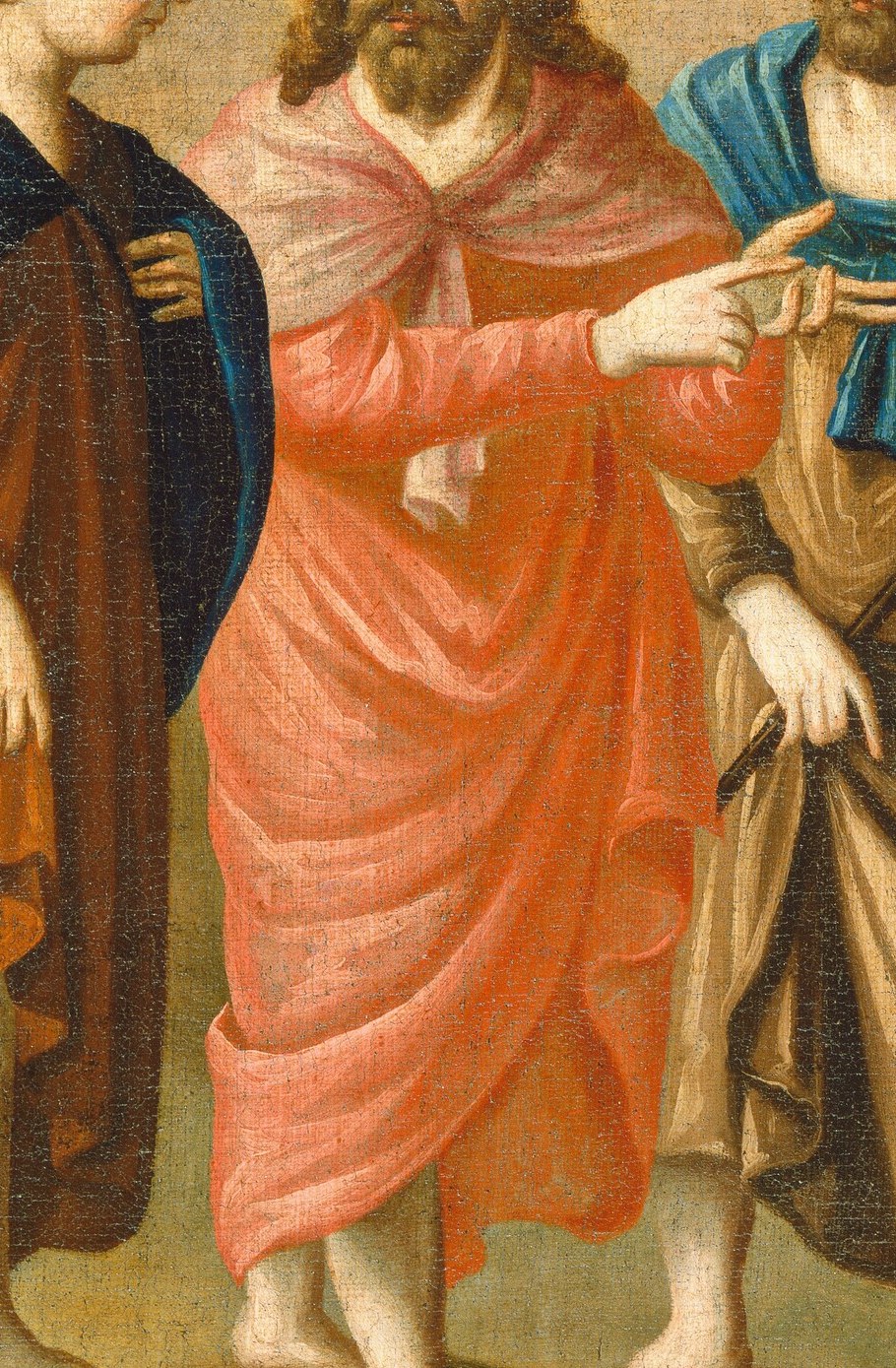
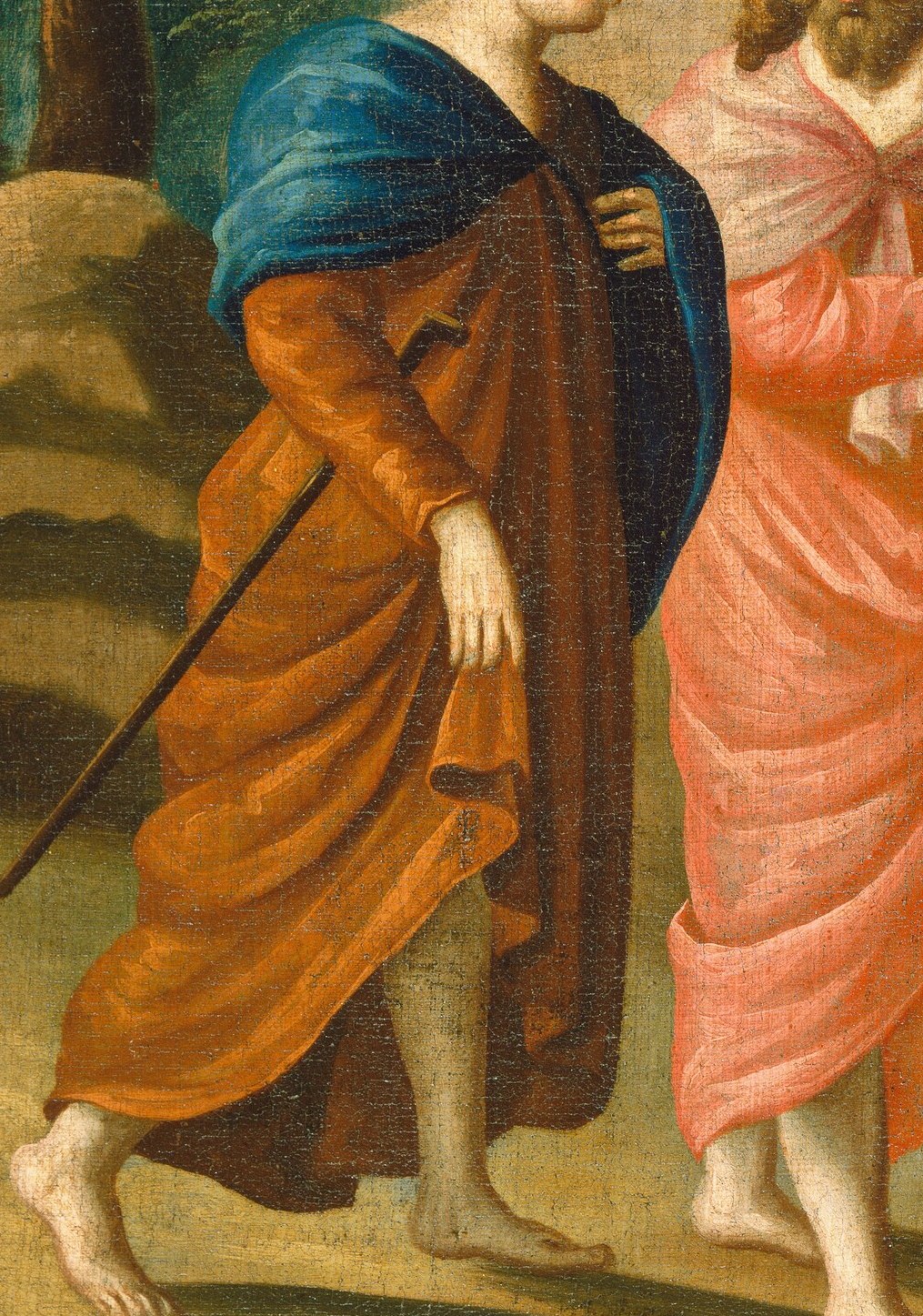
"Christ on the Road to Emmaus," painted by an American artist around 1725-1730, is a compelling biblical scene. This oil on canvas, housed in a museum collection, captures the moment Christ explains scripture to two disciples, who do not yet recognize him, on their way to Emmaus.
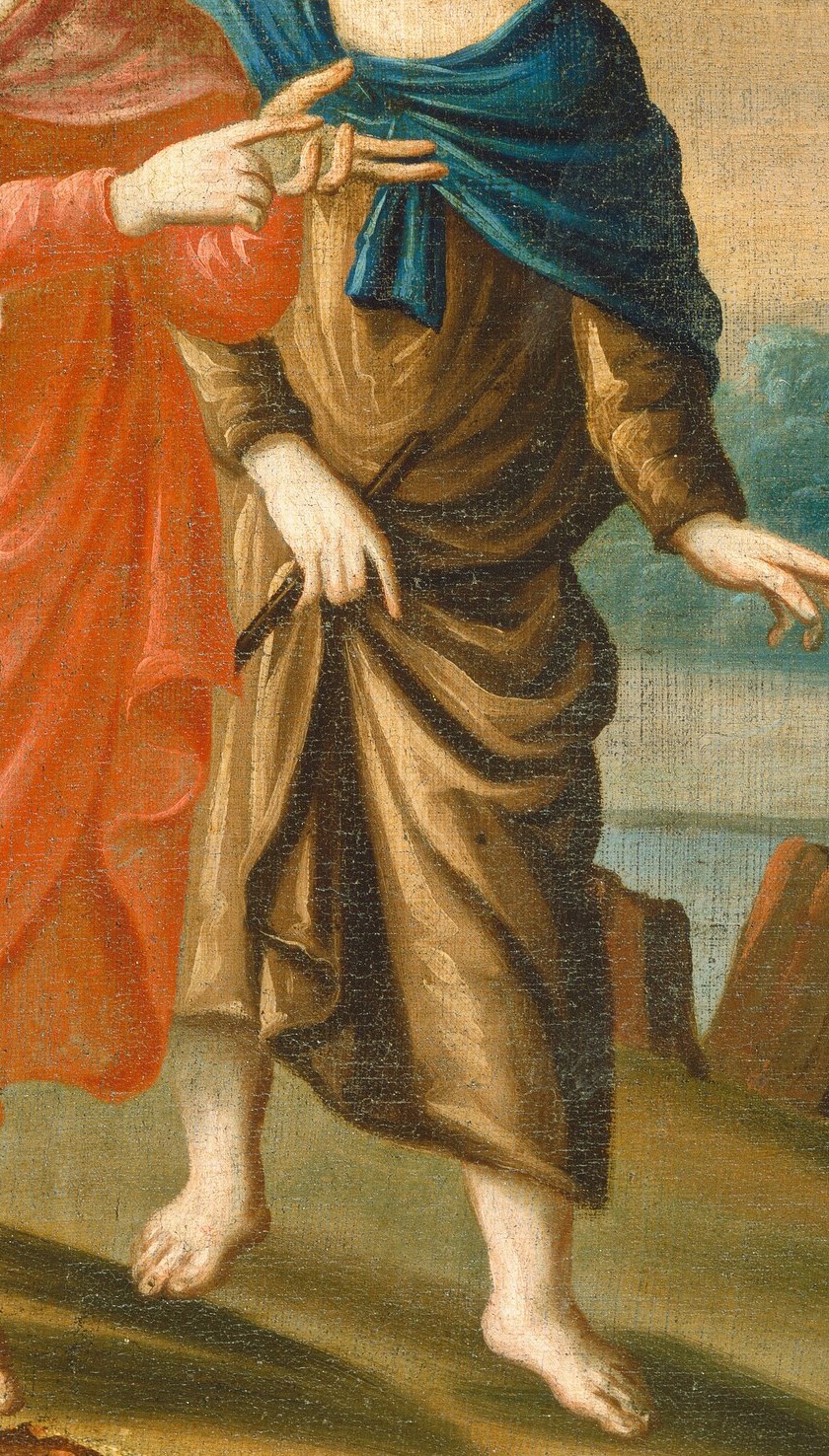
While the vibrant pink robe of Christ and the engaging postures of the disciples draw the eye, a closer look at the distant background reveals the subtle details that enhance the narrative. The tiny buildings nestled on the horizon, barely visible at first glance, add a sense of journey and destination.
This painting illustrates a key post-resurrection event, where Christ's identity is gradually revealed. The artist uses a traditional composition, with the figures set in a natural landscape, to convey this spiritual unfolding. These small architectural elements in the background ground the divine narrative in a relatable, earthy context.
What other subtle details do you notice that add to the story?
Details
Transcript
This painting tells a familiar story, but hides a secret. Christ, in his bright pink robe, explains the scriptures. His disciples, still unaware, listen intently as they walk. The path is long, winding past trees and rocky terrain. Look closely at the distant, tiny buildings on the horizon. They add depth and a sense of a journey's destination.