The Trinity by Bartolomeo di Giovanni
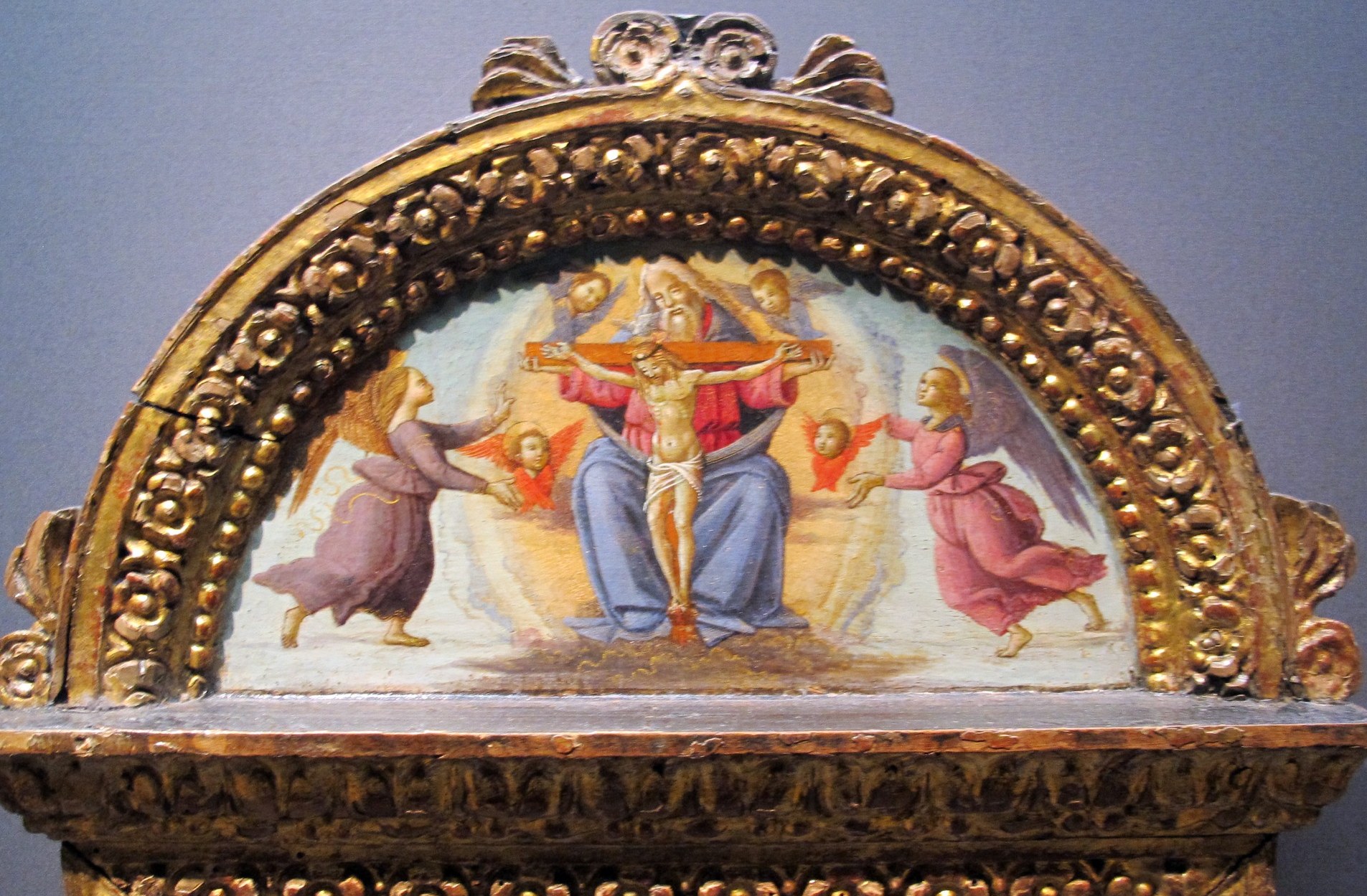
Take a close look at this painting called "The Trinity." It's a tempera work by the Florentine painter Bartolomeo di Giovanni, dating to 1494. But the truly wild story here is that this luminous sacred image survived one of the most infamous art destructions in history, and all because someone hid it in time.
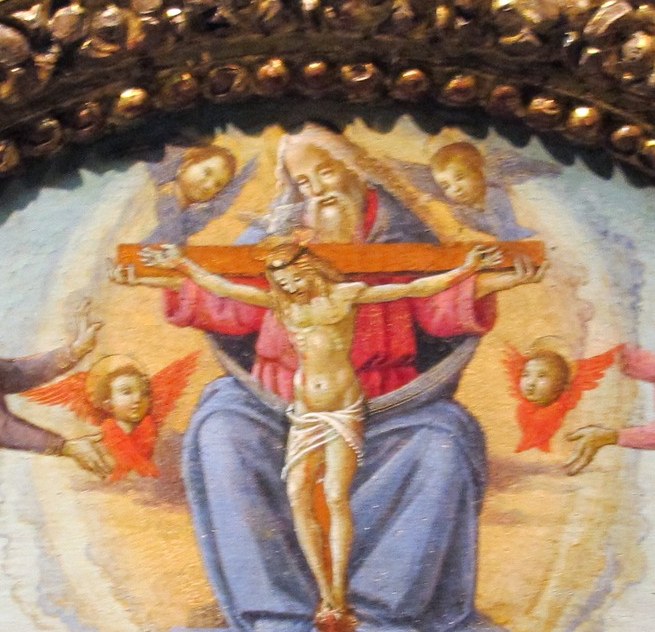
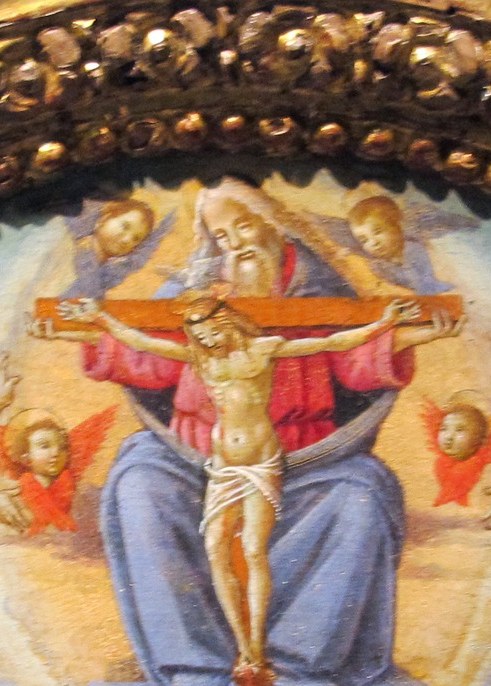
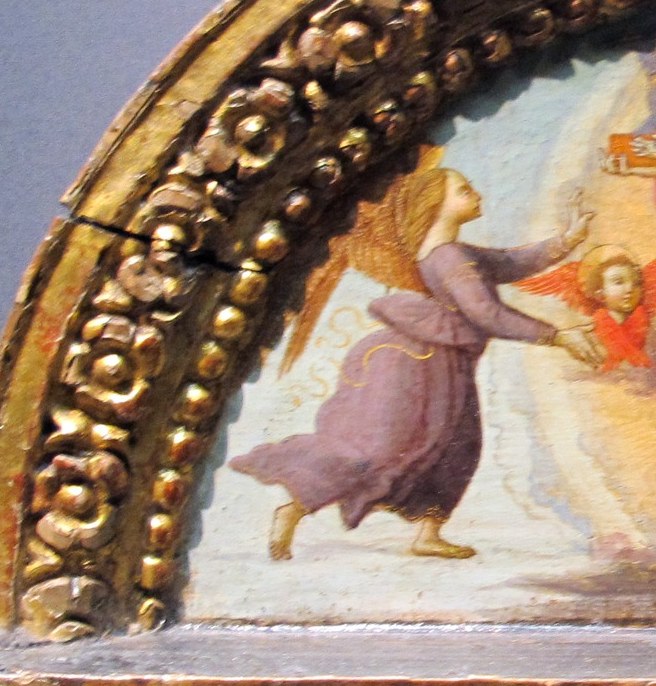
Look at the composition. God the Father, in a deep blue-grey mantle, holds the cross bearing the crucified Christ. Above Christ, a tiny white dove represents the Holy Spirit. The three figures form a single, solemn vertical axis, the full Christian Trinity presented as a devotional object. Two kneeling figures frame the scene in symmetrical postures of prayer, their hands reaching. The ornate, gilded frame is not just decoration; its heavy lunette shape tells us this was once the top section of a full altarpiece.
This painting was made in 1494. Just three years later, the fire-and-brimstone friar Girolamo Savonarola had seized control of Florence. His followers staged the infamous "Bonfire of the Vanities" in 1497, confiscating and burning artworks, books, and personal luxuries in public squares. Religious paintings were often under threat if they were seen as too lavish or worldly. The lower panels of Bartolomeo's altarpiece, the main body with its saints and narrative scenes, were almost certainly destroyed in this frenzy.
But we can still see this Trinity today because someone, perhaps a loyal parishioner at a now-forgotten Florentine church, quietly removed the top lunette and hid it from Savonarola's agents. The painting survived the fires that consumed so much Renaissance art. The face of God the Father we see here, with its gentle tilt and commanding presence, is a survivor's face.
Details
Transcript
Florence, 1497. A Dominican friar seizes the city. Savonarola's mobs burn art in the streets. Look at the deep blue of the Father's robe. Now the body on the cross. And the tiny dove completing the Trinity. This was the top piece of a larger altarpiece. The lower panels were likely lost to the fire. Someone hid this top lunette before the monks came.