The Virgin and Child on a Throne of Angels by Jerónimo Jacinto de Espinosa
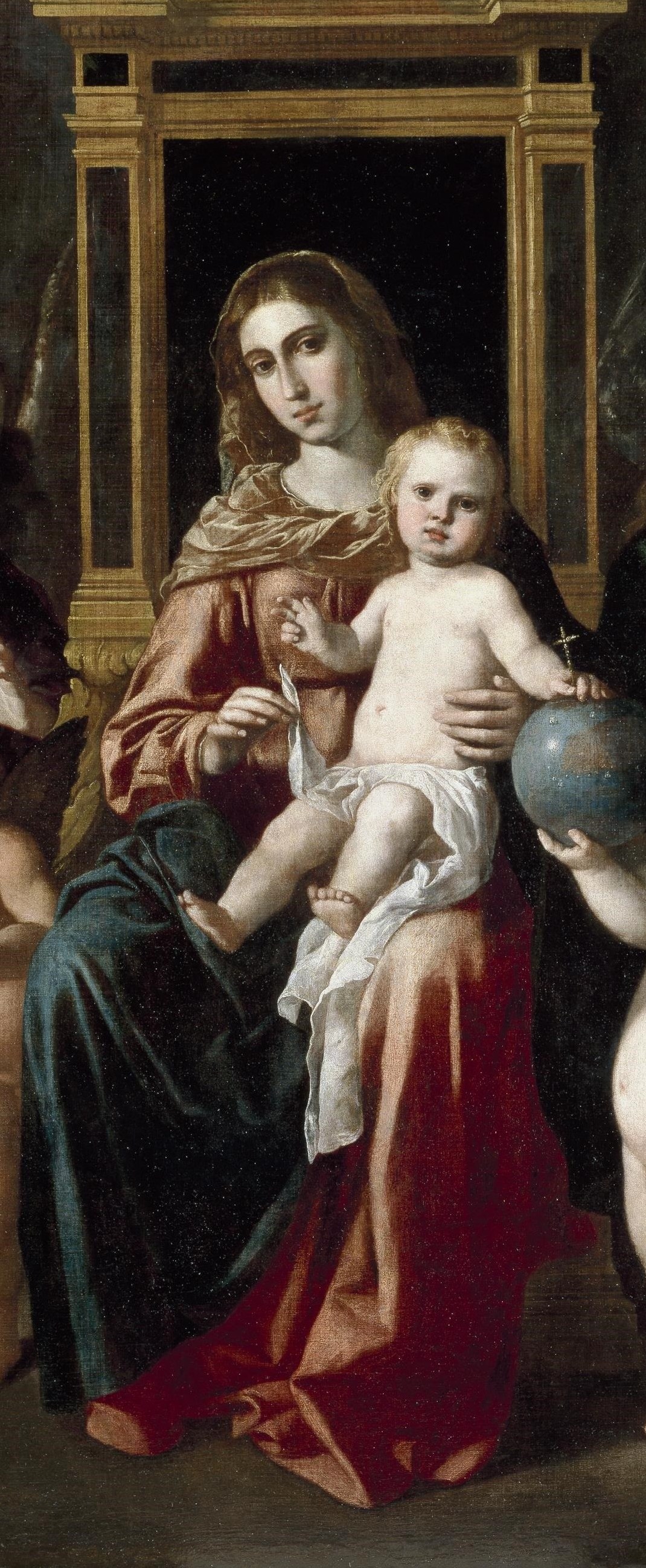
In Jerónimo Jacinto de Espinosa’s 1661 painting, *The Virgin and Child on a Throne of Angels*, now at the Museo del Prado, we see a powerful example of Spanish Baroque religious art. This work served as a visual aid for devotion, reflecting the spiritual intensity of its era.
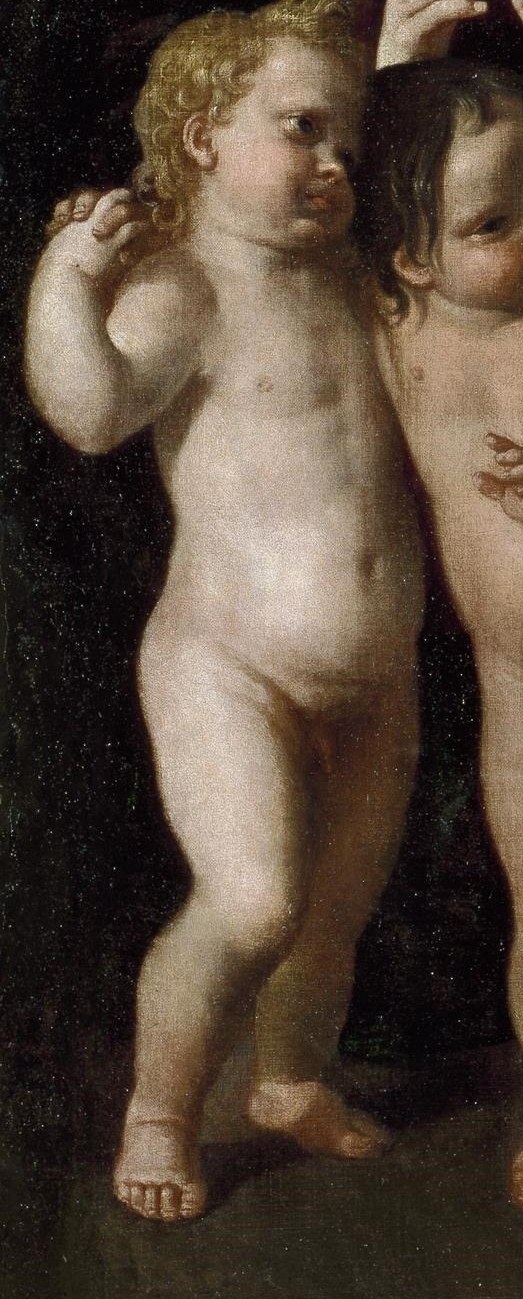
Espinosa places the Virgin Mary and the Christ Child on an ornate gilded throne, surrounded by a host of angels. Notice the Christ Child's blue orb, a clear symbol of his divine authority, and the subtle cross, foreshadowing his ultimate sacrifice.
Painted in the later part of Espinosa’s career, this piece showcases his mature Baroque sensibility. It became part of the Spanish royal collections before finding its home in the Museo del Prado. The dramatic lighting and rich colors were typical of the era, designed to evoke a strong emotional response in the viewer.
What details in this heavenly scene draw your eye the most?
Details
Transcript
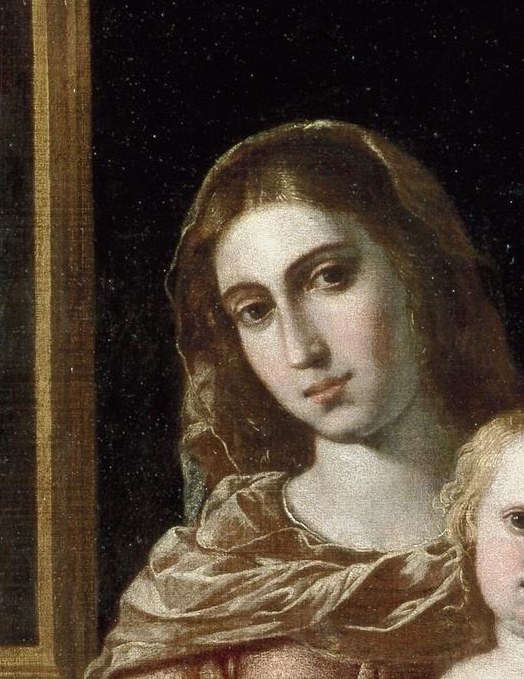
This painting from 1661 shows a heavenly moment. The Virgin Mary and Christ Child appear on a gilded throne. Mary’s serene face conveys maternal love. Christ holds an orb, symbolizing his dominion over the world. The little cross hints at Christ's future sacrifice. Angels, both cherubic and child-like, fill the space. This Spanish Baroque work was made for devotion.