The Cheyenne Brothers Starting on Their Fall Hunt by Catlin, George
George Catlin, a dedicated chronicler of Native American life, painted "The Cheyenne Brothers Starting on Their Fall Hunt" around 1861-1869. This oil on card, mounted on paperboard, captures a significant moment in the daily life of the Cheyenne people.
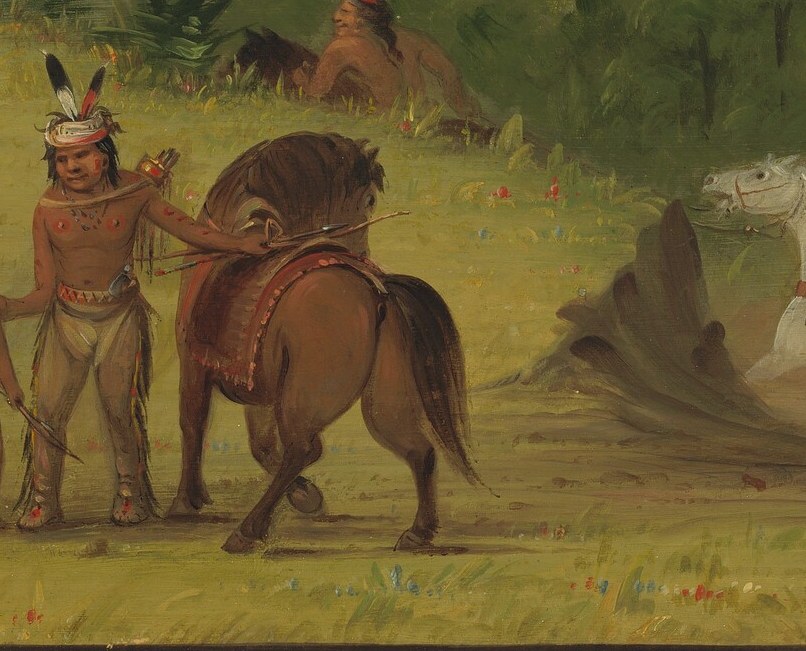
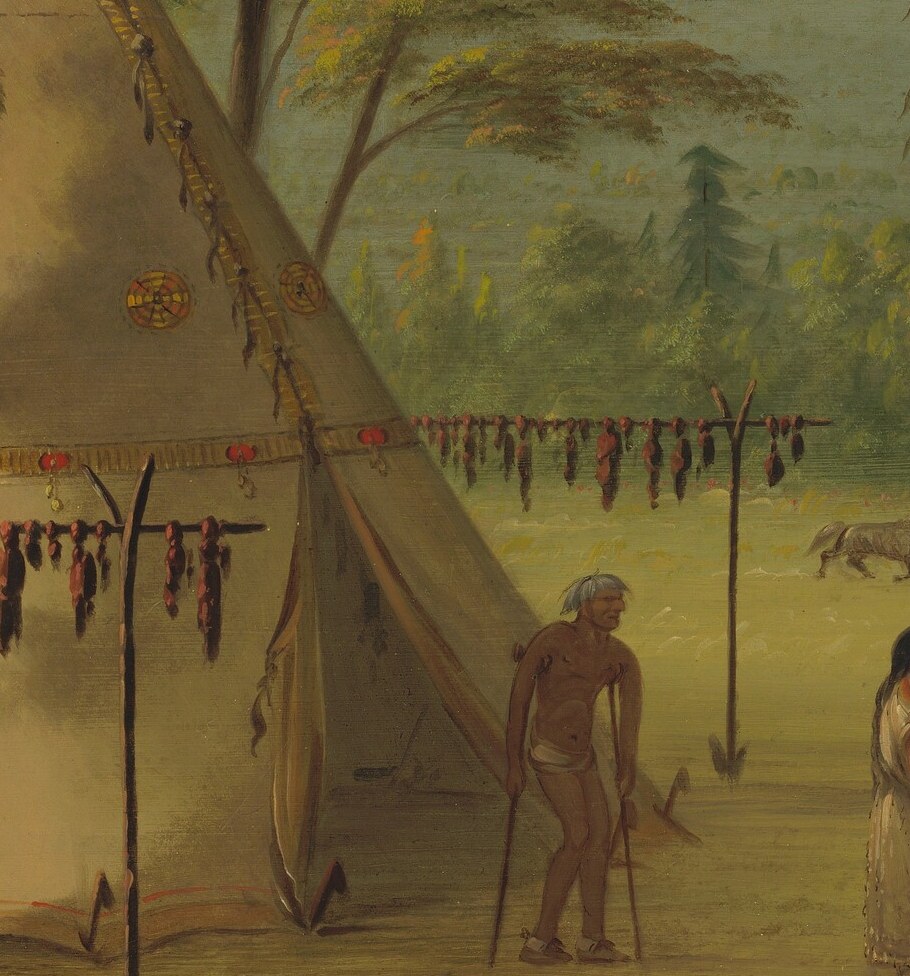
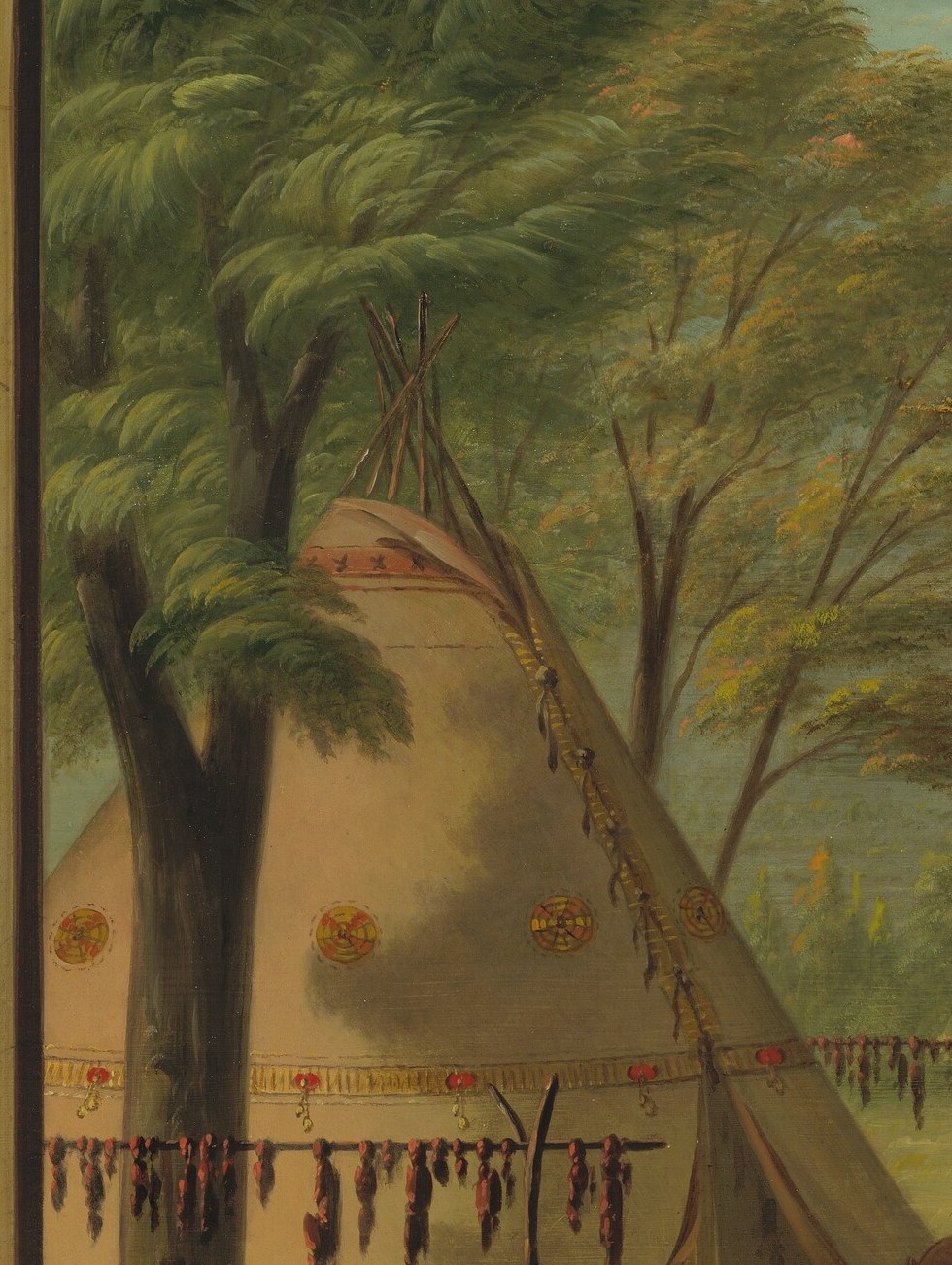
Look closely at the preparations: the Cheyenne riders are poised, and near the teepee, meat from previous successful hunts hangs on drying racks, underscoring the communal and ritualistic importance of the fall hunt for sustenance and survival.
Catlin, an American lawyer turned painter, traveled to the American West five times during the 1830s. He believed that indigenous cultures were vanishing due to westward expansion and dedicated his work to documenting the life and traditions of Plains tribes, aiming for accuracy through direct encounters.
These paintings offer a window into moments that might otherwise have been forgotten, preserving cultural practices for future generations. What details do you notice first?
Details
Transcript
This painter chronicled vanishing Indigenous cultures in the American West. Here, two Cheyenne brothers prepare for their fall hunt. The fall hunt was a vital, ritualistic event for sustenance. Meat from earlier hunts dries on racks near the teepee. His travels in the 1830s informed these detailed depictions. These scenes aimed to record daily life, before it was lost.