After the Buffalo Chase - Sioux by Catlin, George
George Catlin, a lawyer turned painter, dedicated his life to documenting Native American life on the American frontier. His painting, *After the Buffalo Chase, Sioux* (1861/1869), now at the Smithsonian American Art Museum, captures a moment of aftermath and quiet observation.
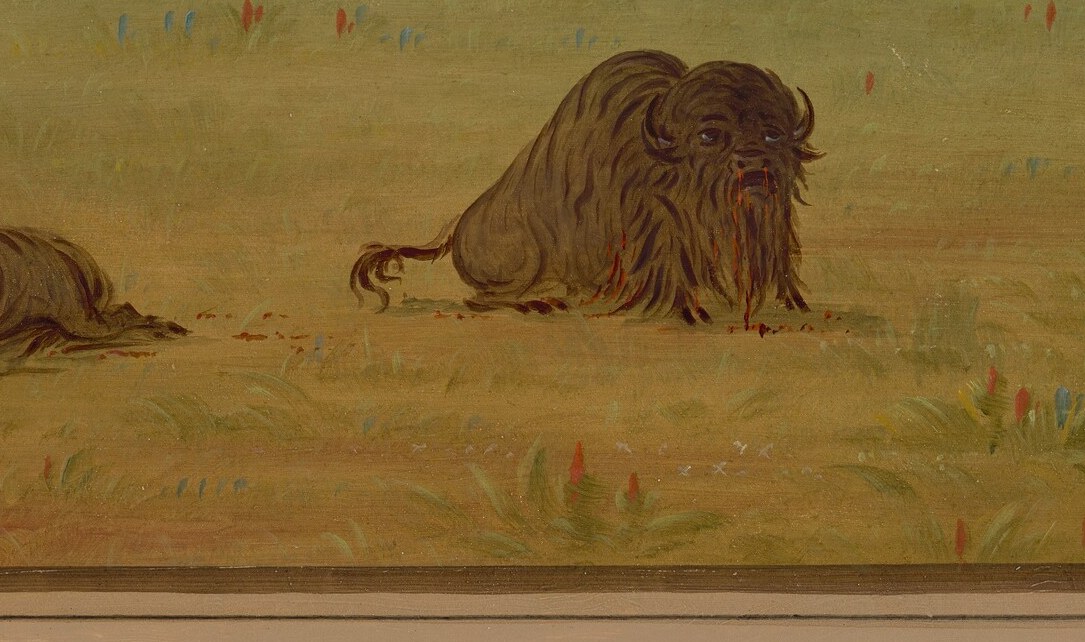
Look for the small details: the distant riders, the exhausted buffalo, and even a fallen horse that speaks to the intensity of the chase. Catlin’s realist approach allowed him to capture these scenes with careful observation, blending accuracy with artistic interpretation.
After his extensive travels through the American West in the 1830s, Catlin produced a vast body of work. This painting, created later in his career, reflects his commitment to recording the customs and activities of Native communities during a period of rapid change.
What other small details do you notice in the vastness of this prairie scene?
Details
Transcript
This painting shows a buffalo hunt, but look closer. The artist traveled the American West documenting Native life. He painted what he saw, like the exhaustion after a chase. Even a fallen horse, a sign of the struggle. But look closely in the grass. Tiny red flowers, almost hidden from view. A small detail, carefully observed by the painter.