Bishop Altobello Averoldo by Francia, Francesco
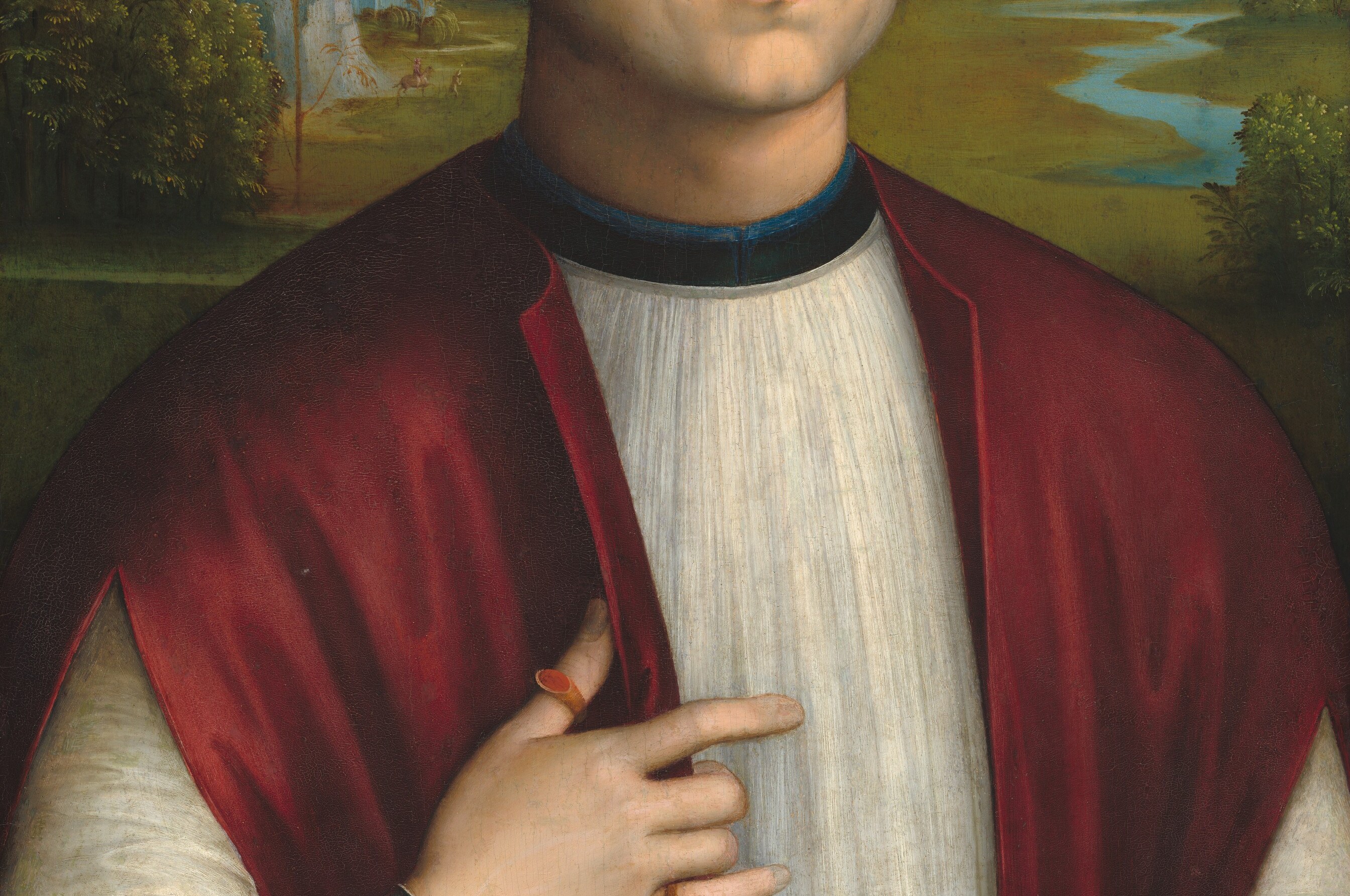
This is Francesco Francia's portrait of Bishop Altobello Averoldo, painted around 1505. It hangs in the National Gallery of Art, Washington. Francia wasn't just a painter; he was the master of the Bologna mint, a goldsmith, and a medallist. Every brushstroke here carries the weight of someone who understood metal intimately, how it catches light, how it announces absolute value.
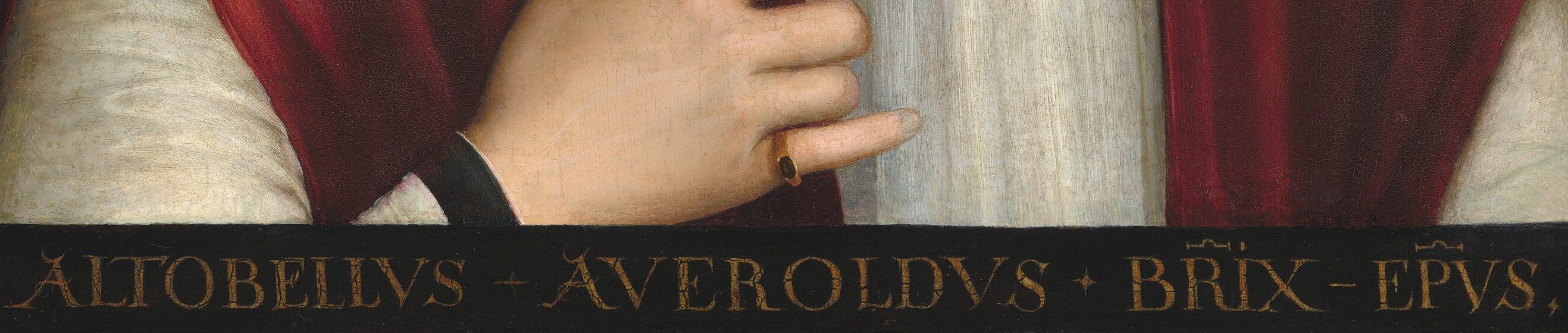
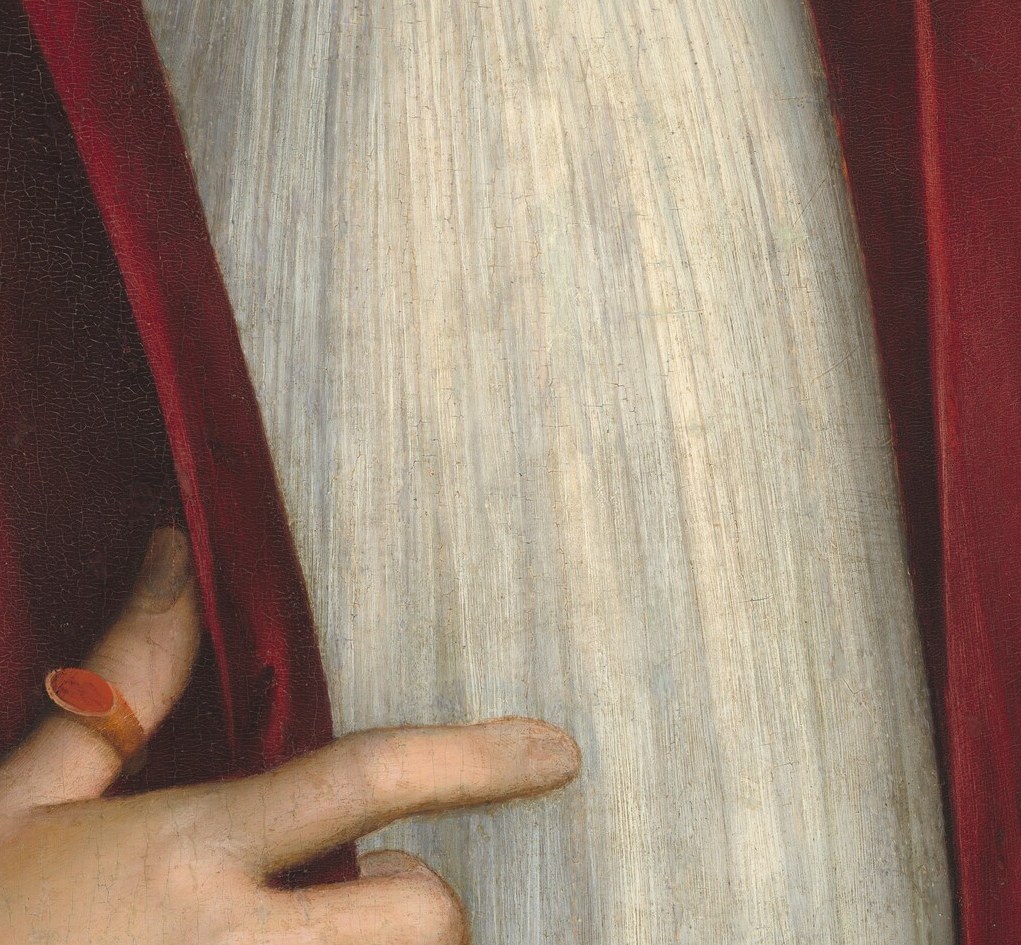
Look first at the stone parapet at the bottom of the painting. The sitter's name is inscribed directly onto it, like a label built into the composition. It reads 'ALTOBELVS AVEROLDVS,' marking him as a bishop and a papal legate. Then move up to his right hand, resting at his chest. Francia has placed the episcopal ring, a symbol of the bishop's bond to the Church, front and center. The gold ring and its stone are rendered with the exacting precision you would expect from the man who designed and approved the city's official coinage.
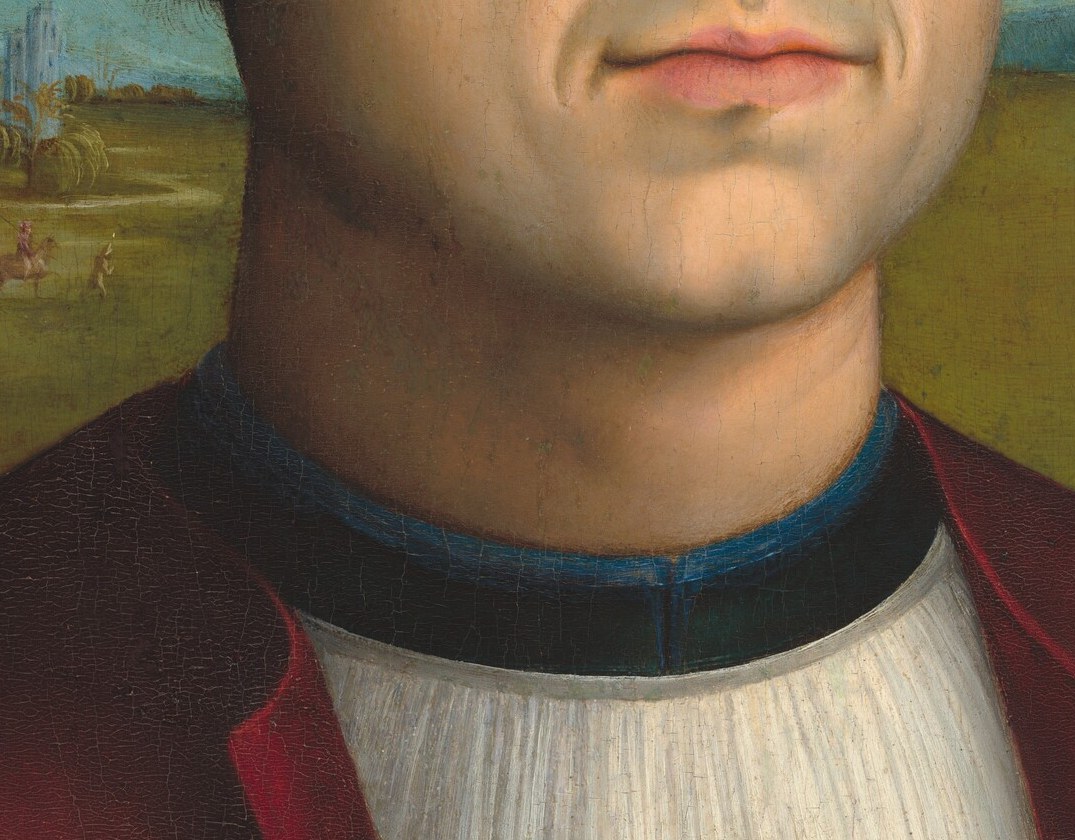
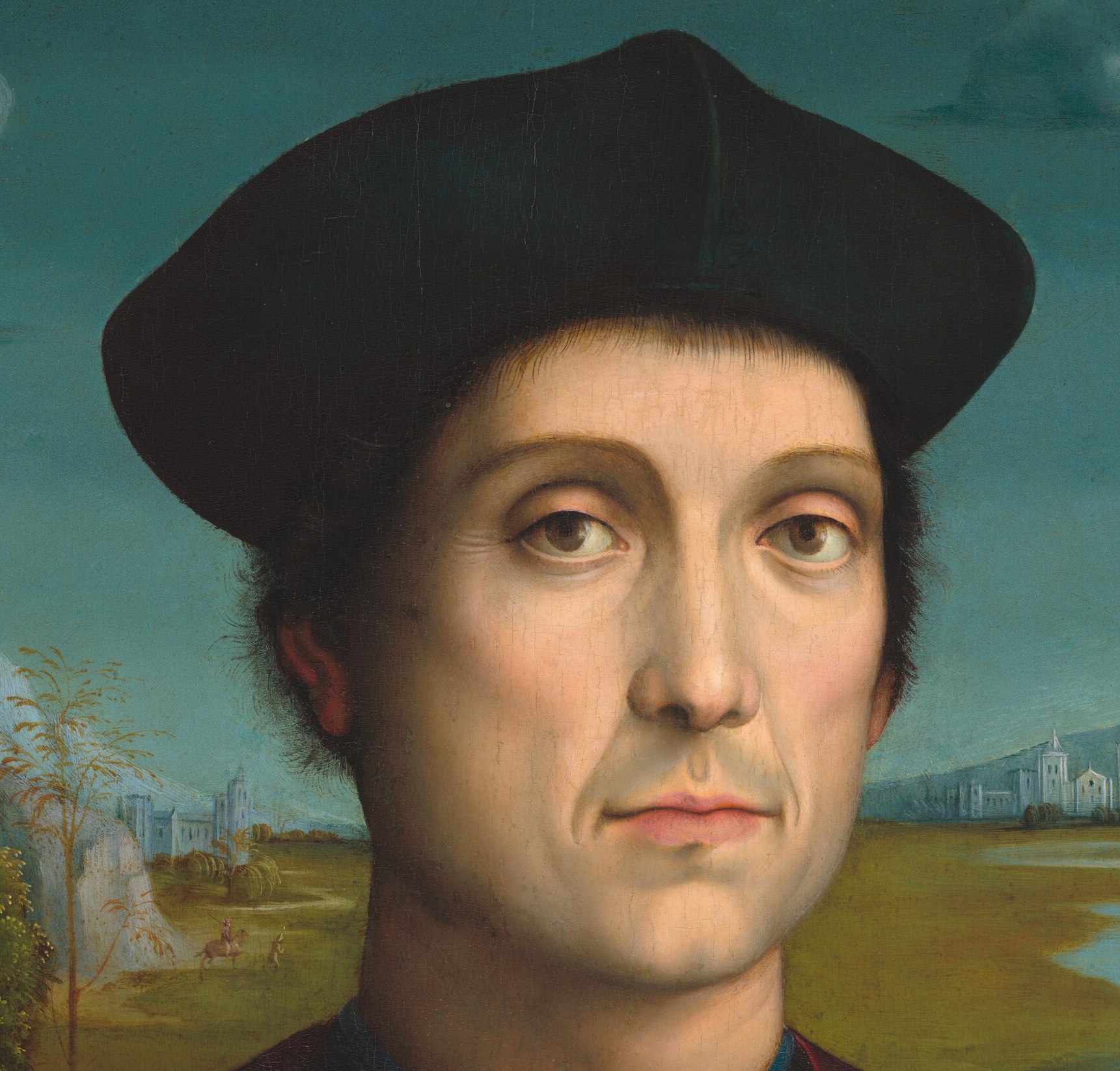
Altobello Averoldo was a prominent figure in the early 16th-century Church, and this portrait was a public statement of his authority. The crimson vestment commands the lower two-thirds of the panel, while the distant landscapes behind him may reference his diocese near Brescia and the Adriatic coast. Francia absorbed Flemish painterly techniques, like the illusionistic stone ledge and the atmospheric landscape, through northern Italian trade routes, but the face is pure Italian observation: individualized, unidealized, and direct.
A portrait is a transaction in status. Who better to paint a bishop worth his weight than the man who literally minted the city's gold?
Details
Transcript
This is an address. A public statement built in oil. His name is carved in stone in the painting itself. Altobello Averoldo. Bishop. Papal legate. Look at his right hand. Resting at his chest. There is the episcopal ring. The bond to the Church. The artist was a goldsmith. He ran the Bologna mint. The ring is painted with a metallurgist's precision. A man of authority. Captured by a man who made the city's coins.