The House of Representatives by Morse, Samuel F. B.
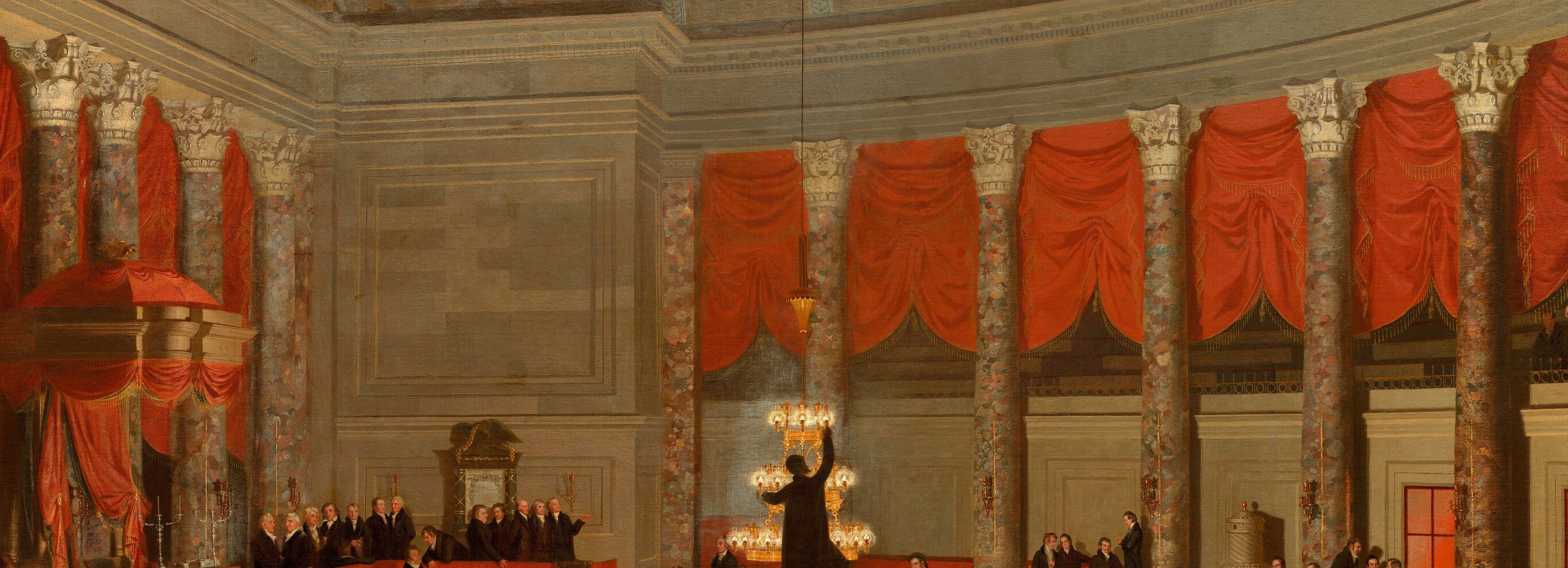
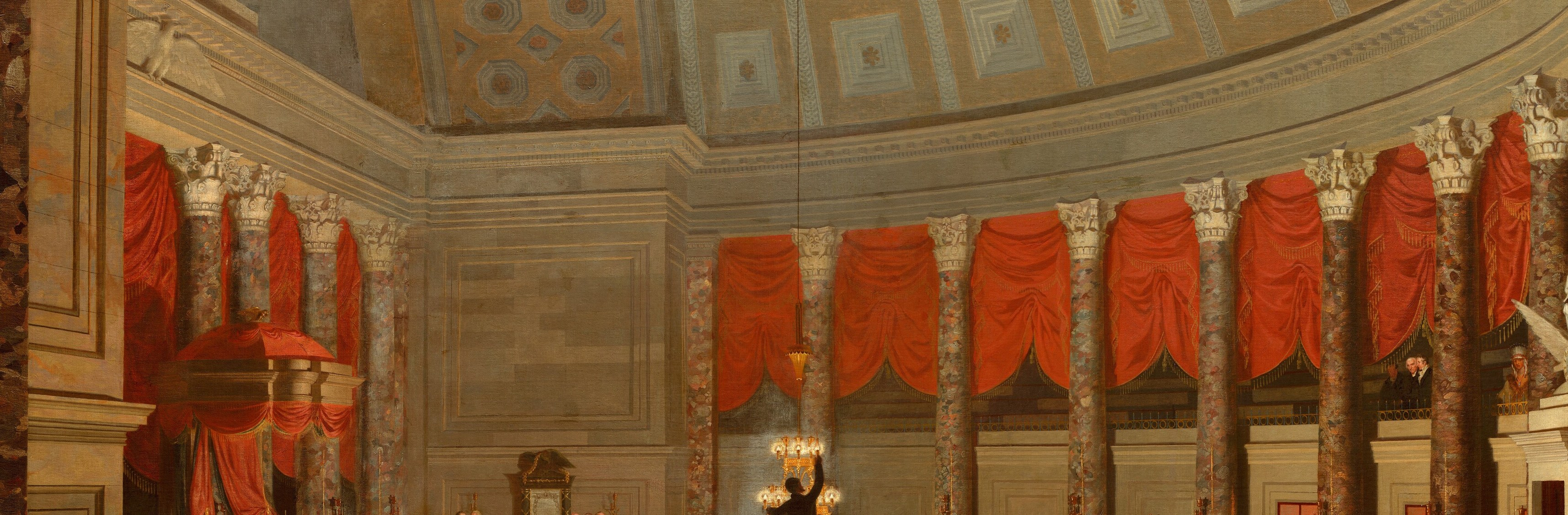
This is Samuel Morse's The House of Representatives, painted in 1822 and now in the National Gallery of Art in Washington. Before he invented the telegraph and changed human communication forever, Morse was a trained painter with a single burning ambition: to become a great American history painter.
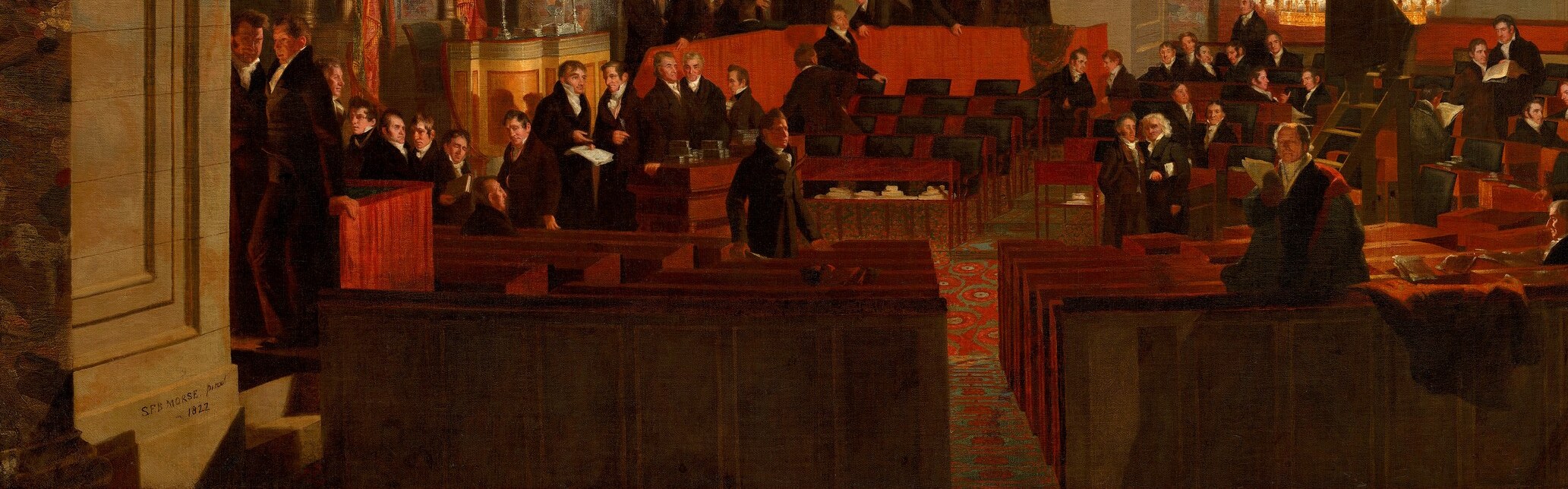
Look at the crowd on the chamber floor. Morse embedded roughly one hundred individual portrait-quality likenesses of real sitting congressmen. He spent months observing actual sessions, studying the way Benjamin Henry Latrobe's neoclassical architecture caught the light from the great central chandelier. Every face was drawn from life.
When he exhibited the painting in 1823, critics admired its ambition and craft. But paying audiences were sparse. The tour lost money. Morse, who had returned from years of study in England expecting to build a career documenting American democracy, understood the public was not going to reward the kind of civic art he wanted to make.
He pivoted hard, toward science and invention, and the rest is history. But here, in the foreground, he painted himself as a witness, looking out from the edge of the nation's legislative heart. A man present at the start of something he believed in, and quietly, irrevocably leaving it behind.
Details

Transcript
Samuel Morse wanted to be a great American painter. He filled this room with nearly a hundred real congressmen. He spent months in the chamber, drawing from life. Now look in the foreground. Morse put himself in the painting, watching history. The critics praised it. The public, however, did not come. It made so little money he gave up painting for good.