Winter at Portland by Allen Tucker
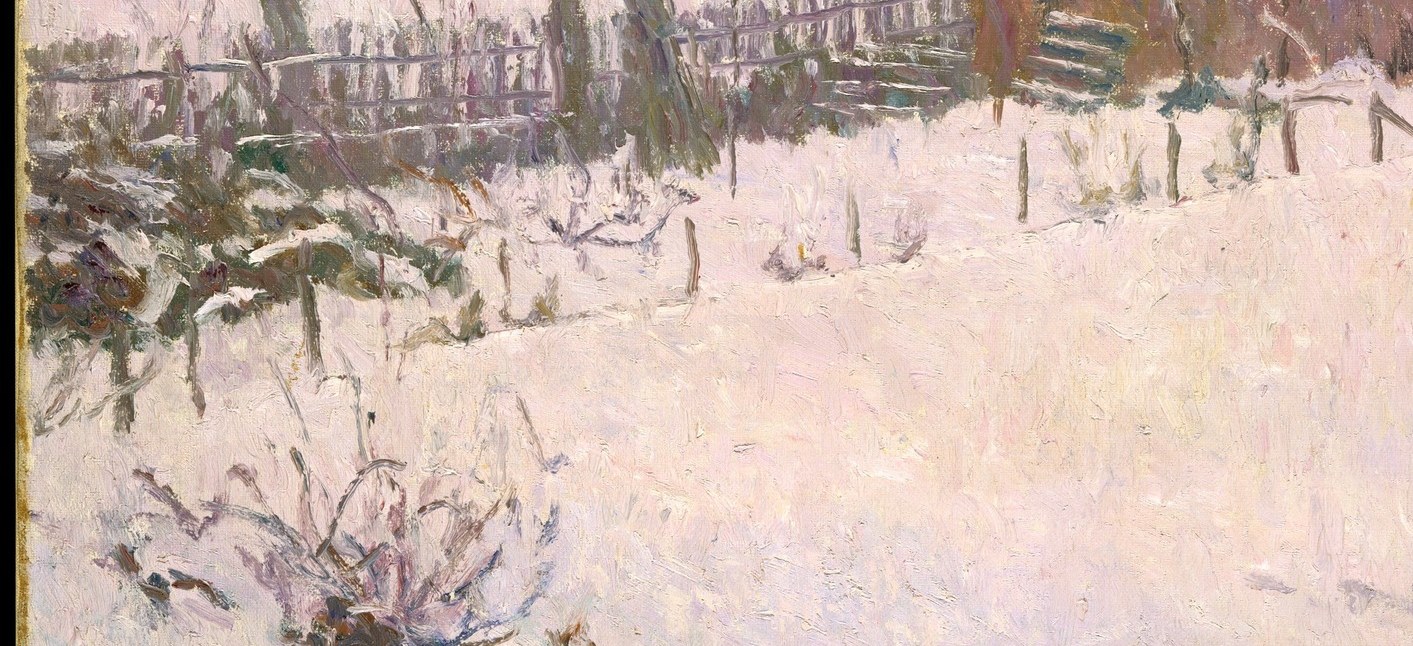
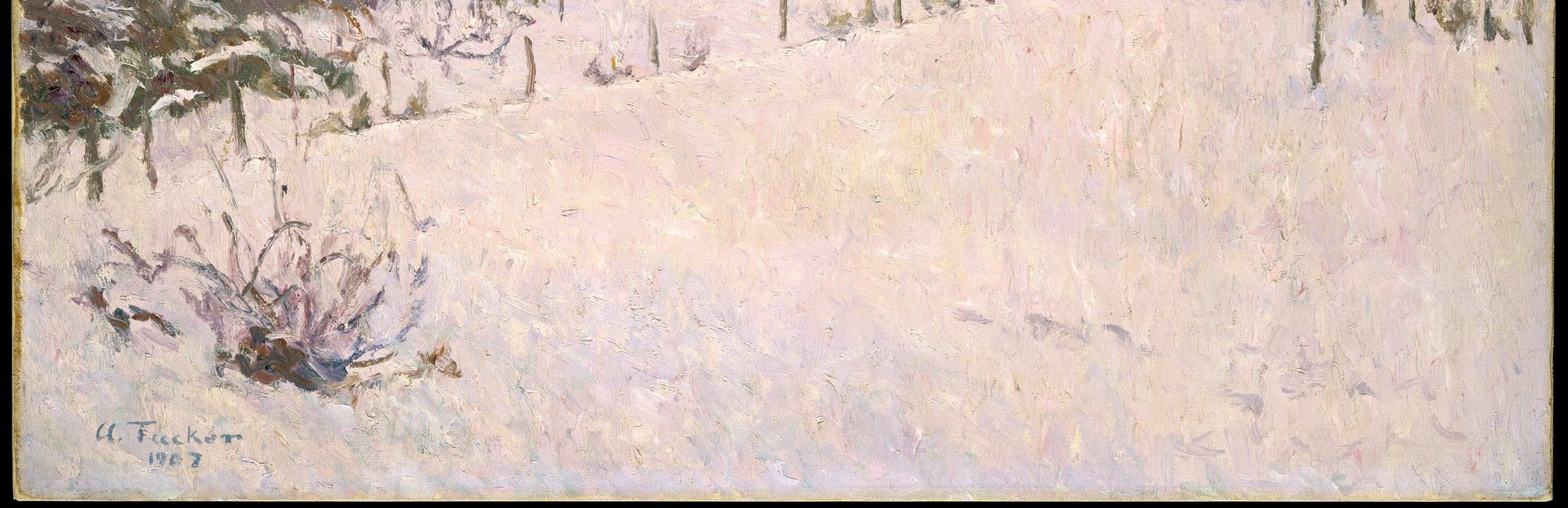
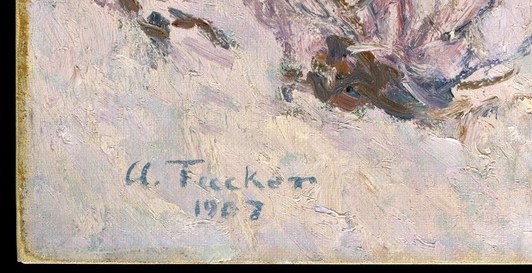
The Met holds a quiet winter secret: Allen Tucker's "Winter at Portland," painted in 1907. It looks almost entirely white from across the room. Step closer and the snow dissolves into lavender, pale violet, and cool blue, the artist's most technically daring move.
Tucker was born in Brooklyn in 1866, and though he's far less famous than the Impressionists he admired, he understood their central lesson: snow is never truly white. He built this entire foreground from thick impasto strokes of non-white color. A close look at the shadow passages rewards the effort.
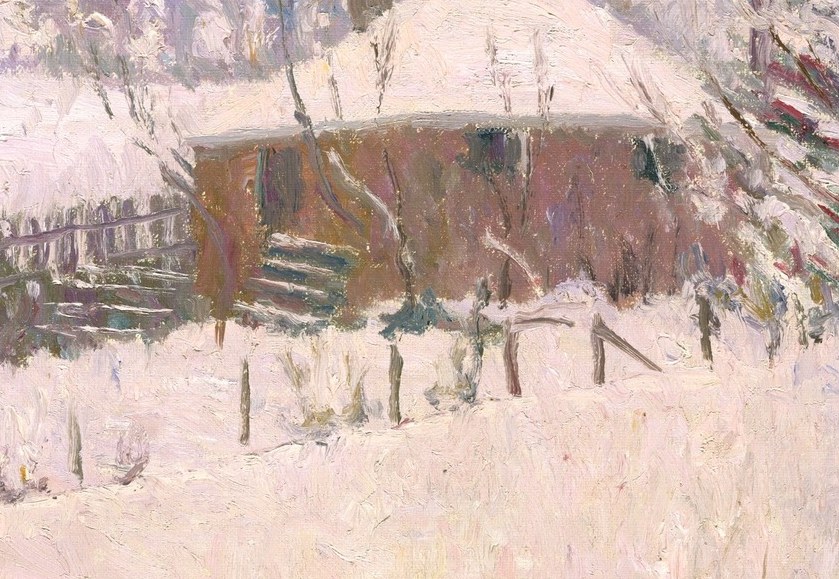
The single warm note is the ochre-red cabin, almost buried in snow, anchoring the eye in a near-white canvas. Beyond it, the hillside and sky dissolve into each other, pale pink and faint violet erasing the horizon line. The result is a diffuse winter light that fills the whole frame.
This was painted just before American art shifted toward modernism, making it a late, lovely example of the tonalist tradition. A whole landscape built from the colors hiding inside white.
Details

Transcript
A New England winter. The kind that swallows sound. The color of the snow is the real subject here. Look close: lavender, pale violet, cool blue strokes. Tucker learned this from the French Impressionists. Snow is never just white. It catches every color in the sky. One warm anchor holds it all: a cabin in ochre-red. Painted in 1907, before modernism upended everything.