清 潘思牧 山水 冊頁八開|Landscapes by Pan Simu
This is a single leaf from an eight-leaf album by the Qing dynasty painter Pan Simu, created in 1821. Titled Landscapes, it lives at the intersection of ink, paper, and disciplined emptiness. Pan Simu was 65 when he painted it, and every stroke carries the economy of a lifetime.
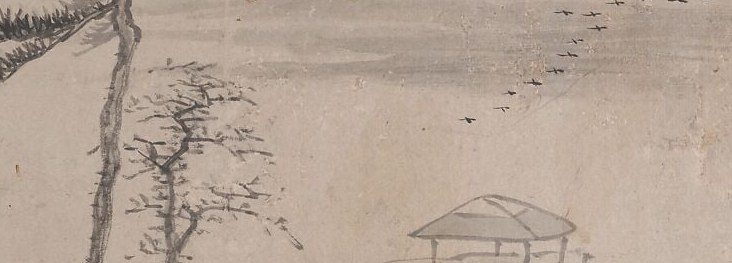
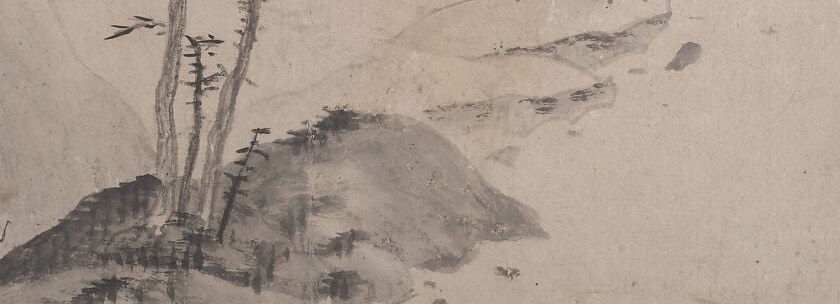
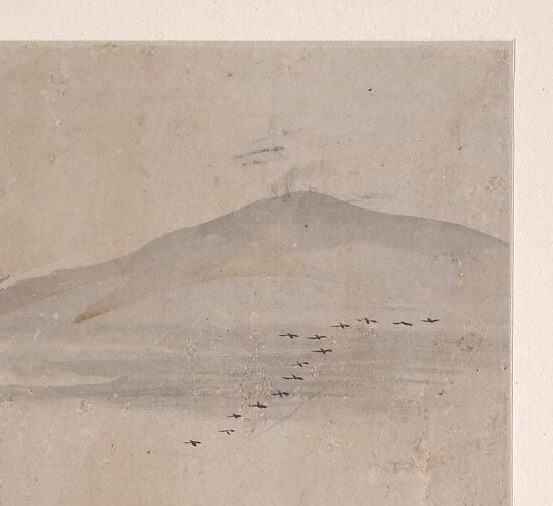
Look at the unpainted band across the middle. That is not a blank. In the Chinese tradition, deliberate white space is called liubai, and it does work: it is mist, water, and infinite recession all at once. Below it, the rocky foreground slope is built with cun, dry-brush texture strokes dragged over a wet wash. Each painter developed a personal cun vocabulary, and Pan Simu's is legible here in the rough, broken marks that become stone.
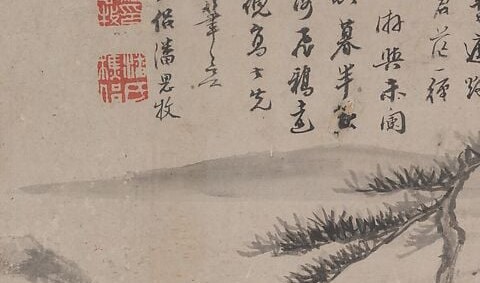
The paired pines anchor the composition, their needle clusters built from short, fast radiating strokes. The tiny flying geese, the distant ink-wash hills, and the small pavilion are all subordinated to the void they frame. This is a landscape that teaches you how to look by refusing to fill itself in.
If you stood in front of this album in a museum, what would you look at first: the void or the pines?
Details
Transcript
Most of this painting is unpainted paper. The blankness is not empty. It is mist, water, and distance. Chinese painters call this liubai: expressive, deliberate emptiness. Now look at the rocky slope below it. Dry, dragged strokes over wet wash build stone texture from nothing. This stroke technique is called cun. Every master had their own vocabulary. And here, the pine needles: speed and pressure made permanent. Pan Simu painted this leaf in 1821, at age 65. The brush knows.