Charles Sheeler and Nina Allender by Schamberg, Morton Livingston
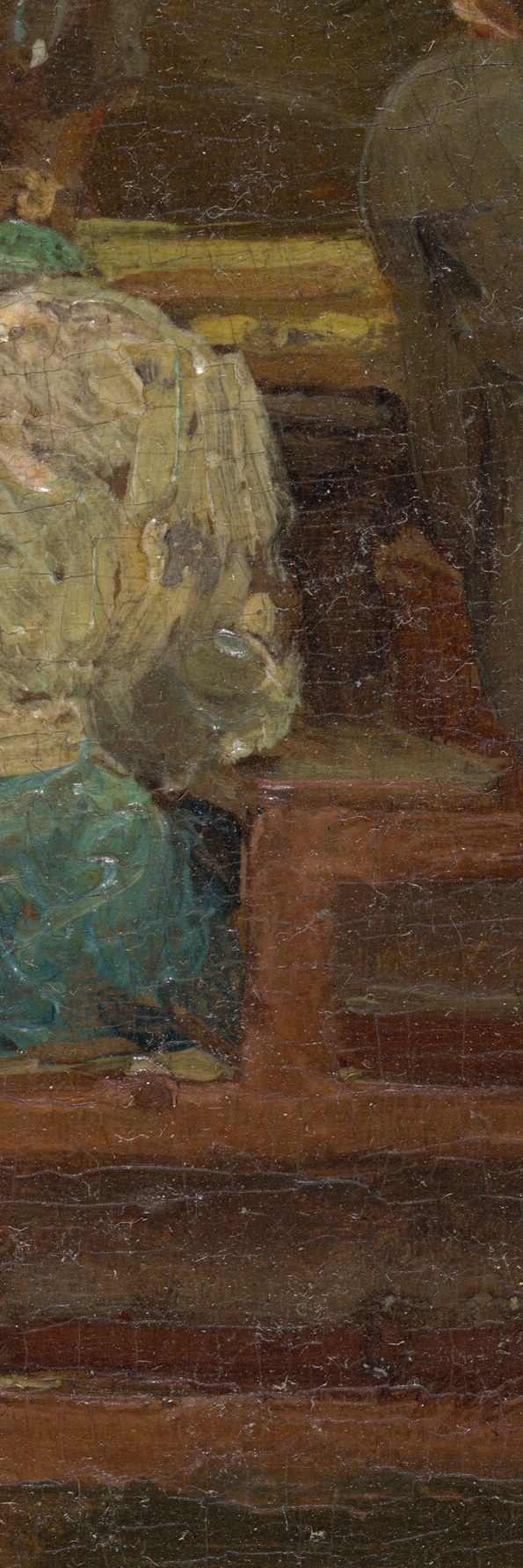
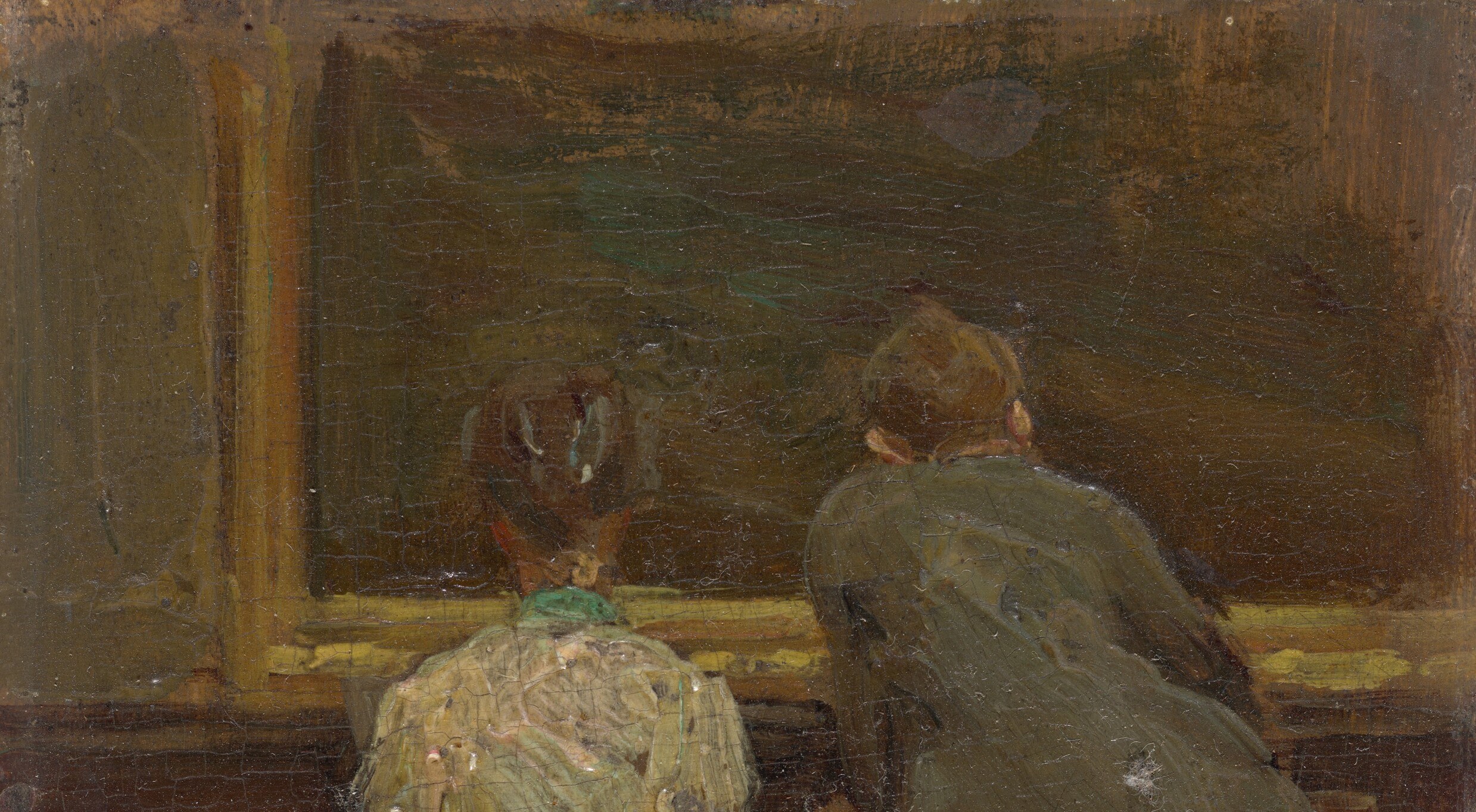
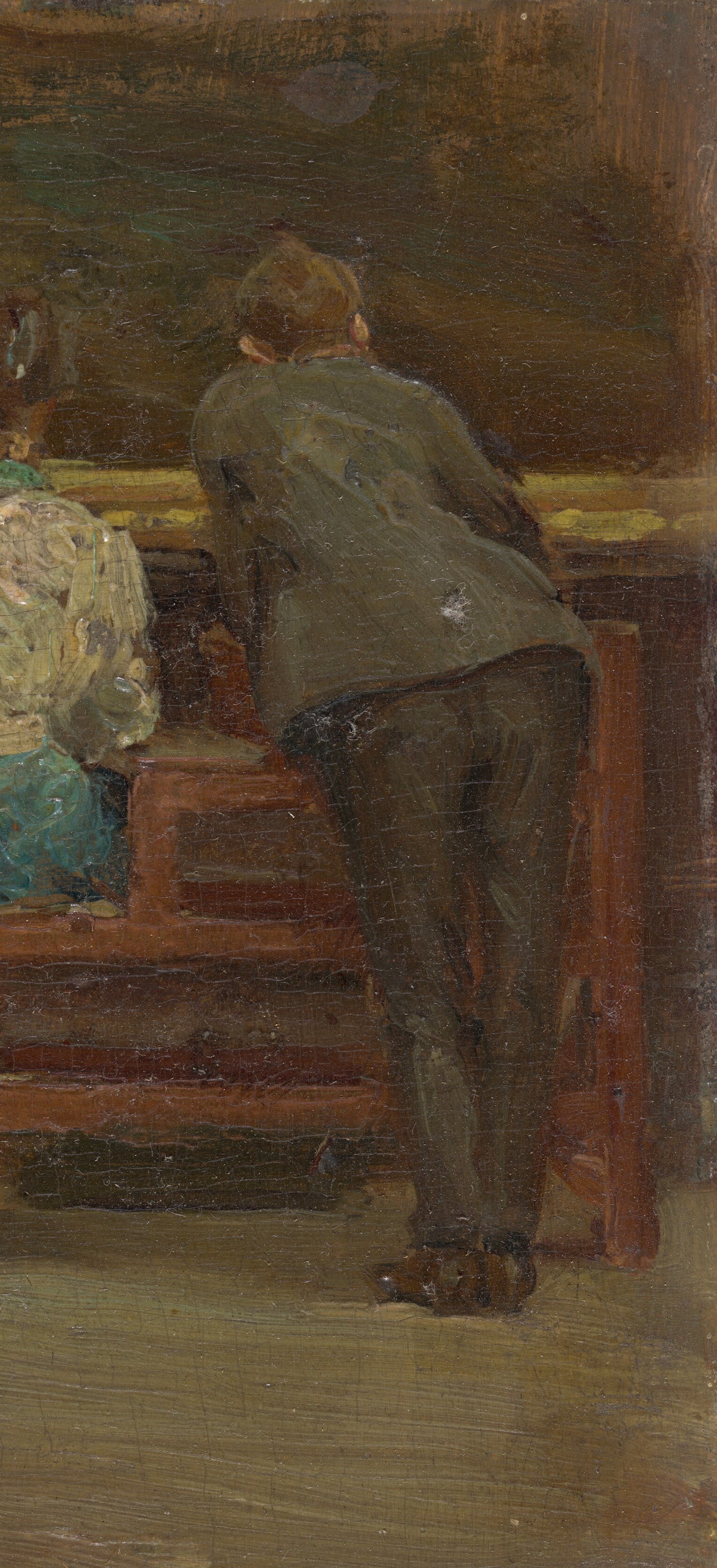
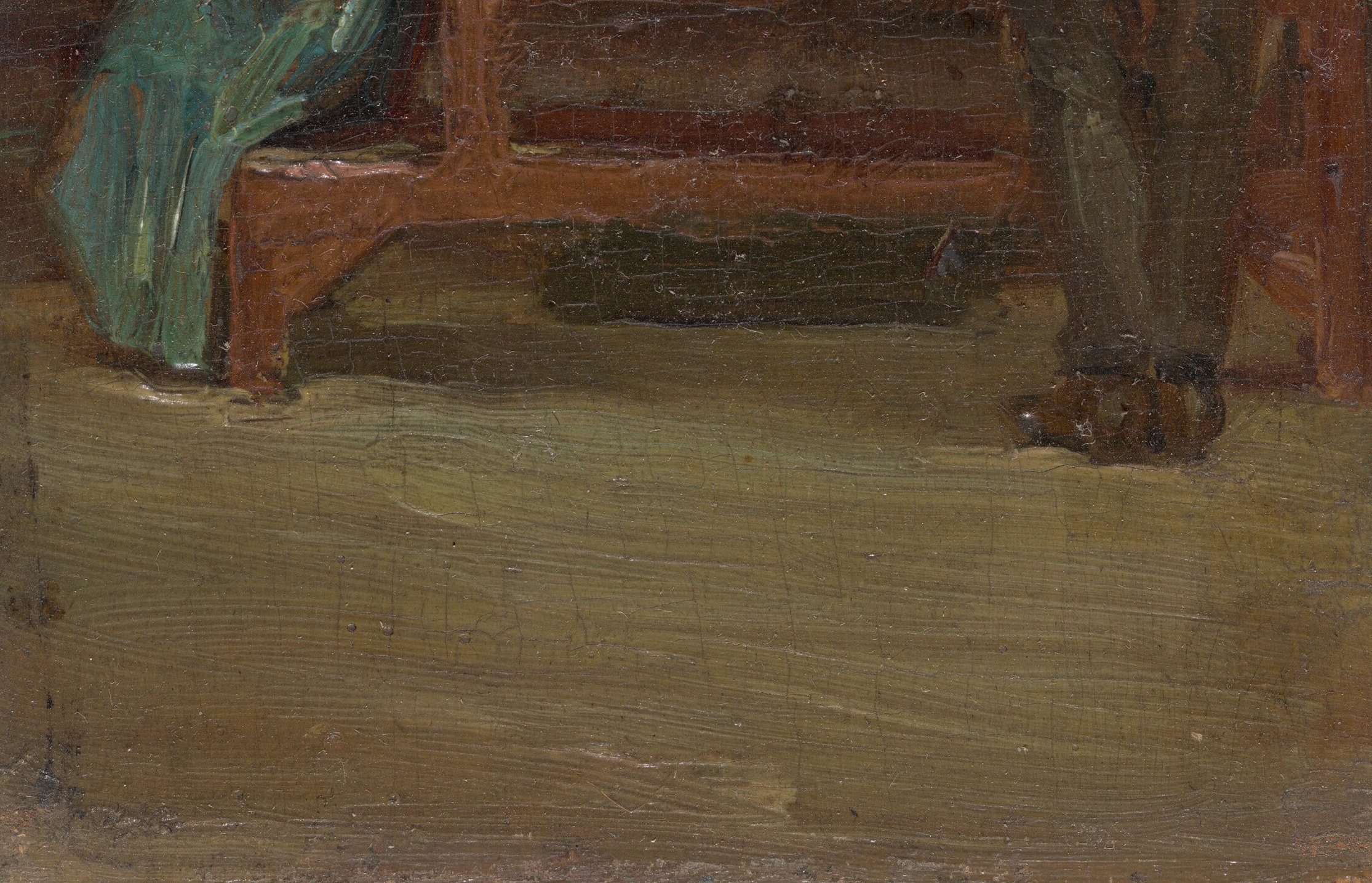
Morton Livingston Schamberg painted 'Charles Sheeler and Nina Allender' around 1906, and he did something almost unheard of in portraiture of that era: he turned both sitters away from us. What remains is a painting about posture, fabric, and the space between two people, a kind of visual biography told from the back.
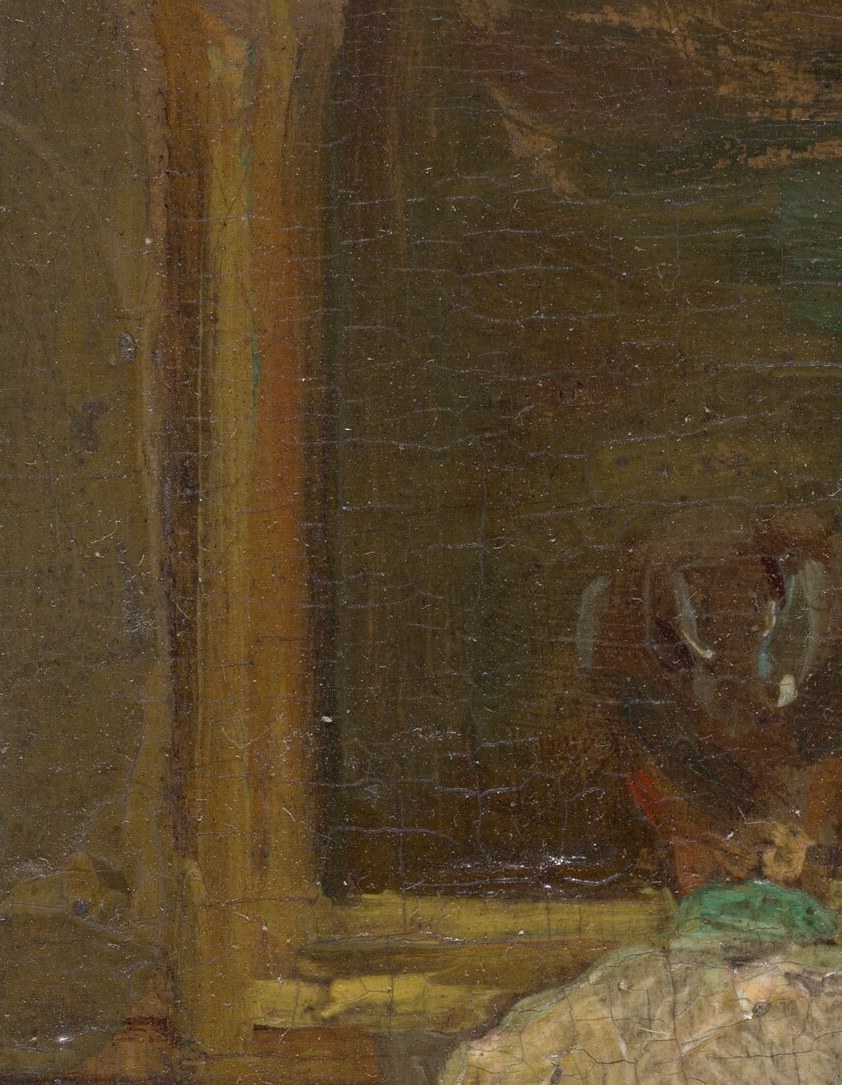
Look first at the hair. Nina Allender's tight upswept Edwardian chignon is her entire readable identity here, a single knot of warm ochre and shadow. Then look at the narrow dark gap between the two figures. They knew each other well, but Schamberg left that sliver of negative space as an unbridgeable psychological distance, coded in paint. The dark panels on the wall behind them strongly suggest a museum interior, meaning these sitters are themselves looking at art while we look at them.
Charles Sheeler would go on to become a defining American modernist and Precisionist photographer. Nina Allender became the cartoonist for the National Woman's Party, her suffrage drawings appearing in weekly broadsides. Schamberg caught them both before that future was public. He himself was a rising modernist, one of the first Americans to explore Cubism and industrial subjects, until his life was cut short by the 1918 influenza pandemic at age thirty-six.
This small oil on wood panel is one of his few surviving portraits. A painting about looking ahead, made by an artist who didn't get to.
Details
Transcript
She sits in teal. He sits in gray. A double portrait with no faces. Her identity is this upswept Edwardian knot. The gap between them is a sliver of dark. They are watching art. We are watching them. Sheeler would become a modernist master. She would lead the suffrage fight. The painter gave us their futures before they could be seen. He died in the 1918 pandemic. This rare painting survived.