Eleanor Wyer Foster (Mrs. Isaac Foster) by Badger, Joseph
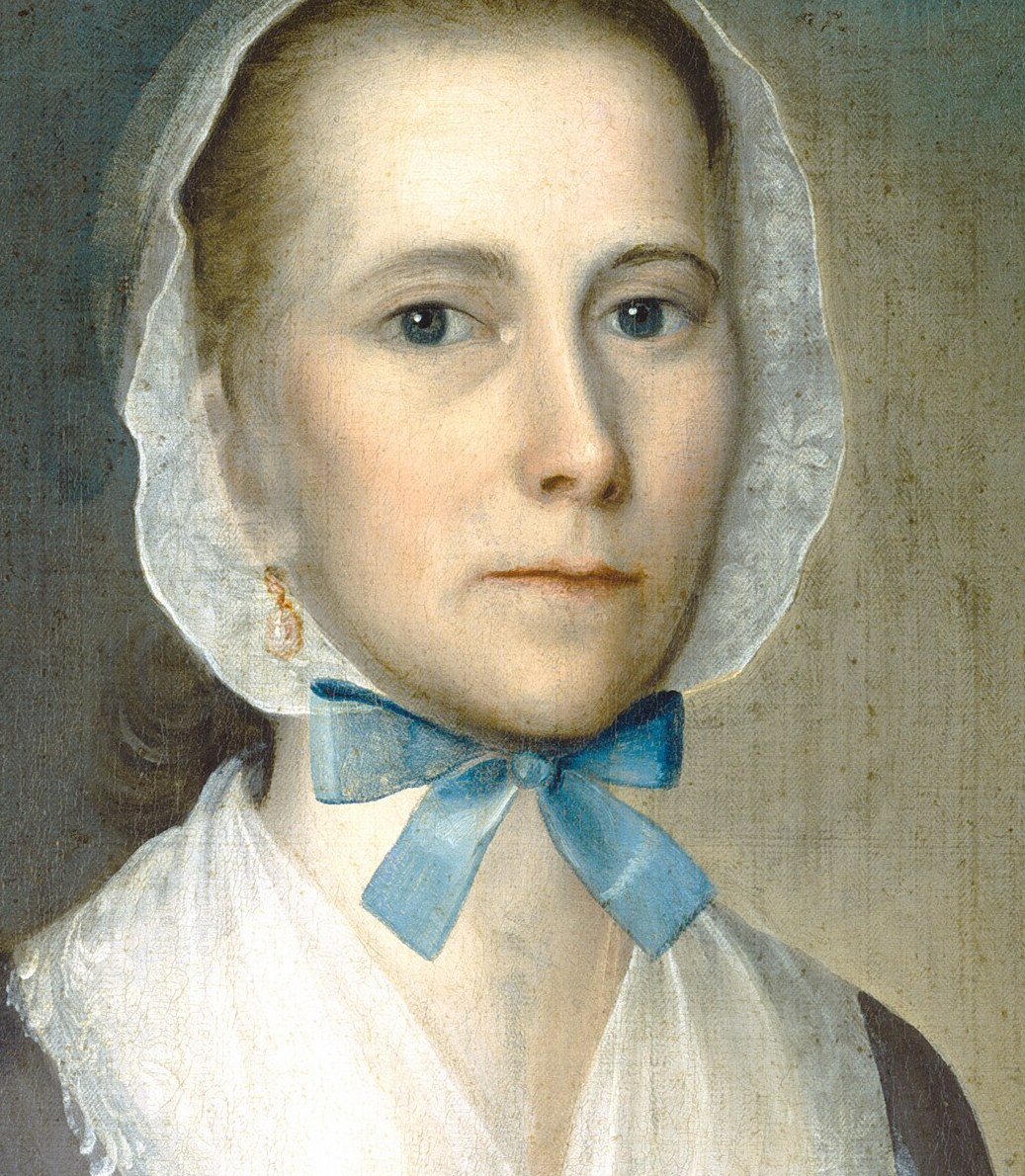
This portrait of Eleanor Wyer Foster by Joseph Badger, painted in 1755, reveals a fascinating detail about colonial American art: its canvas.
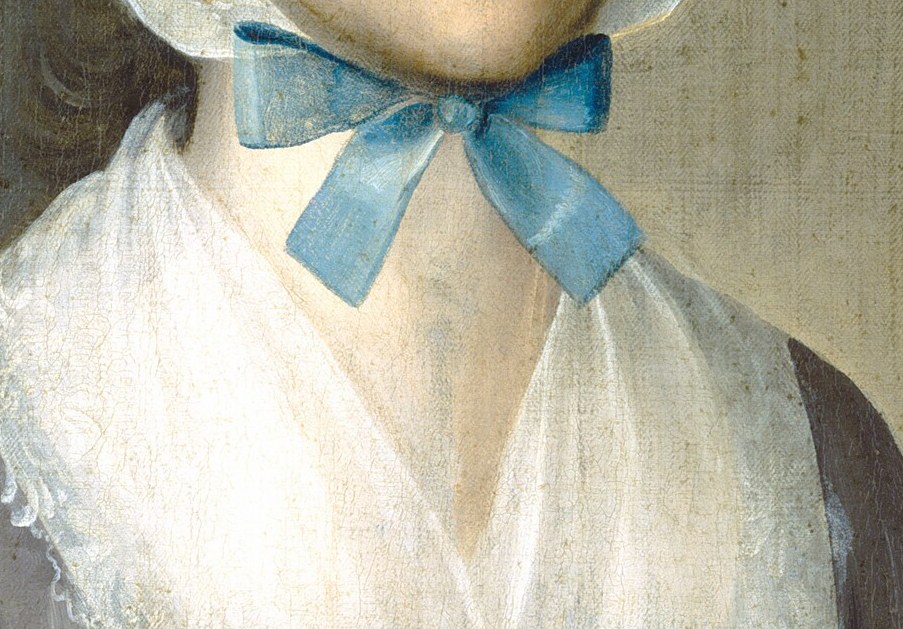
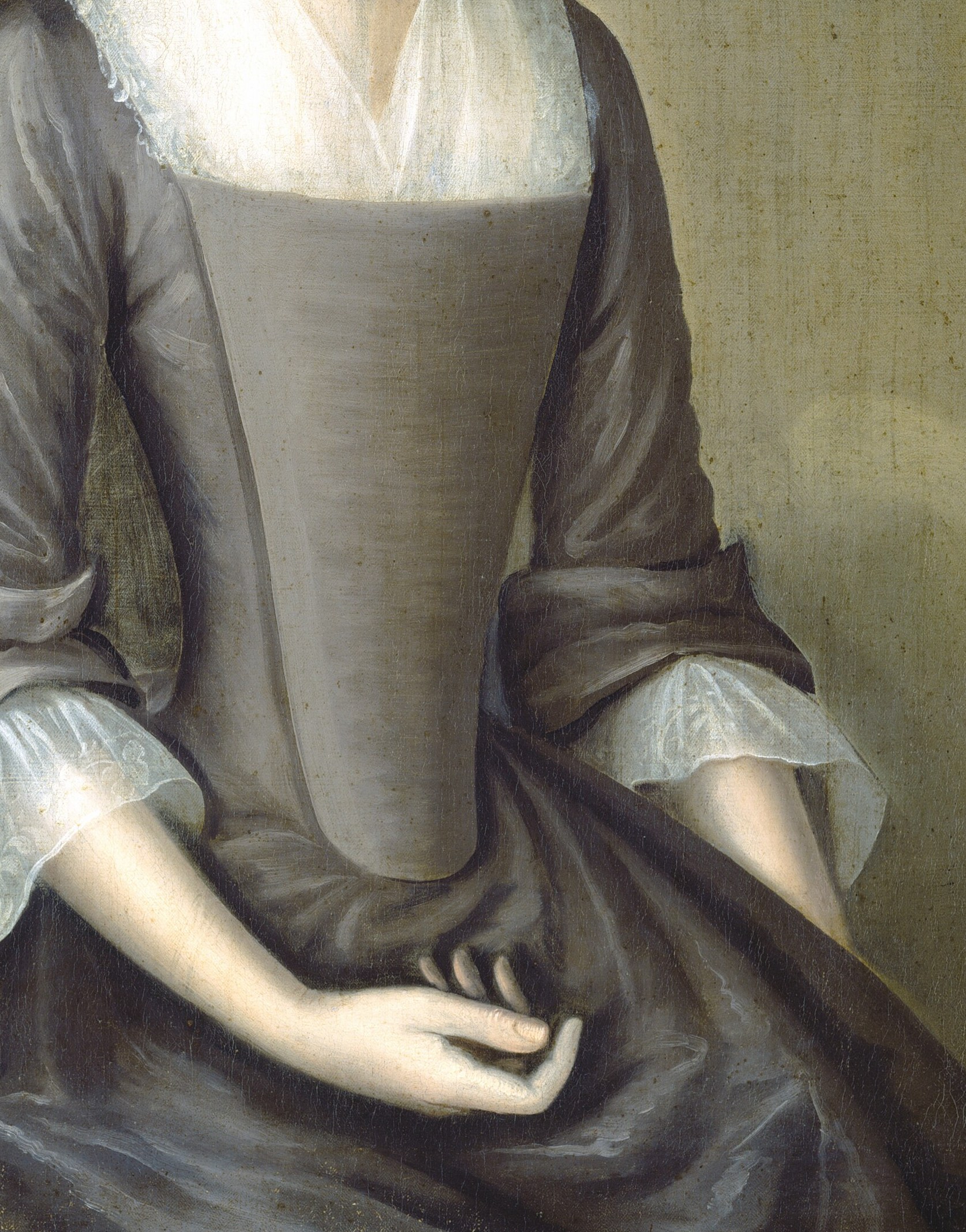
While Eleanor Wyer Foster sits for her portrait with poise and elegance, adorned with a white lace collar and blue ribbon, the true story lies beneath the paint. Look at the subtle texture of her dark gray dress; it hints at the very fabric it was painted on.
Joseph Badger, like many artists in pre-Revolutionary America, often had to make do with what was available. With few dedicated art suppliers, he used an unusual material: bed ticking. This durable fabric, typically used for mattress covers, served as a practical and readily accessible canvas.
This choice of material not only speaks to the resourcefulness of colonial artists but also makes Badger's work a unique historical document, reflecting the conditions of art production in 18th-century Boston. What does knowing this change about how you see the painting?
Details
Transcript
This quiet portrait holds a secret material. She wears a delicate lace collar and blue ribbon. Look closely at the texture of her dress. This painter used an unusual canvas: bed ticking. Pre-Revolutionary America had few art suppliers. Artists often painted on whatever fabric they could find.