Vrouw uit Wadwaay by http://www.wikidata.org/.well-known/genid/a5371e3514fb11170163eb6e6cbb2519
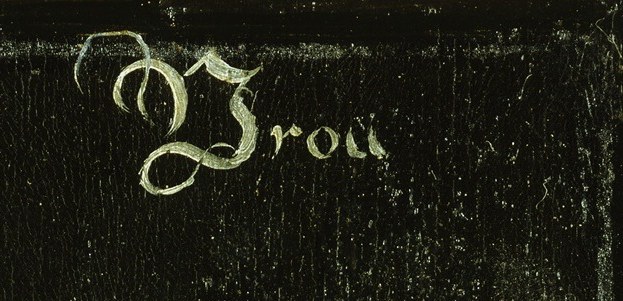
A Dutch panel painting carries two words above its subject: Vrouw. Weduwe. Woman. Widow. The painting is "Vrouw uit Wadwaay" (Woman from Wadwaay), by an unknown artist, circa 1550. Its present whereabouts are unrecorded.
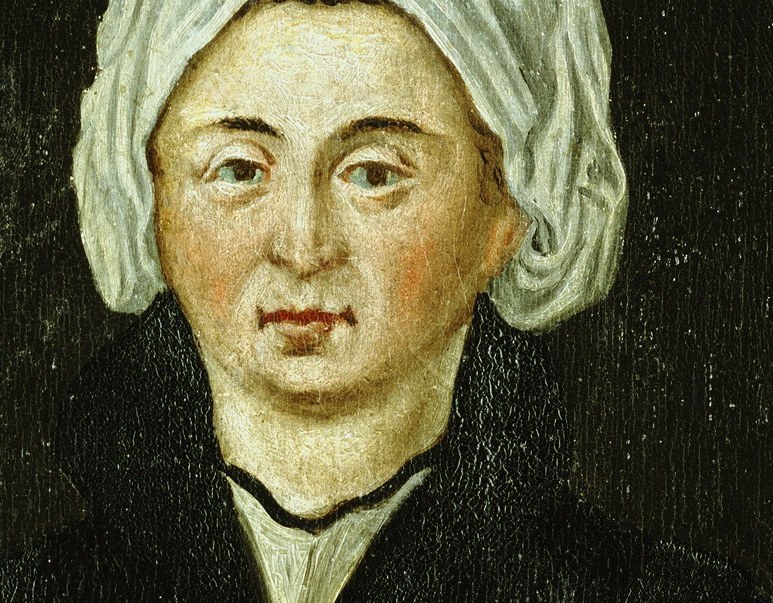
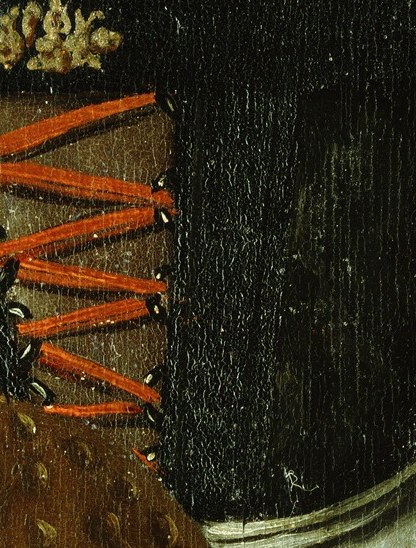
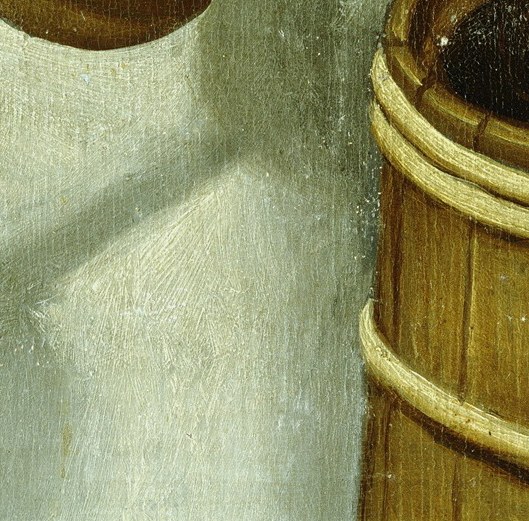
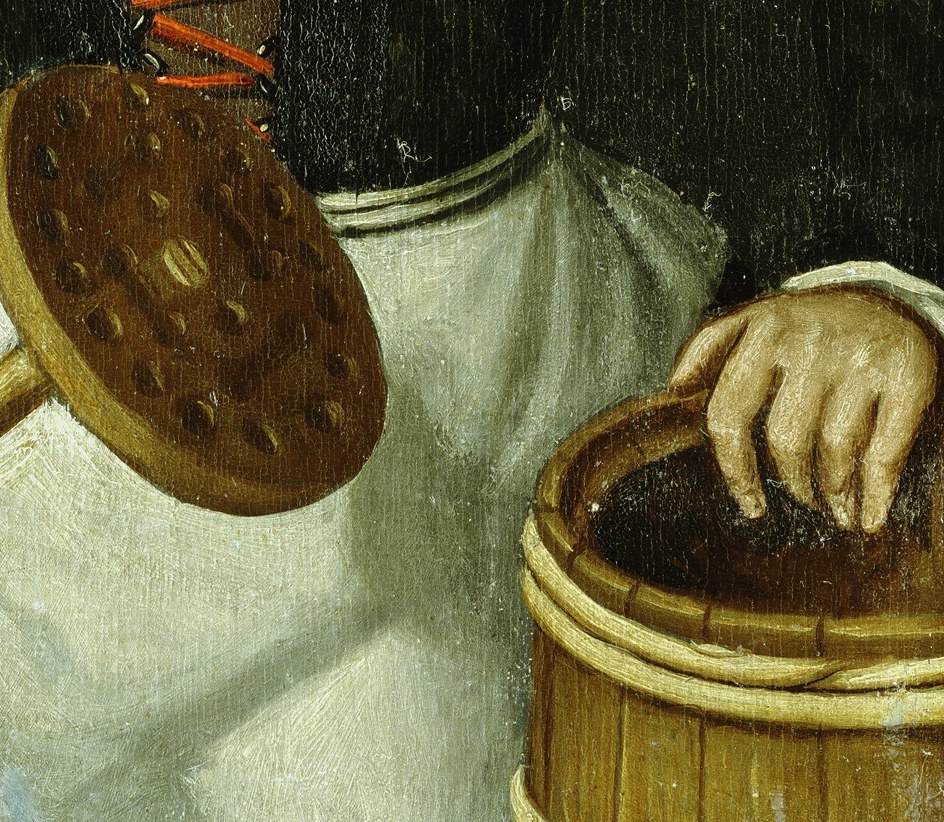
Look first at those inscriptions at the top of the panel. Then let your eye drop to the woman herself: a steady, direct gaze, the white cap and black dress of mourning, and one stroke of unexpected color, red lacing drawn tight across her bodice. In her left hand she grips a wooden paddle, mid-task.
The work belongs to the tradition of Dutch genre painting that recorded everyday life and regional custom. Painted on panel with clear outlines and restrained modeling, it prioritizes narrative over virtuoso technique. The artist is unknown. So is the woman's name. The painting tells you she is a widow from Wadwaay. That is all.
She looks straight at the painter, and now at us. A widow, a worker, a face without a name. What do we lose when we record only the category and not the person?
Details
Transcript
Two words are painted above her head. Weduwe. It means widow. Her face is still. She looks straight at you. Red lacing. One flash of color in all this black. A working widow. The paddle in her hand.