Saint John the Evangelist on Patmos by Titian
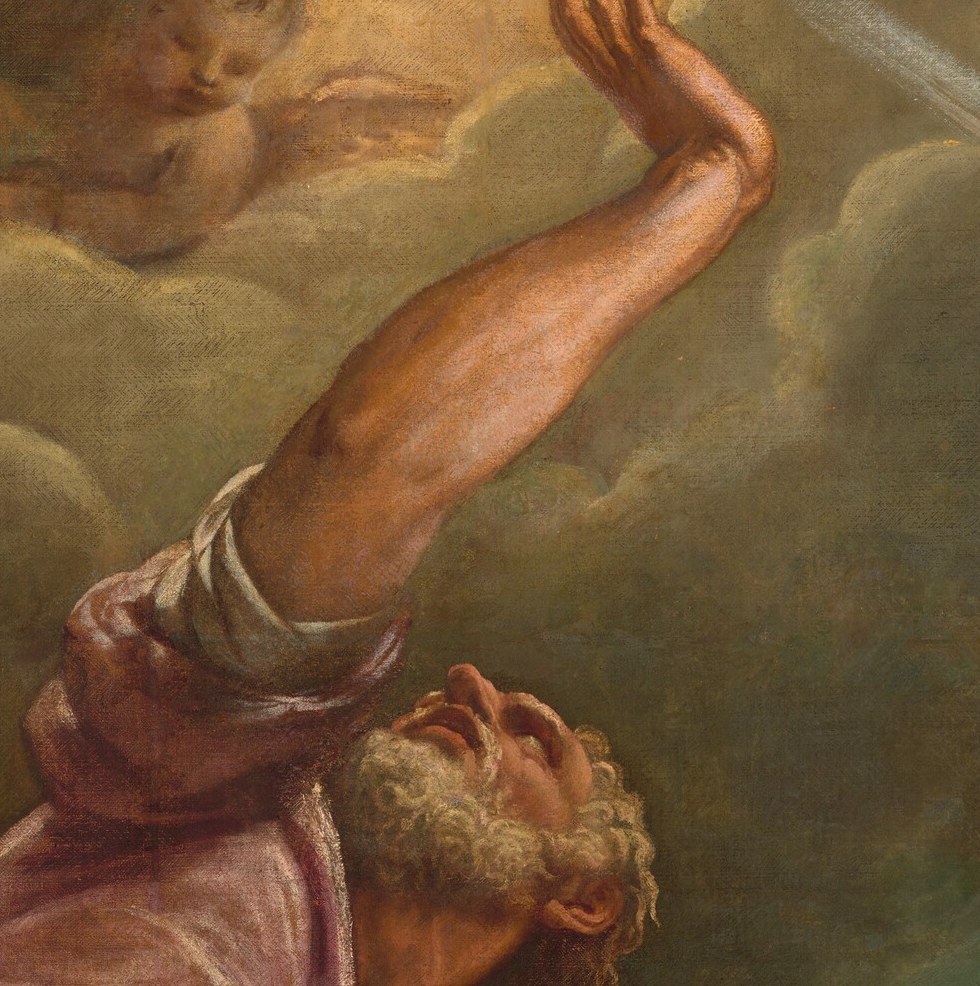
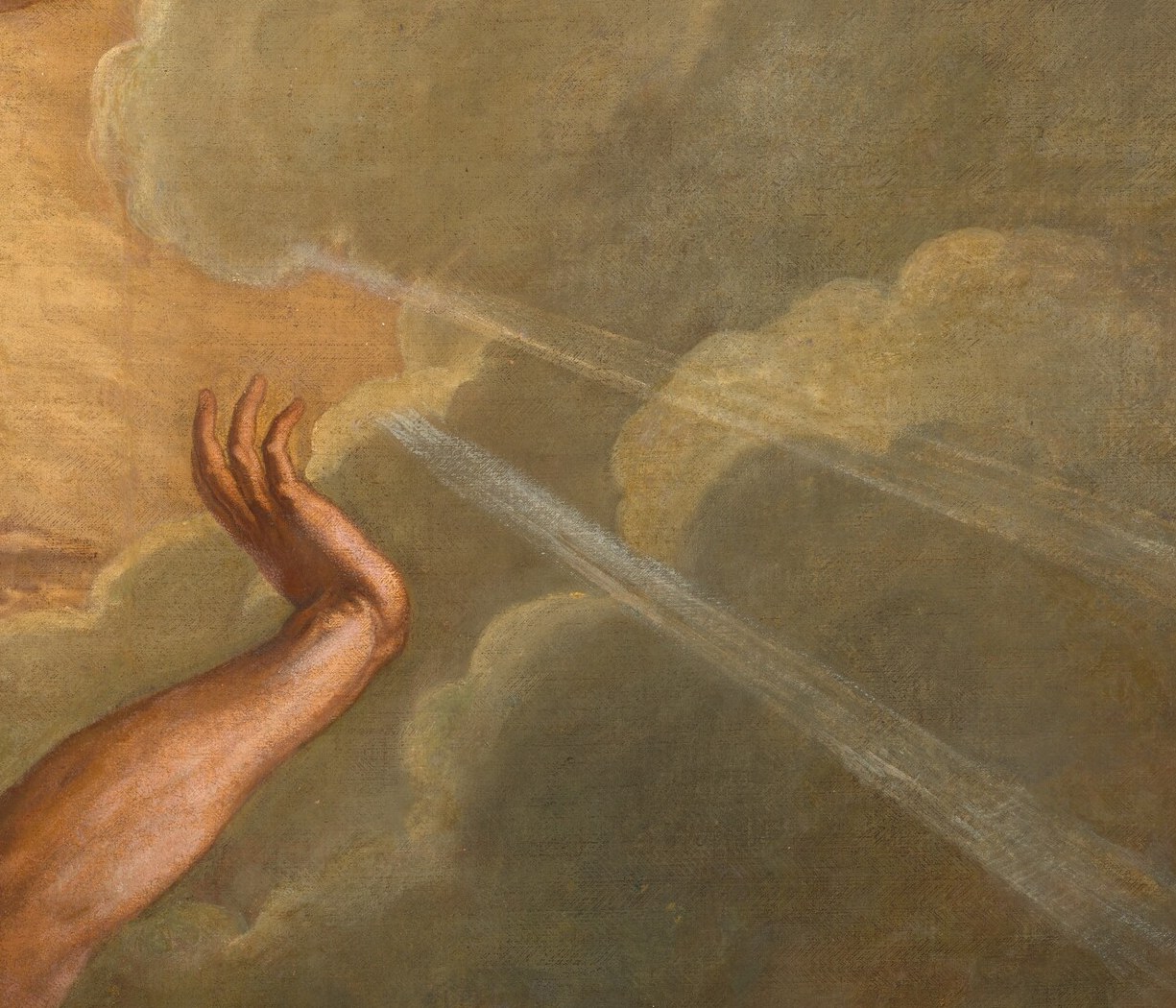
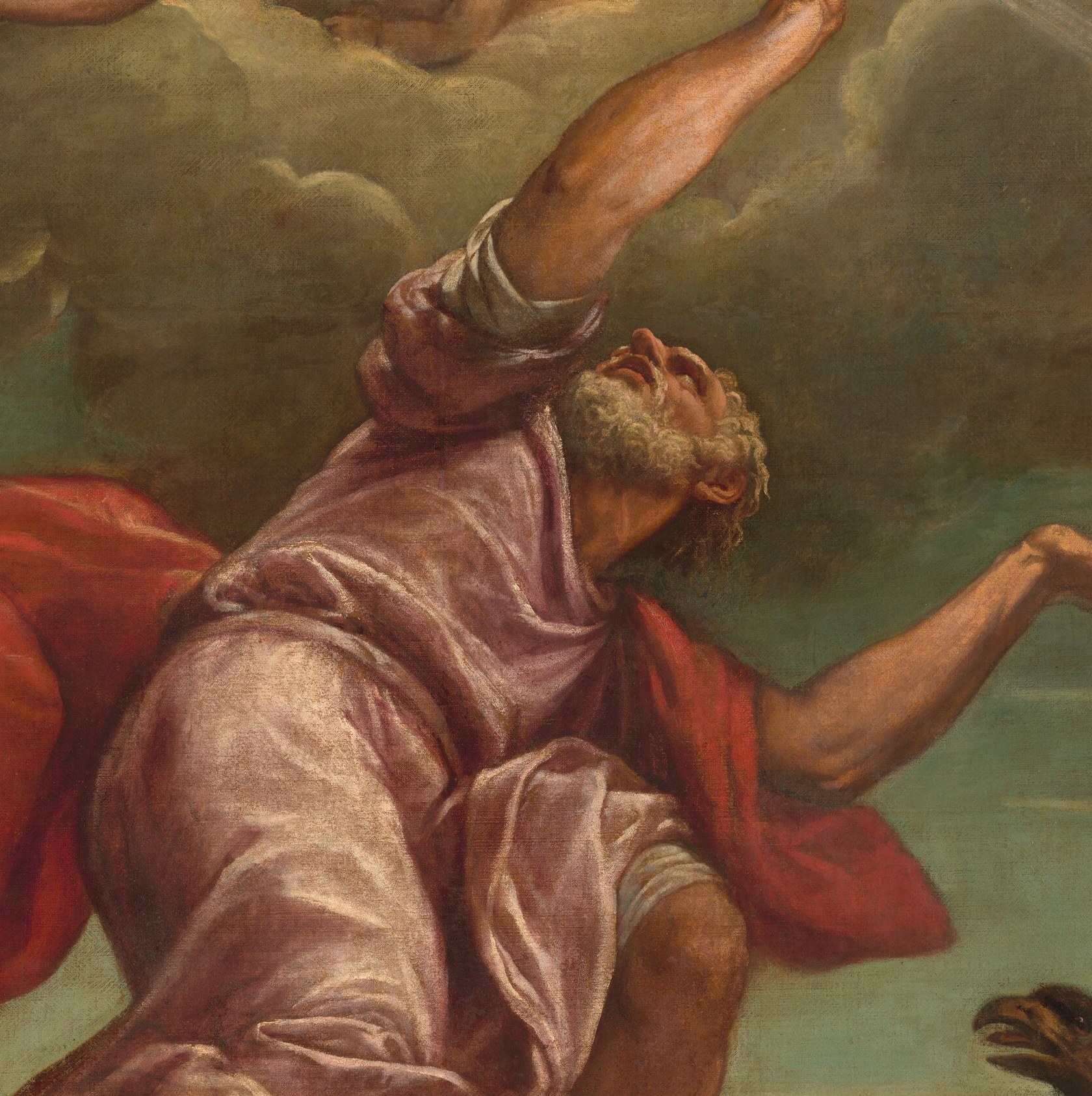
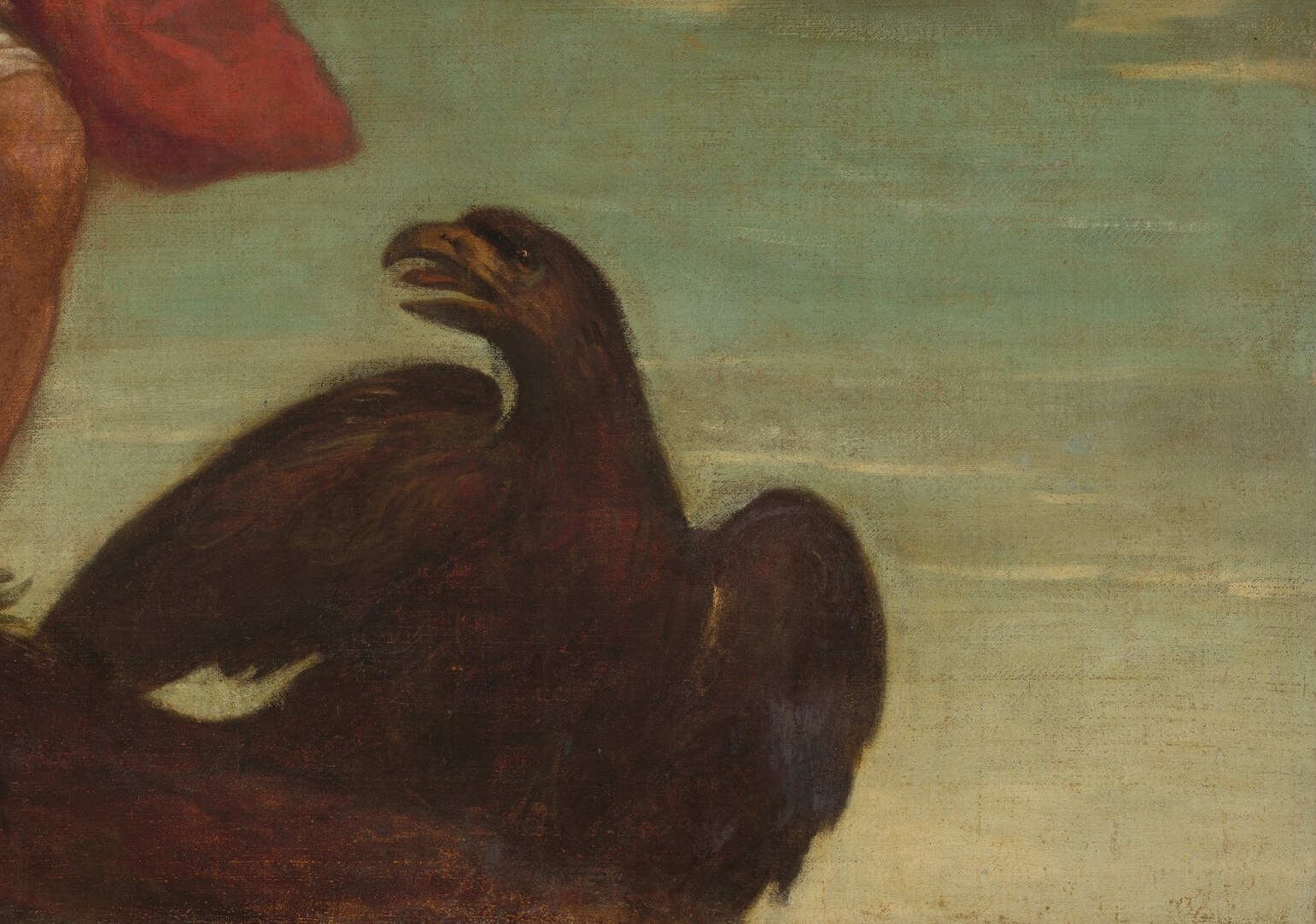
Saint John the Evangelist on Patmos, painted by Titian around 1553, hangs today in the Kimbell Art Museum. John is shown in exile on the Greek island of Patmos, receiving the divine visions he would write down as the Book of Revelation. His upturned face and the burst of warm light in the upper right are the drama. But the real fireworks are in the paint itself.
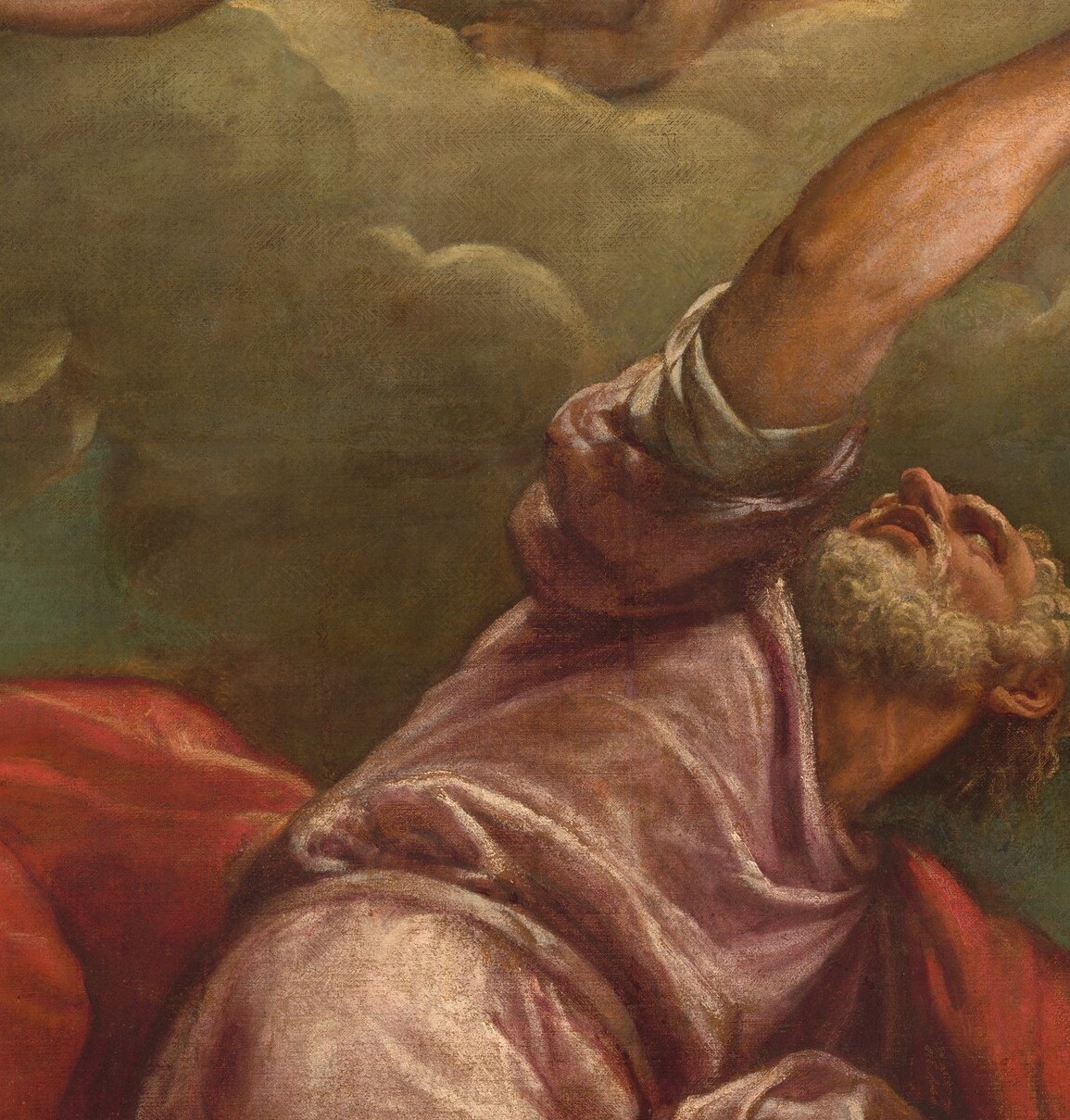
Zoom in on the white robe across his shoulder and chest. What looks from a distance like luminous folded fabric resolves, on closer inspection, into individual strokes of thick oil paint, some laid on with a single flick of the brush. Titian has stopped trying to hide the fact that this is paint on canvas. The strokes sit proud of the surface, catching actual gallery light.
Titian was nearly seventy when he painted this. He had spent a lifetime mastering the smooth, blended finish that made Venetian painting famous. But in his final two decades he took a radical turn: he began building form out of visible, broken brushwork, dabbing and scumbling color directly onto the canvas and letting the viewer's eye do the blending. Contemporaries called it his 'late manner,' and it baffled some of them. The painter Palma Giovane wrote that Titian would work with 'daubs of color, so coarse that close up nothing could be seen.'
Art historians now see this late work as a bridge to the future. The loose, open brushwork that Titian developed here would echo through Velázquez, Rubens, and eventually the Impressionists. What looked like unfinished roughness to his own century turned out to be the beginning of a new way of thinking about paint, not as a window onto a scene, but as a physical substance with its own expressive power. Next time you stand in front of a late Titian, step as close as the guard will allow. Then step back. Watch the chaos resolve into light.
Details
Transcript
A saint on a rocky island, staring into light. This is Titian, around 1553. He's nearly seventy. A painter who spent sixty years mastering how light falls on skin. But late in life, he stopped blending. He let the strokes show. Look at that white robe. Those aren't smooth surfaces. You're seeing individual flicks of the brush, thick white paint just sitting there. Up close, it looks like chaos. Step back, and it becomes pure light.