The Chariot of Apollo by Odilon Redon
Odilon Redon's 'The Chariot of Apollo' (c. 1905) is now in the Musée d'Orsay. Redon spent the first half of his career making only black-and-white charcoals and lithographs, his 'noirs.' When he finally turned to color around 1900, he painted not the world but the inside of a dreaming mind. This is not an illustration of myth. It is the feeling of glimpsing something luminous from the corner of your eye.
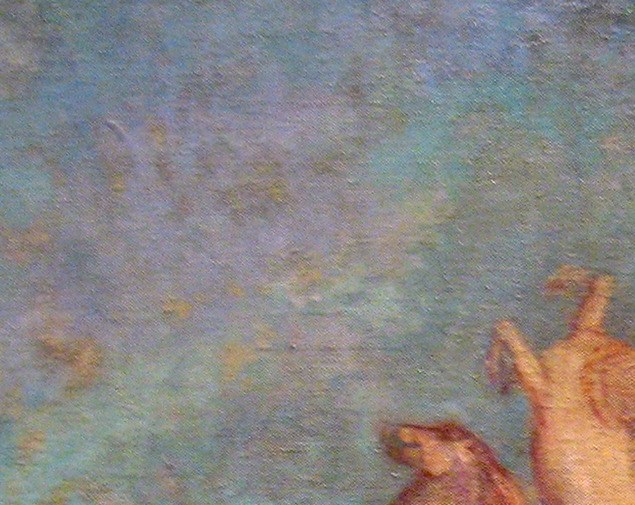
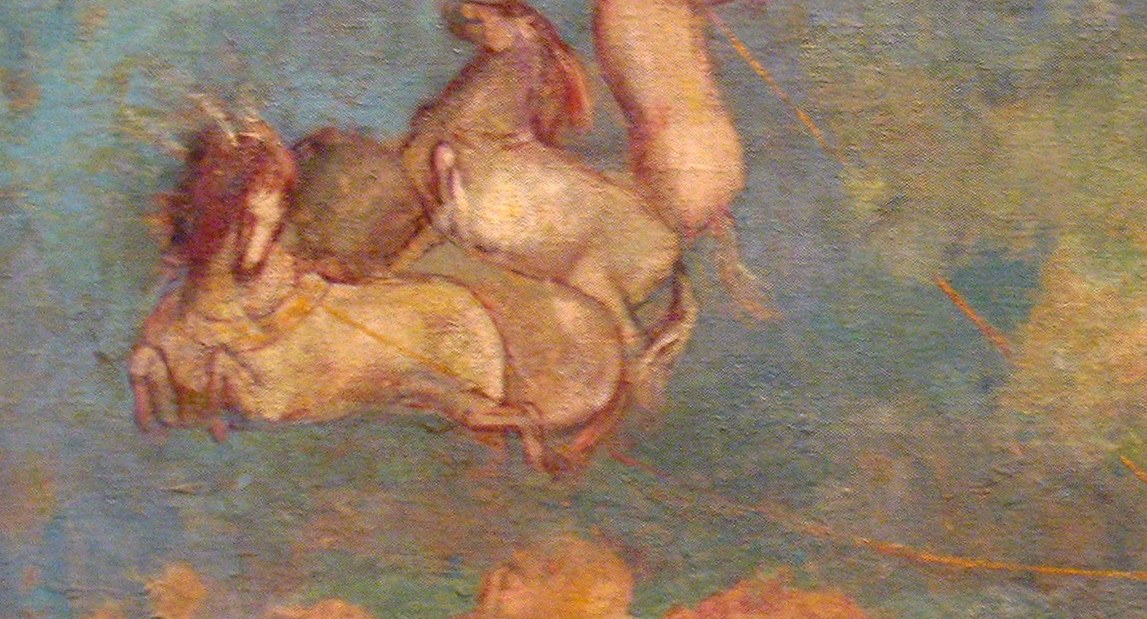
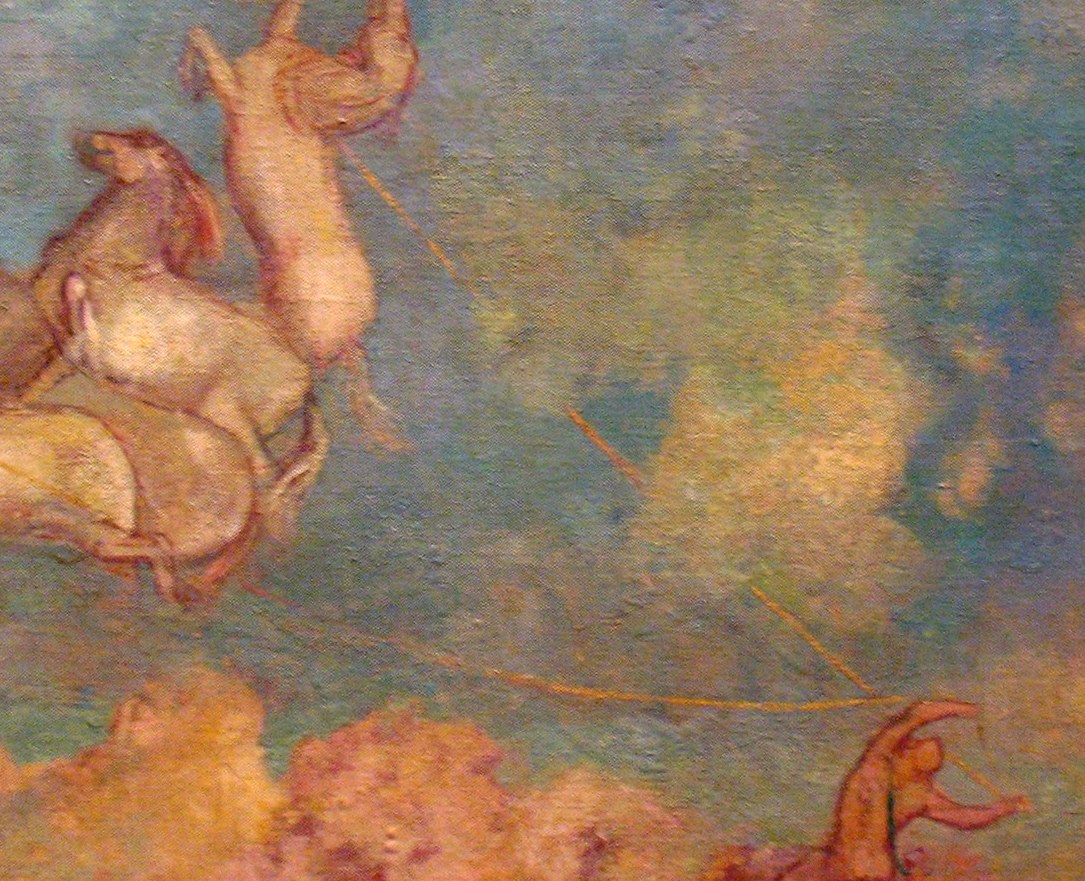
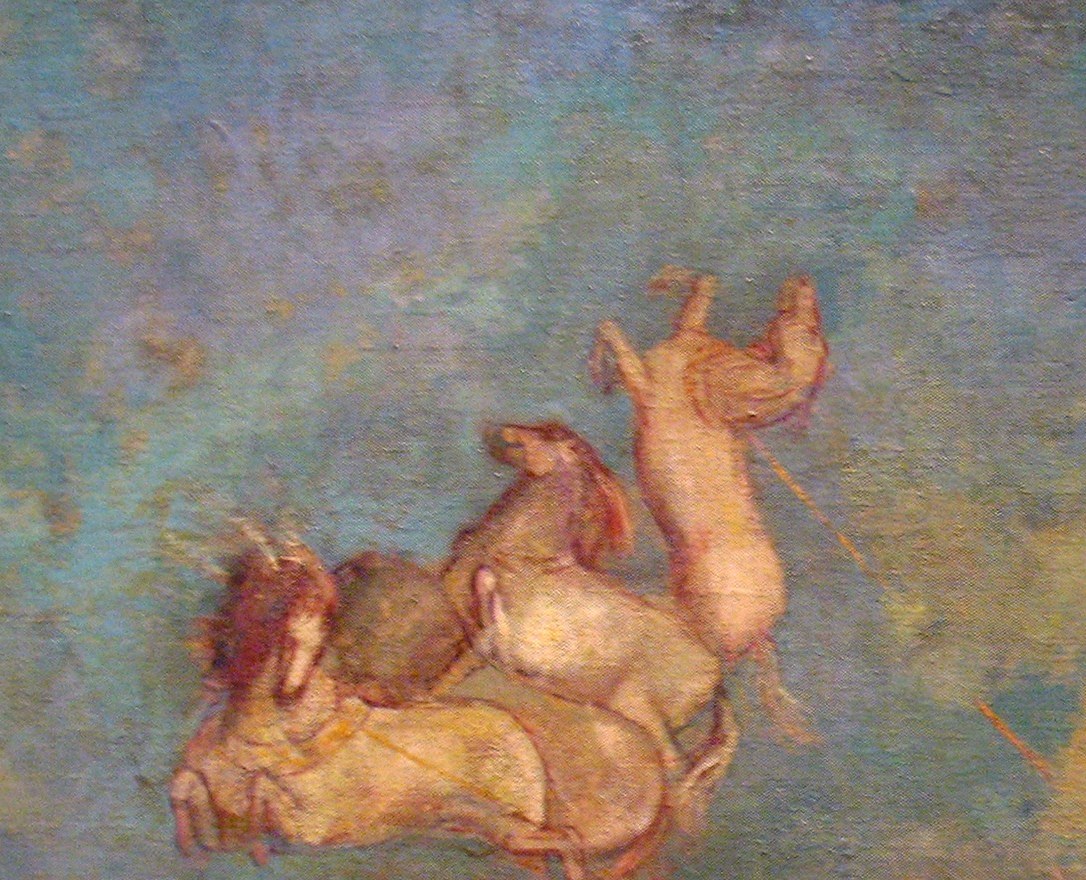
Watch the boundary where white horse dissolves into peach cloud. Redon does not draw an outline and fill it in. He builds up thin, dry, layered strokes until a muzzle or a flank emerges from colored haze, and then he stops, leaving the form half-realized. The painting's subject is that dissolve: matter becoming light, solid becoming atmosphere.
Apollo drives the sun across the sky. Below, a barely visible mortal lies on the earth, arm reaching upward. The gesture matters less as story than as scale: the chariot is enormous, radiant, unreachable. Redon gives you the ache of looking at something divine from the ground.
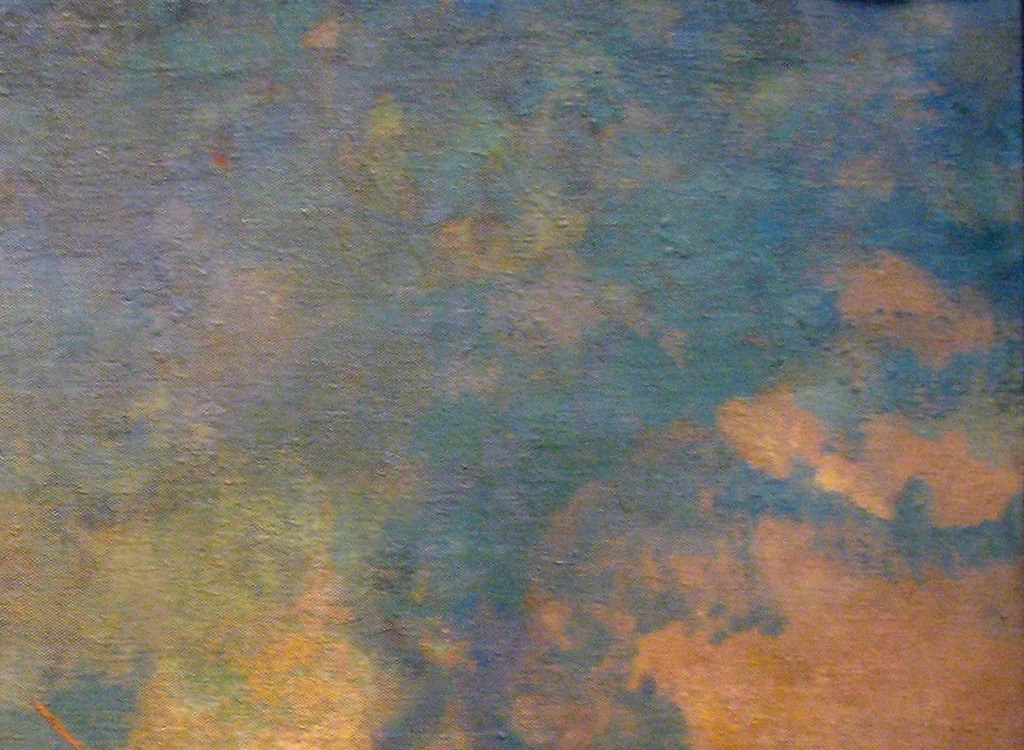
The sky's colors, teal, blue-green, gold, pink, are not weather. No real sky looks like this. Redon was a Symbolist, and for him color carried emotion the way a chord carries feeling in music. The warm gold center is Apollo's presence, not his portrait.
What do you make of a painting that shows you a horse and then, while you are still looking, dissolves it into paint?
Details
Transcript
A chariot, two horses, a god, all barely there. Redon painted this around 1905. He was sixty-five. The most solid thing: a warm muzzle against blue sky. But follow the neck down. Now look where horse meets light. The animal does not end, it turns into paint. A body becoming atmosphere, in oil on canvas.