Saint Giles with Christ Triumphant over Satan and the Mission of the Apostles by Miguel Alcañiz the Elder
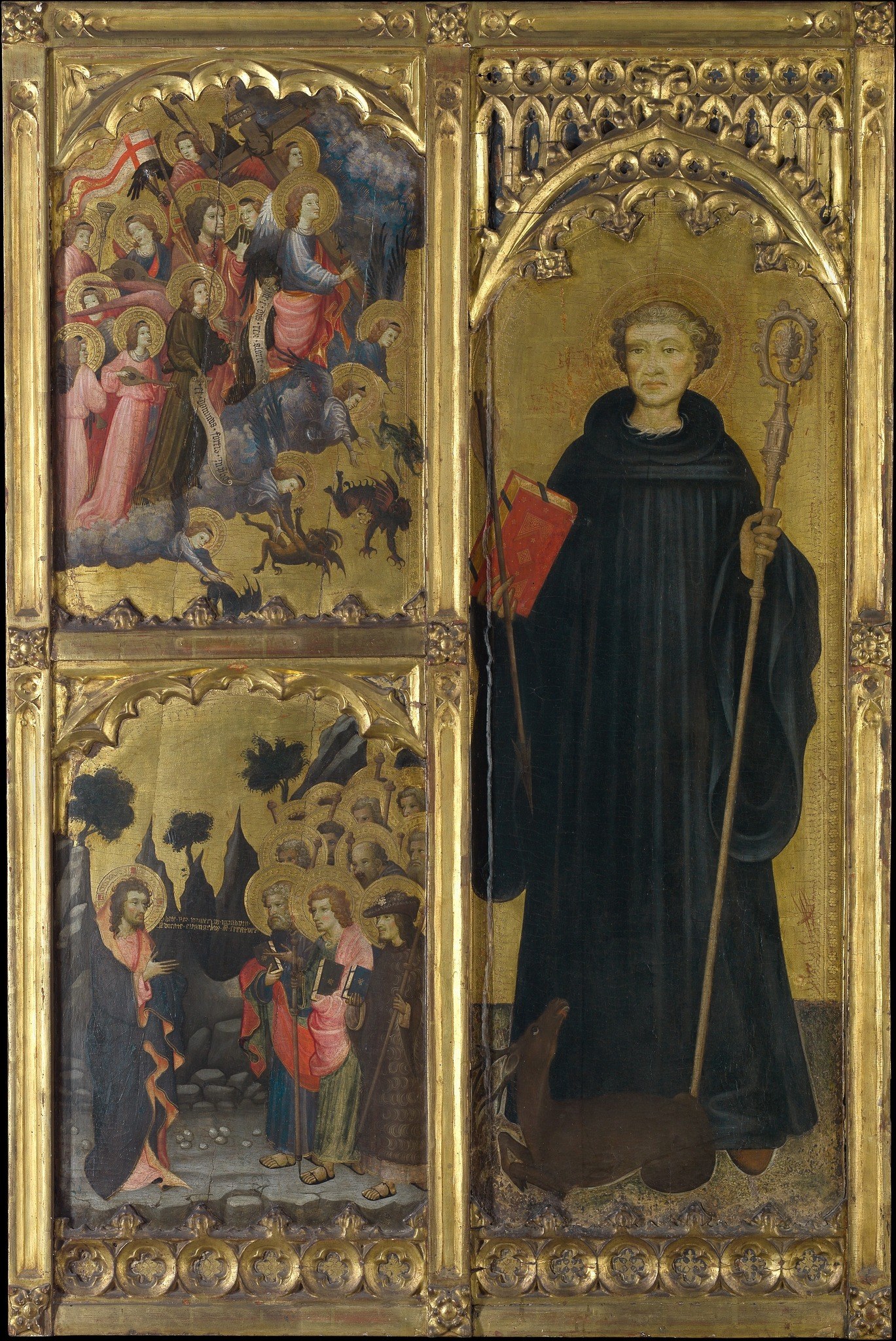
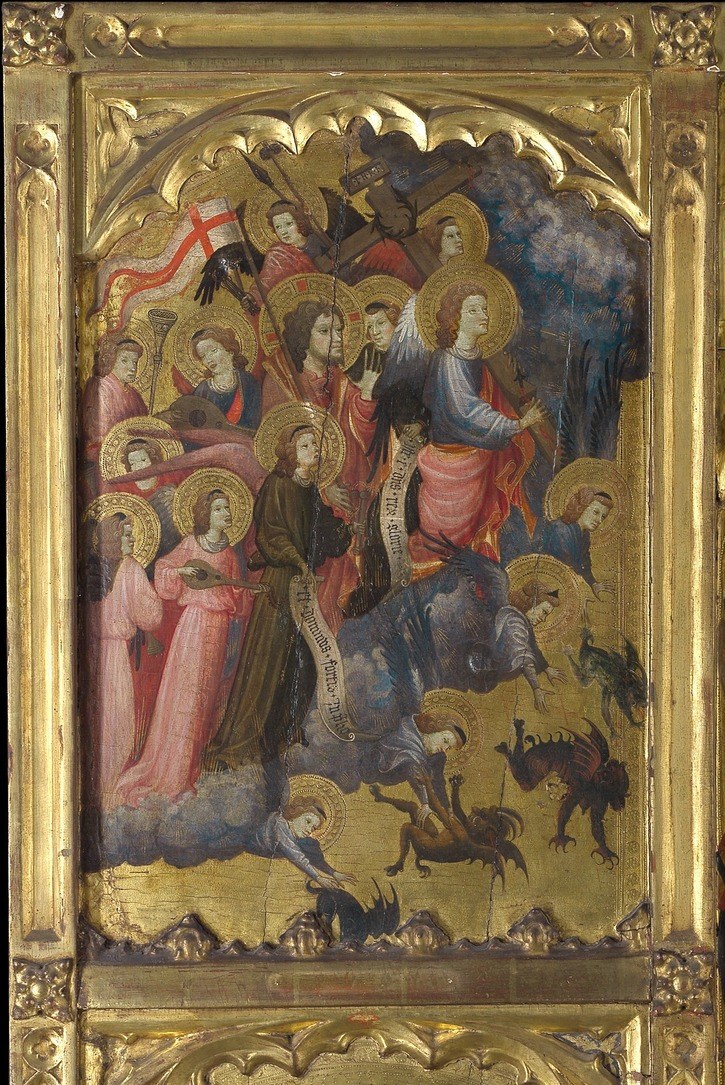
This is the Saint Giles altarpiece, painted by Miguel Alcañiz the Elder in Valencia in 1408. It hangs at The Metropolitan Museum of Art, where the gallery lights can only hint at what it was built to do.
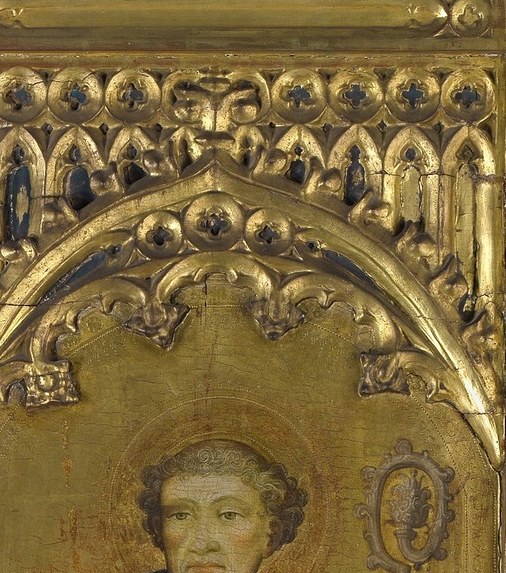
The entire work is tempera on a gold leaf ground, real gold, hammered thin and laid down in sheets before a single figure was painted. The surface was then burnished with a hard tool until it reflected light like a still pool. In a candlelit church, every flicker would have moved across the gold, making the sacred scenes appear to shimmer with their own light. The saint's oversized gilded halo was engineered as pure reflector: a disc designed to catch every flame in the sanctuary.
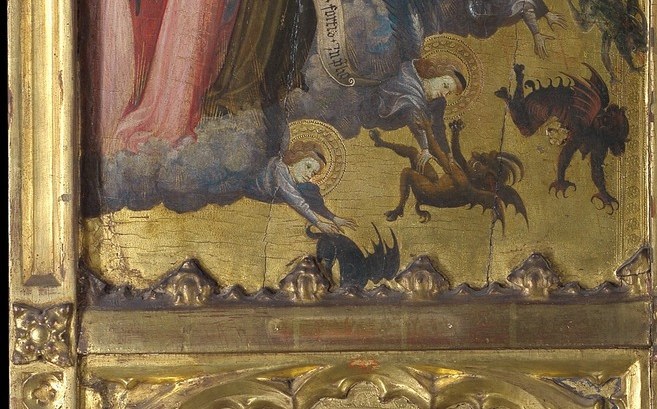
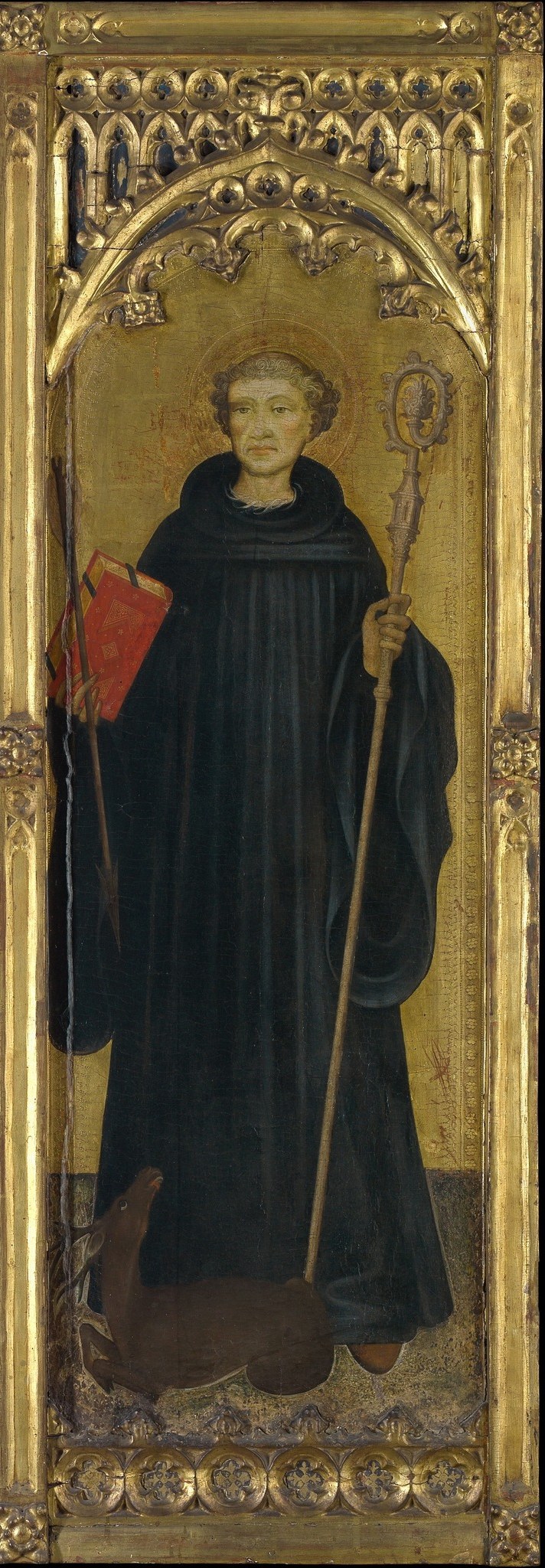
The imagery works in sequence. At top left, Christ stands victorious over a dragon-like Satan crushed beneath his feet, a detail nearly invisible from a distance, rewarding anyone who steps close. Below, apostles receive their mission. And dominating the right panel, Saint Giles holds his red-wrapped crozier, the wounded hind at his feet completing his legend. The heavy Gothic dividers between panels do theological work: victory, then mission, then the saint who carries that authority.
In 1408, gold leaf wasn't decoration. It was the physical presence of divine light, and these painters knew exactly how to work it. Next time you stand before a gold-ground panel, imagine the room dark and the candles lit. What would you see first?
Details
Transcript
This altarpiece was painted in Valencia, 1408. Every background is a single sheet of hammered gold. The gold was laid down first, before any figures. Then it was burnished so it would catch candlelight. The saint's halo becomes a mirror in a dark church. Christ stands on a dragon you can only see up close. The painters wanted the gold to do the impossible: make paint into light.