Winter Scene by http://www.wikidata.org/.well-known/genid/b6ca25a4a716121ecbbedfe40334bf98
This is Juriaen van Streeck's 'Winter Scene', painted sometime between 1644 and 1650. The most arresting thing about it is not what it shows, but when it was made. In 1644, the Thirty Years' War was grinding through its third decade. Much of central Europe was a wasteland. Yet here, on a Dutch waterway, life is frozen into a quiet, communal rhythm.
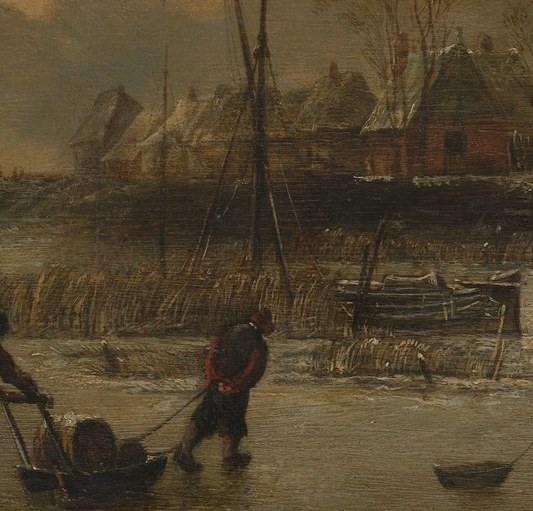
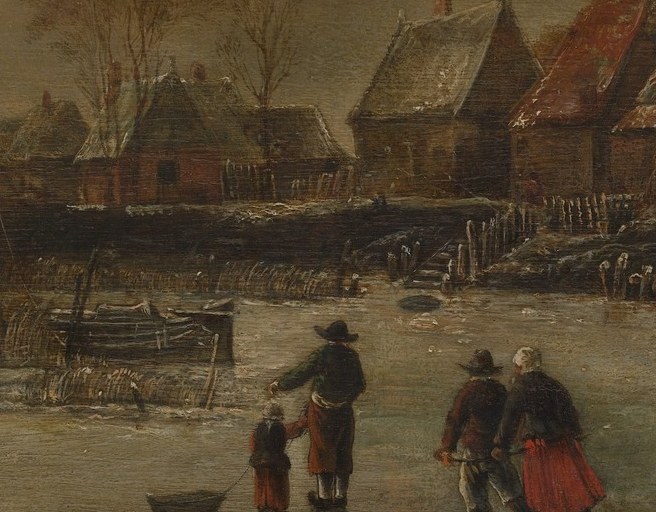
Look first at the bent figure in the foreground, pulling a sled. He anchors the whole composition, his posture a study in everyday labor. Then let your eye drift across the ice to the cluster of skaters and the moored river boat. Commerce has literally frozen in place, and the villagers have simply repurposed the river as their social square.
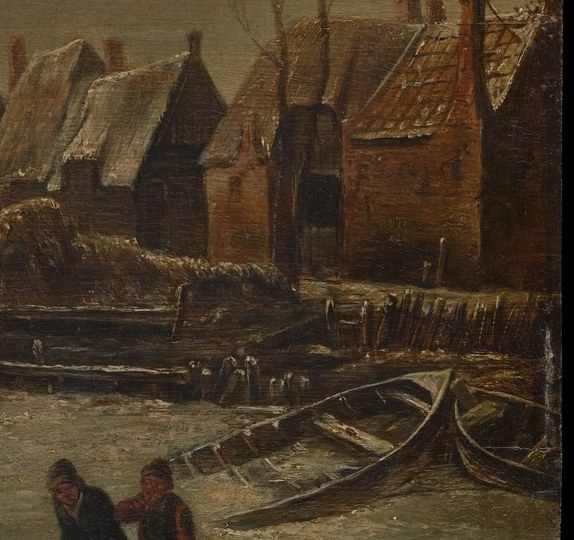
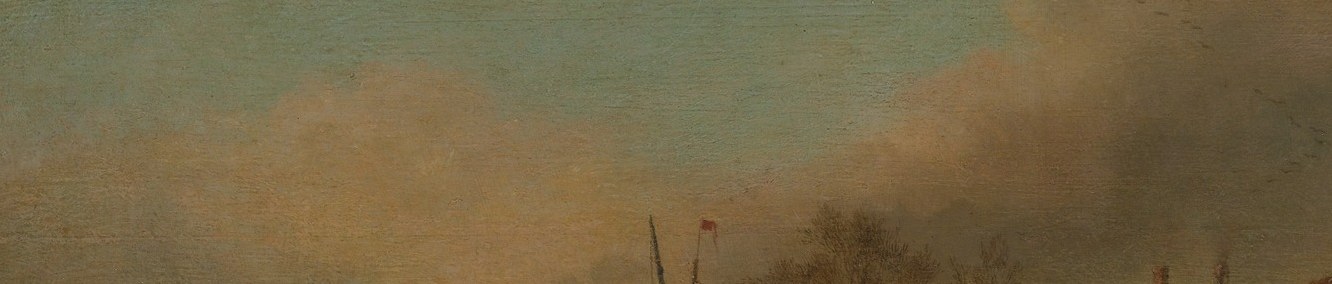
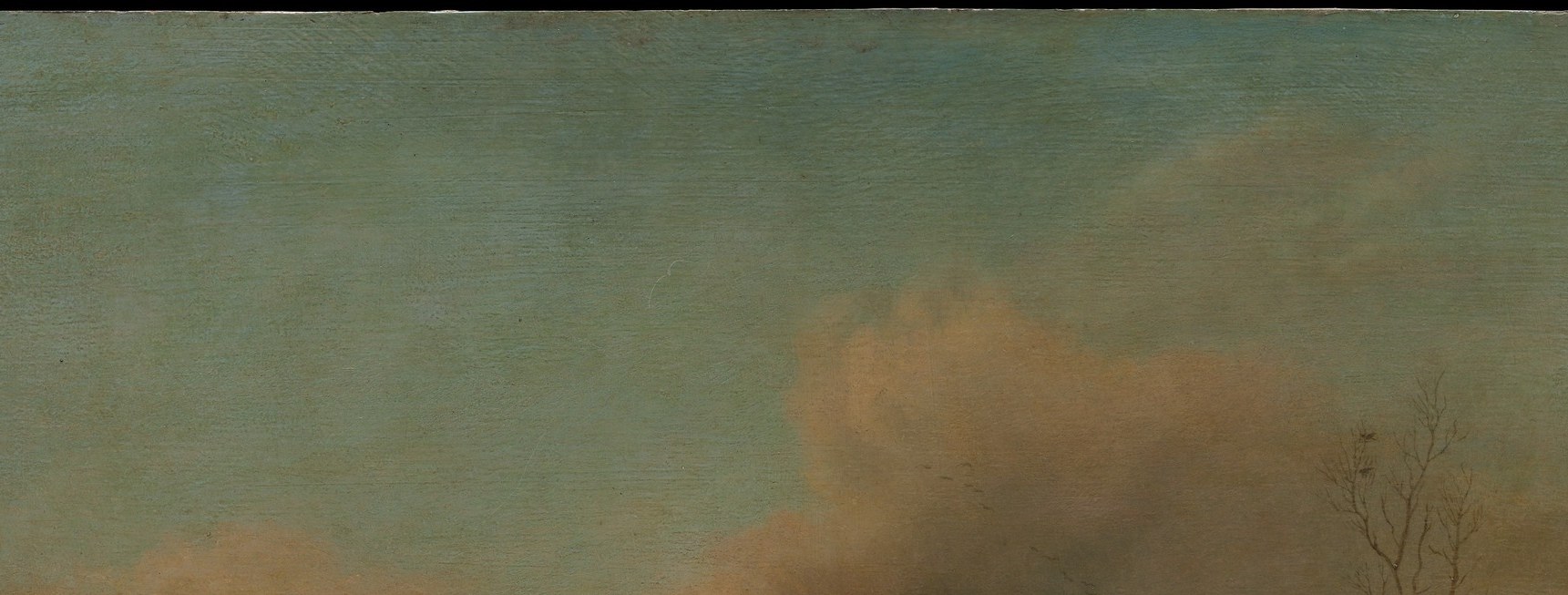
The painting's warmth is entirely structural. Scan the horizon and you will find a thin amber band separating ice from sky. It is easy to miss, but that subtle glow is the painting's inner light. The only other warmth comes from the Dutch brick houses on the right, whose chimneys promise shelter against the cold palette.
Van Streeck is better known for his still lifes, but this landscape captures something specific to the Dutch Golden Age: a hard-won peace on home soil while the continent burned. The winter is harsh, the ice is gray, but the scene is one of quiet resilience.
Details
Transcript
1644. Europe's most brutal war still has four years to run. But this frozen river is a world away from the fighting. A man hauls a sled. Small acts of daily work, not armies. Commerce is frozen in. The boats sit useless until spring. So the whole community simply moves its life onto the ice. The only warmth is in the brick, and that low band of amber sky.