Altarpiece of the Annunciation by Juan Correa de Vivar
Juan Correa de Vivar's "Altarpiece of the Annunciation," painted in 1559, was originally created for a place of worship and now resides at the Museo del Prado. This oil painting captures the pivotal moment of the Annunciation, where the Archangel Gabriel delivers the divine message to the Virgin Mary.
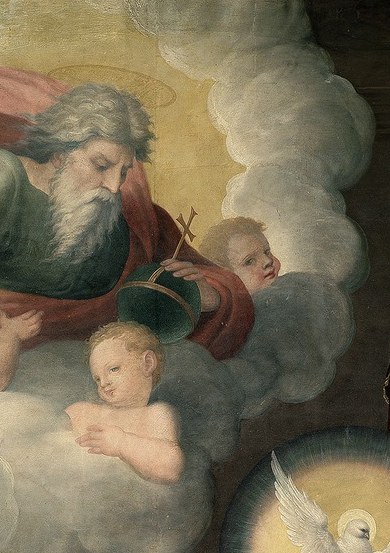
Look closely at the scroll held by Gabriel, bearing the Latin inscription "Ave Maria Gratia Plena" (Hail Mary, full of grace). Observe Mary's contemplative expression and the symbolic lilies, representing purity. Overhead, God the Father and the dove of the Holy Spirit underscore the sacred nature of this event.
As an altarpiece, this work played a central role in devotional practices of its time. Correa de Vivar's detailed rendering and use of oil paint bring this miraculous narrative to life, reflecting 16th-century Spanish artistic and religious trends. It's a testament to the enduring power of sacred art.
What details in this painting draw your eye the most?
Details
Transcript
This painting from 1559 was created for a place of worship. It depicts the Archangel Gabriel announcing Jesus's birth to Mary. Gabriel presents a scroll that reads: "Hail Mary, full of grace." Overhead, God the Father blesses the scene. The Holy Spirit, as a dove, descends towards Mary. Today, this altarpiece is preserved at the Museo del Prado.