Deborah Kip, Wife of Sir Balthasar Gerbier, and Her Children by Rubens, Peter Paul, Sir
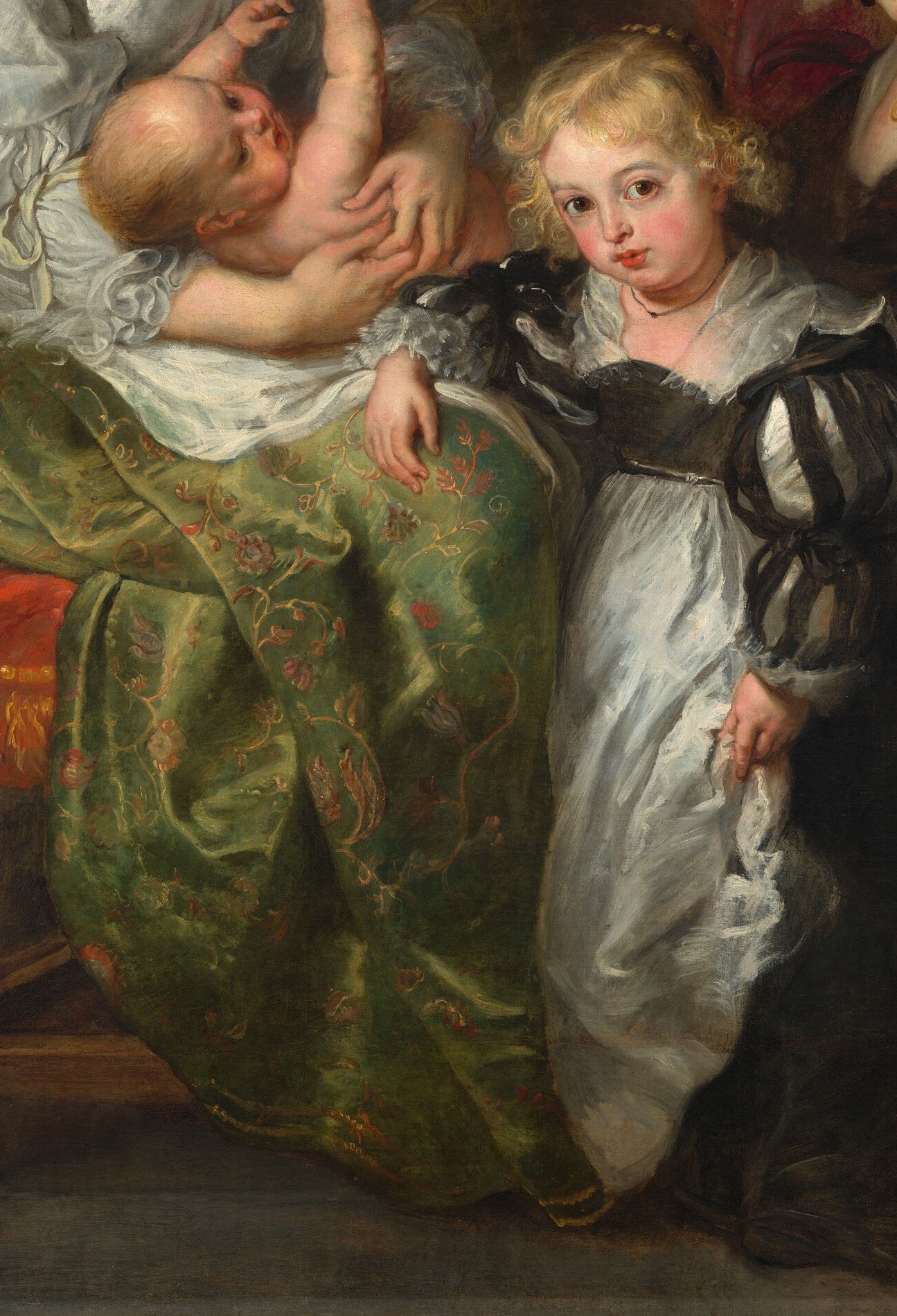
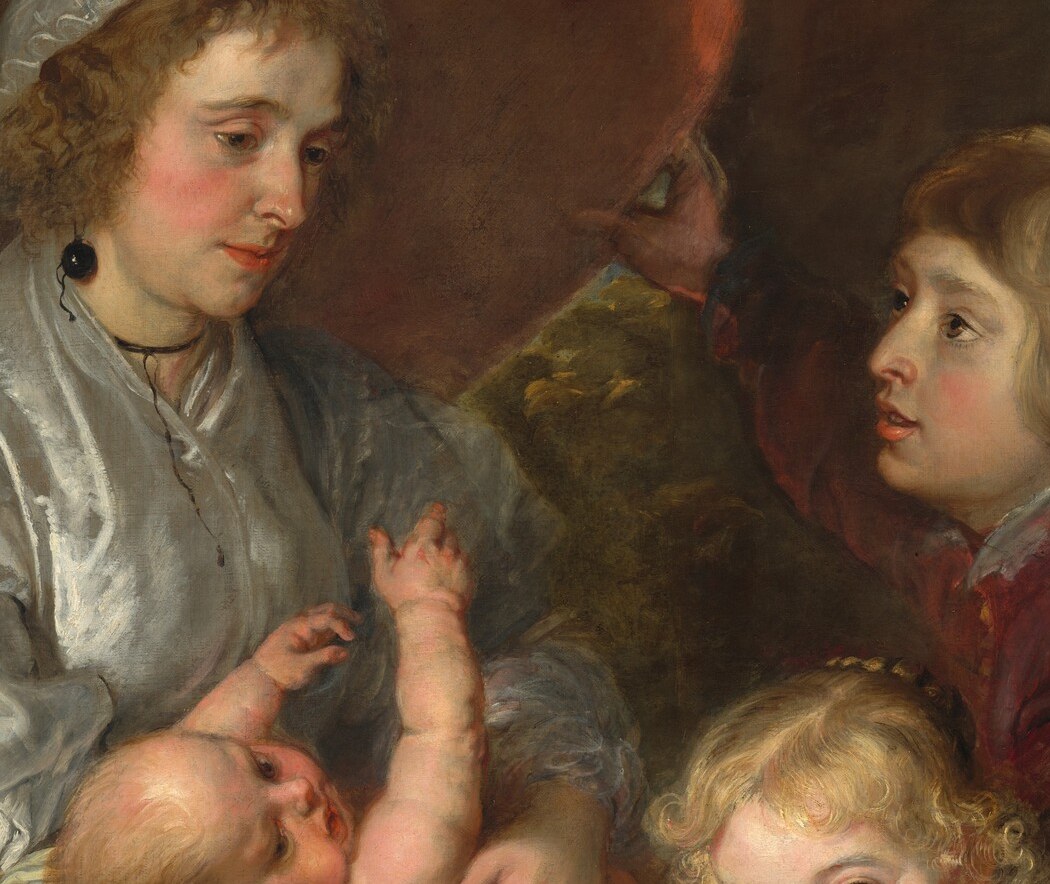
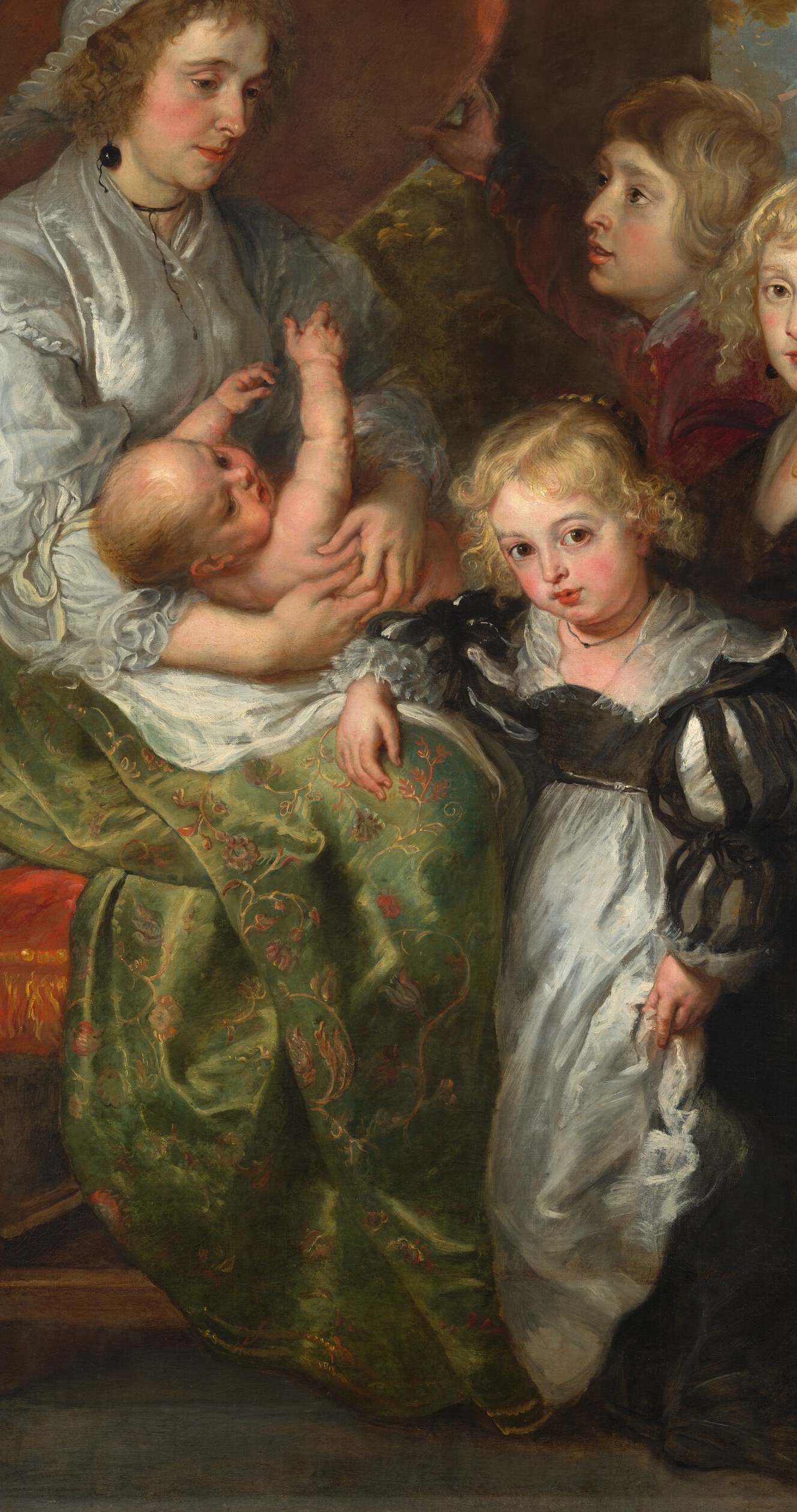
This is Peter Paul Rubens' "Deborah Kip, Wife of Sir Balthasar Gerbier, and Her Children," painted around 1629-30 and then substantially reworked in the mid-1640s. It lives at the National Gallery of Art in Washington, D.C. The most curious thing about it is not just the family dynamic, but the fact that Rubens returned to a finished painting over a decade later and changed his mind.
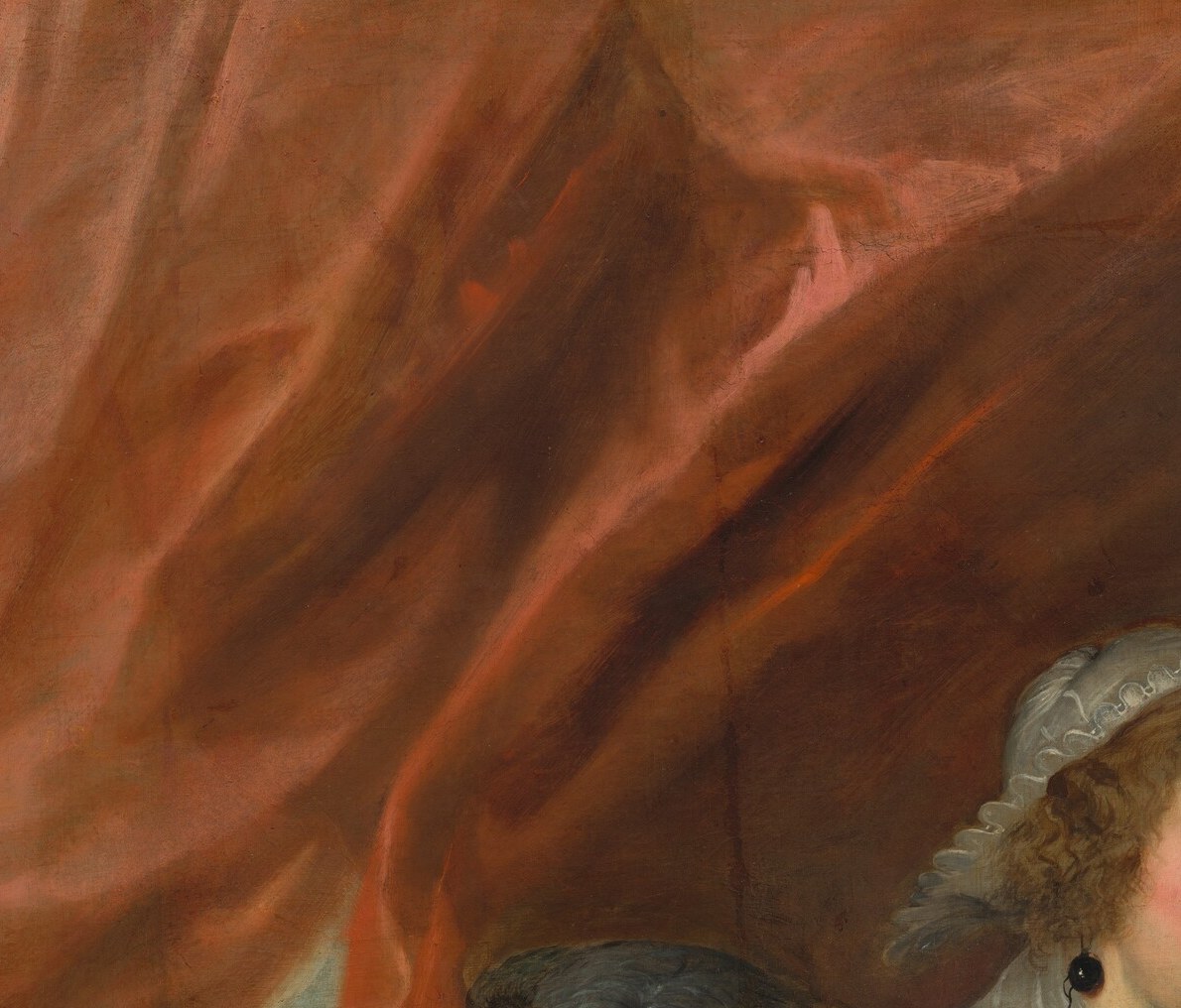
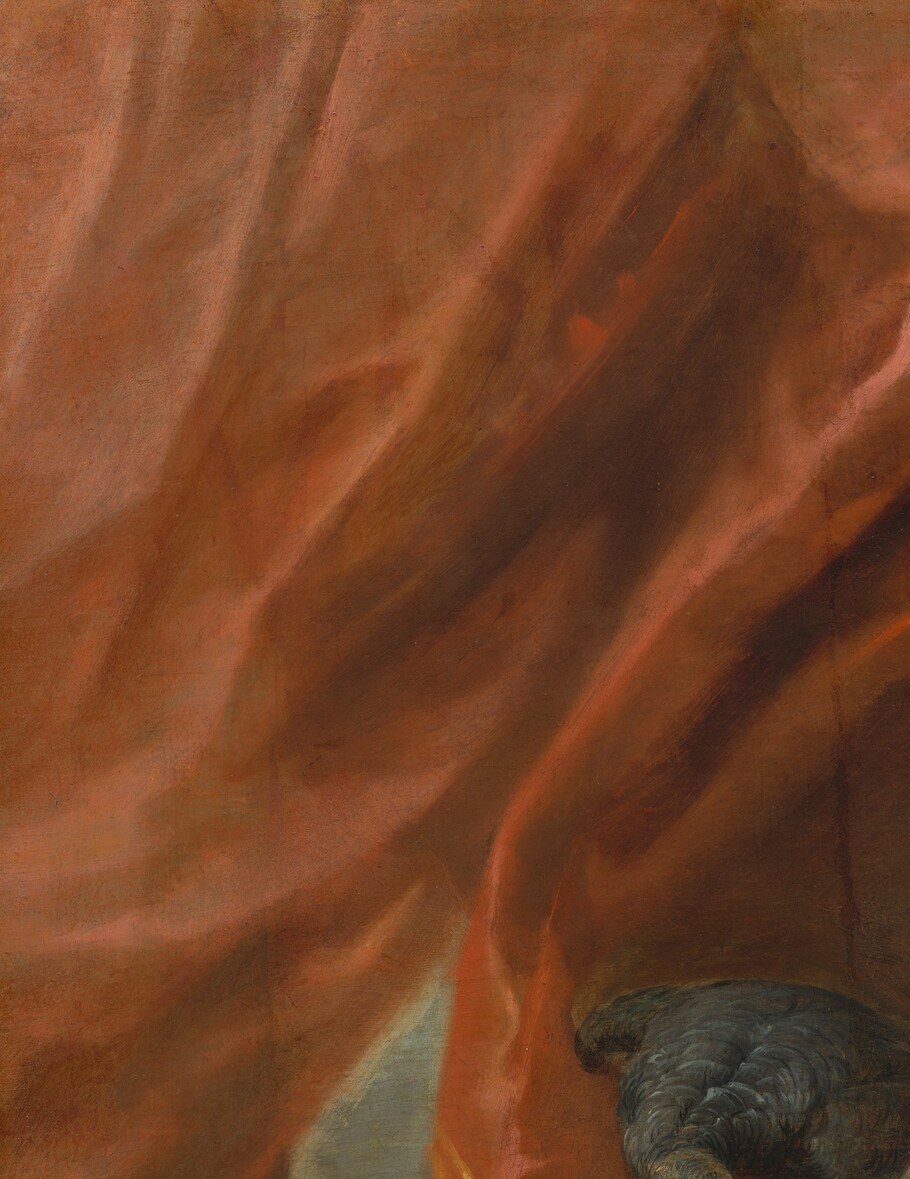
Look at the standing child in the center. The dress appears a luminous silver-white satin, a showpiece of Rubens' skill with fabric. But embedded within that paint is a pentimento: a ghost of red drapery showing through, particularly visible around the hem. The dress was originally a different color, likely a warmer crimson or gold, painted over to cool the palette. His revision re-centered the whole visual temperature of the group, drawing the eye to the mother's green silk and the theatrical orange curtain.
The sitter is Deborah Kip, married to Sir Balthasar Gerbier, a diplomat and art agent who worked for the Duke of Buckingham and likely brokered connections for Rubens in English court circles. The portrait was made during a period when Rubens was not only a famous painter but an active diplomat himself, shuttling between the courts of Spain, England, and the Spanish Netherlands. The children's composed poses, particularly the clasped hands of the central child, reflect a mirror of the courtly decorum their parents navigated daily.
That he chose to re-enter an old canvas and re-harmonize it suggests a perfectionist's restlessness, even at the height of his career. The revision was not for a client but for his own eye. It means the painting we see is a palimpsest of two distinct decades, two distinct artistic moods, fused together in one frame.
Details
Transcript
A woman and her children, richly dressed. But look closely at the standing child's silvery skirt. Right through the satin, you can see a trace of red underneath. This painting was not always as you see it. Rubens finished it around 1630. Then, more than a decade later, he came back. He repainted the children's clothes, shifting the entire color story of the family. A finished masterwork, reopened and recomposed, in the pursuit of something cooler and brighter.