明 朱鷺 墨竹詩畫 摺扇|Bamboo and poem by Zhu Lu
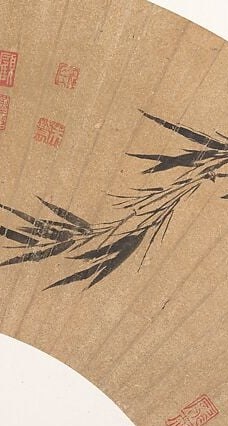
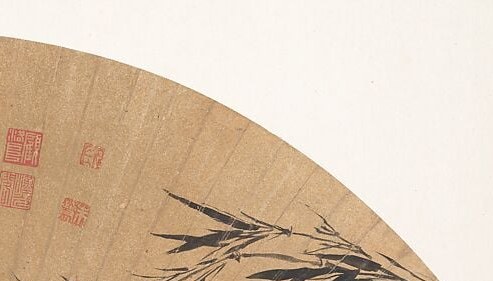
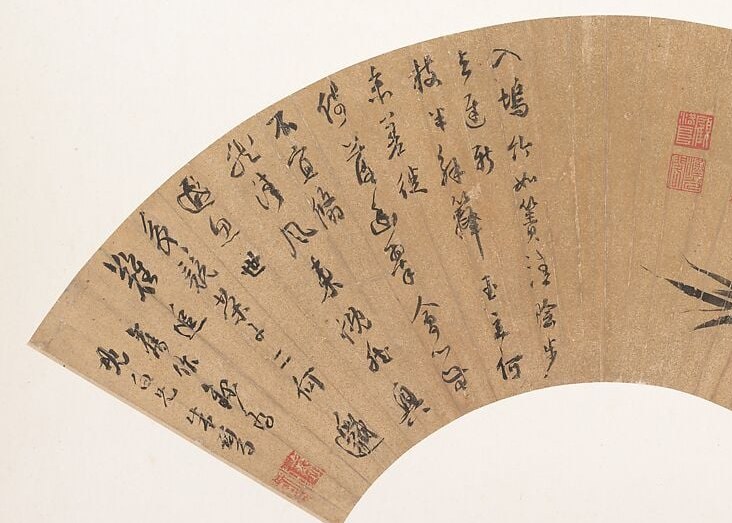
Bamboo and Poem is a folding fan painted by the Ming dynasty artist Zhu Lu in 1616, now mounted as an album leaf. The fan is ink on gold-flecked paper, and it carries a full ethical syllabus in a single bending stalk.
Look at the stem's segmented nodes. Each horizontal joint represents perseverance through adversity, the core metaphor for a scholar-official's career. The hollow interior is humility. The leaves were painted in rapid, unhesitating strokes because in literati thought, painting bamboo was a moral exercise, the brushwork IS the virtue it depicts. Notice how a single leaf grades from wet black at its entry to pale grey at its exit, exhausting the ink in one gesture.
Zhu Lu lived from 1553 to 1632, through the late Ming dynasty's cultural transition. The fan format was intimate and portable, meant to be held closely, opened and closed hundreds of times. The calligraphic poem beside the bamboo is not decoration. In literati aesthetics, calligraphy and painting share a single origin in the brushstroke; text and image are one utterance.
Three hundred years before modern self-help, a scholar could open this fan and read an entire moral education: be upright, be hollow, bend without breaking.
Details
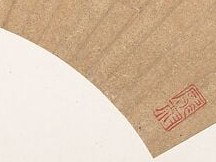
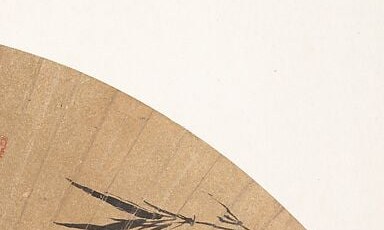
Transcript
It begins with emptiness. The stem enters from nowhere, already growing. Each knotted joint: perseverance through adversity. The hollow interior is humility. The painter was a scholar-official. The leaves: moral action. Each stroke made without hesitation. A single brush-load grades from wet black to pale grey. The poem is not a caption. In literati thought, calligraphy is painting. Bamboo, poem, and gold ground: an entire ethical education, folded into a pocket.