Bride and Groom on Horseback - Connibo by Catlin, George
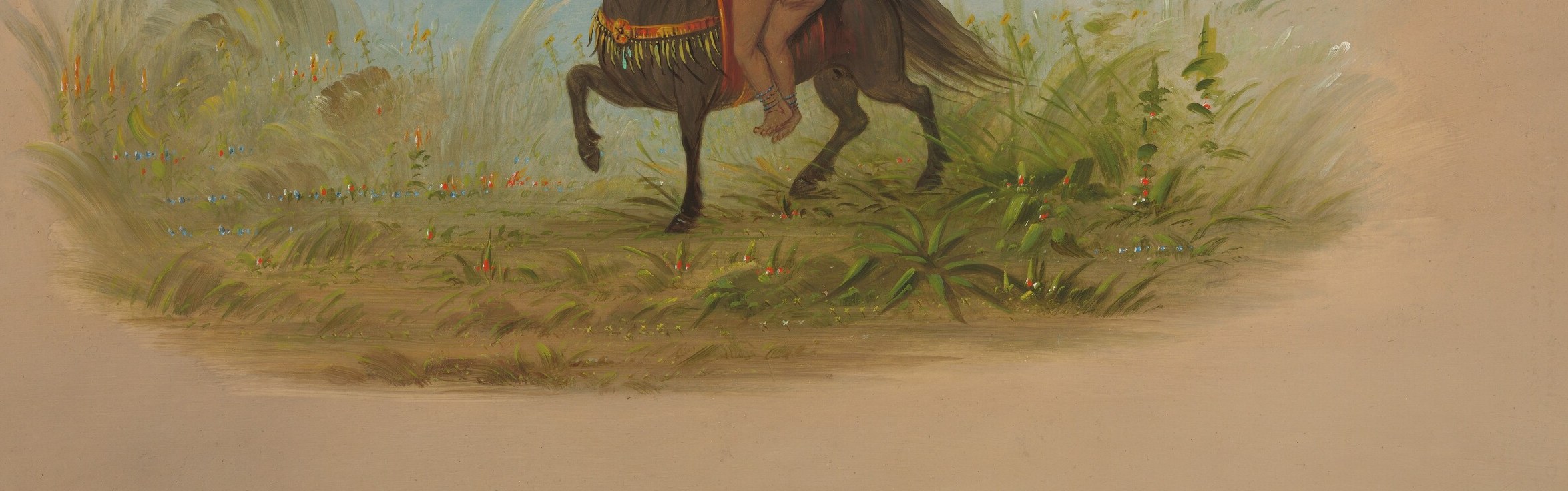
George Catlin, famous for his portraits of Native Americans, painted "Bride and Groom on Horseback - Connibo" in 1854. This oil on card mounted on paperboard shows a departure from his usual ethnographic focus, instead depicting an intimate scene of a couple on horseback beneath a tree.
Notice the details: the prominent feathers on the groom's headdress, the intricate patterns of the horse's saddle blanket, and the horizontally held spears, suggesting a shared journey. These elements offer a glimpse into the painter's ability to portray personal narratives.
Catlin made five journeys to the American West in the 1830s, documenting the lives of Plains Indians. While this particular painting doesn't fit his typical frontier studies, it bears his initials, 'G.C.', in the lower left. The catalog number '458' in the upper margin is a subtle but fascinating clue to the painting's history, indicating it was formally cataloged long ago. It's a reminder that every artwork has a life beyond its creation.
What other stories might these catalog numbers tell us about a painting's journey through time?
Details
Transcript
George Catlin painted thousands of portraits of Native Americans. But this painting, titled "Connibo," is different. The bride and groom ride together, their spears held horizontally. Catlin signed his work with these initials, 'G.C.'. But look closely at the upper margin, where a catalog number appears. This shows the painting was officially inventoried, years ago.