View of Rhenen by Goyen, Jan van
View the artwork: View of Rhenen →
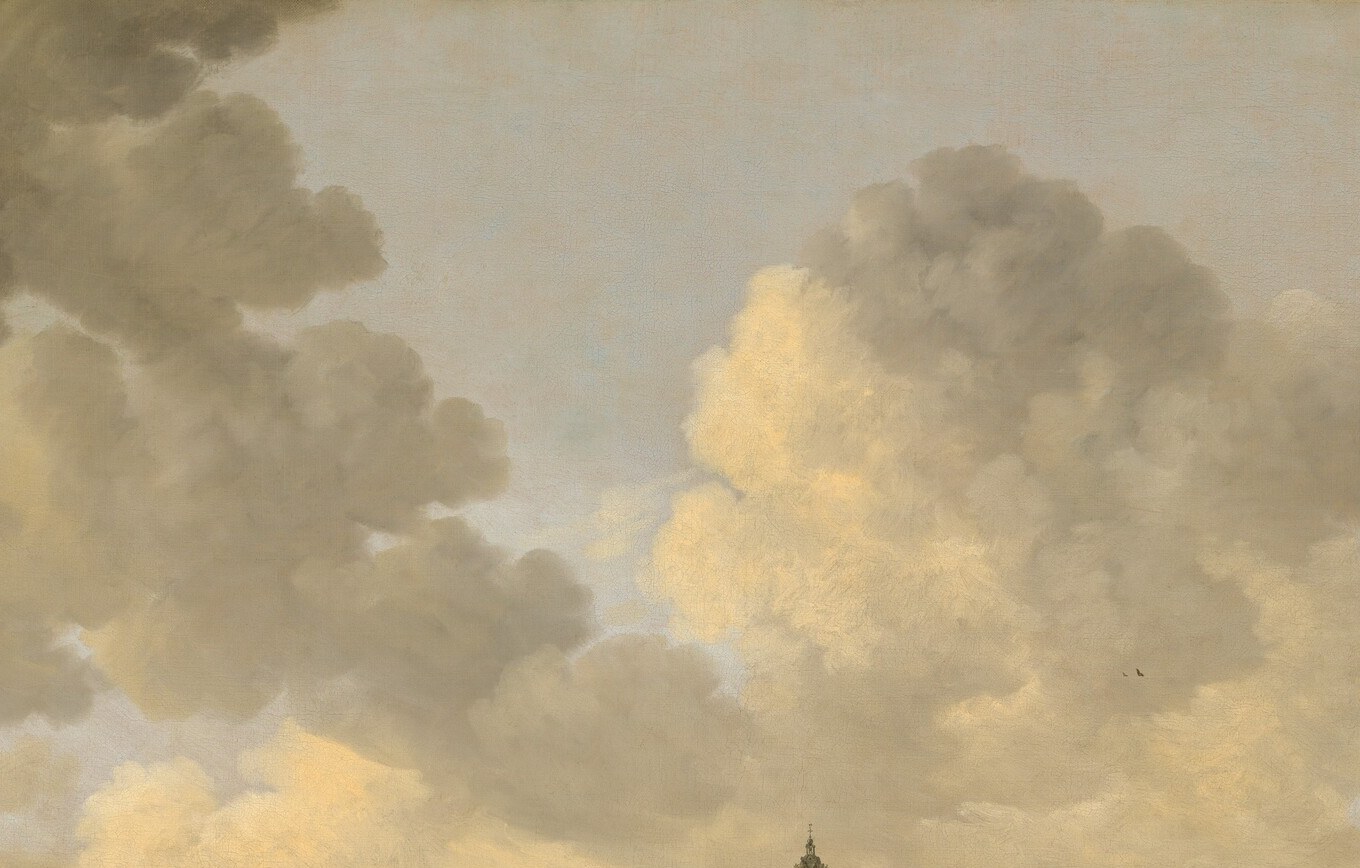
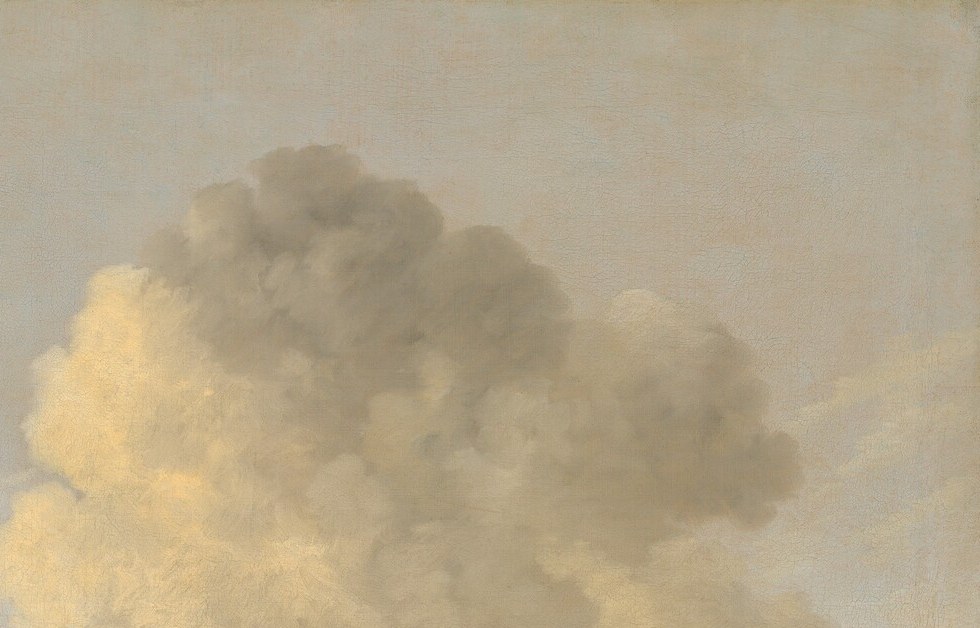
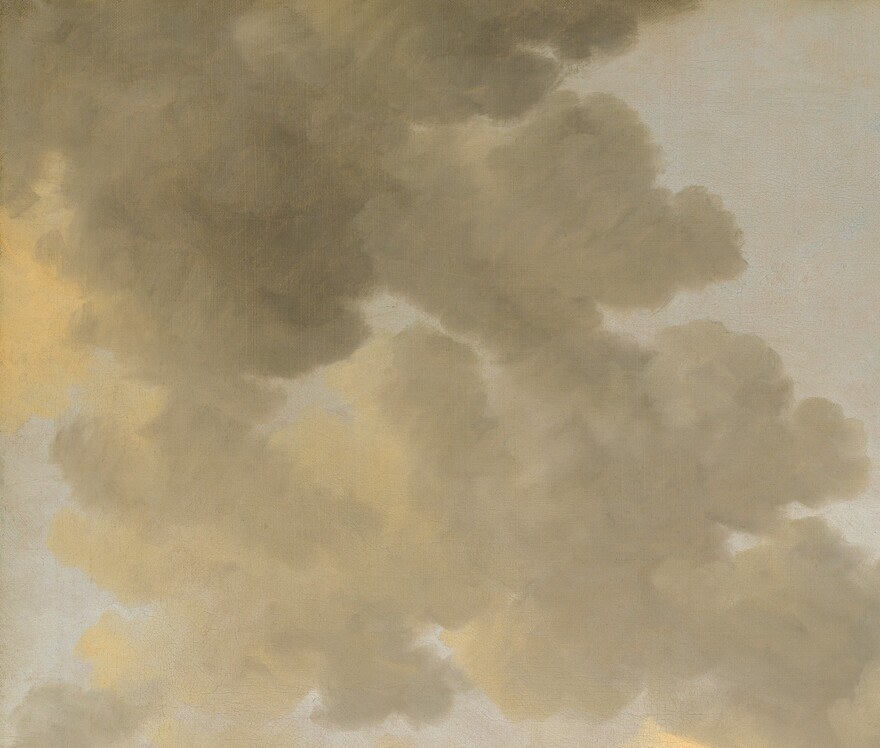
Jan van Goyen painted "View of Rhenen" in 1646, and the real subject is the sky. It takes up nearly two-thirds of the canvas. A towering cumulus mass rolls in from the left, shadowed and heavy, while a warm sunlit rift breaks through on the right. The town, the river, and the church tower are just the grounding line for this weather drama.
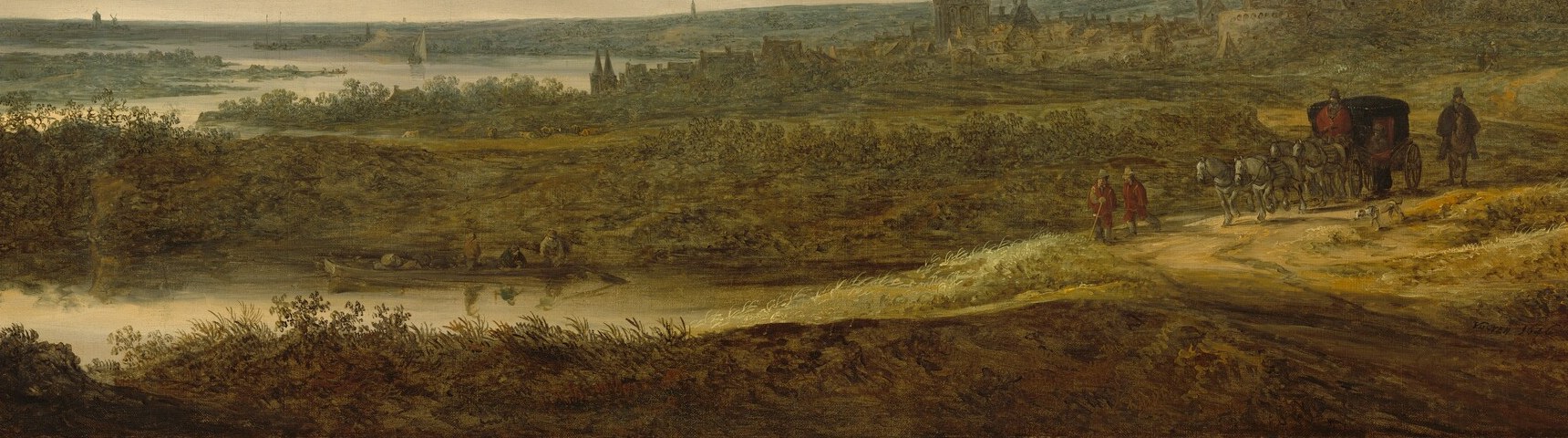
Look for the tiny horse-drawn coach on the foreground road. Beside it walks a lone figure in a wide-brimmed hat. Van Goyen used these two small travelers as a scale marker, without them, the sky would read as abstract. With them, the landscape feels vast and real.
Van Goyen was staggeringly prolific, leaving behind some 1,200 paintings and more than a thousand drawings. He is one of the key tonalists of the Dutch Golden Age, painters who restricted their palette to soft grays, ochres, and umbers and let light do the heavy lifting. Here, the sandy foreground road in warm umber pushes the eye straight into Rhenen, a town he painted repeatedly throughout the 1640s.
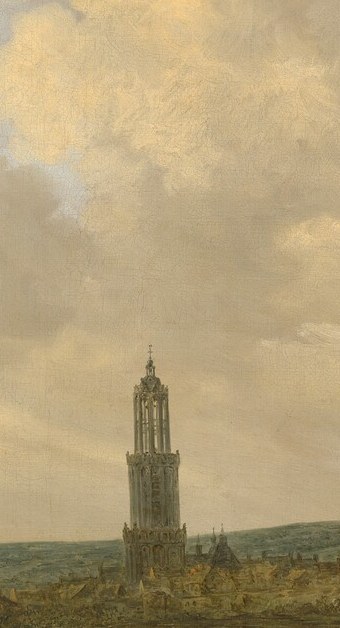
The painting is a document of a specific place, the Cunerakerk spire is still recognizable today, but it is also a record of how a 17th-century artist understood atmosphere. Every brushmark serves the weather.
#arthistory #dutchgoldenage #vangoyen
Details
Transcript
A Dutch sky can swallow a town. Rhenen, 1646. The church tower pins the map. Its twin in the civic order: a working windmill. High drama above, but quiet commerce below. Van Goyen built this whole world with three colors. The road enters town through a gate at the right edge. The traveler has been walking since morning.