Artwork
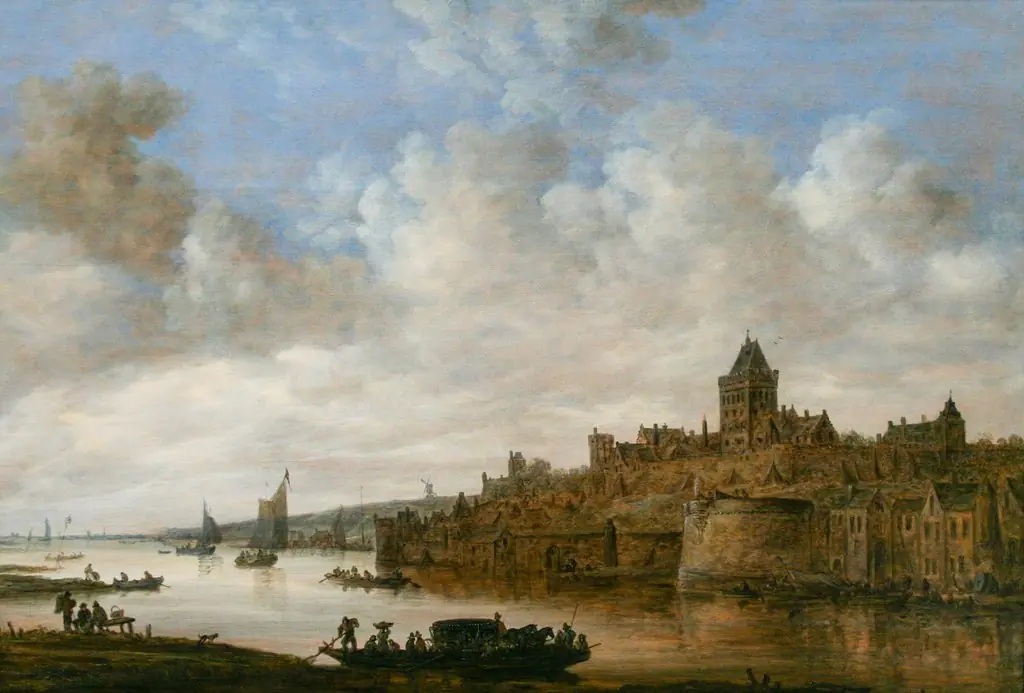
View of Rhenen
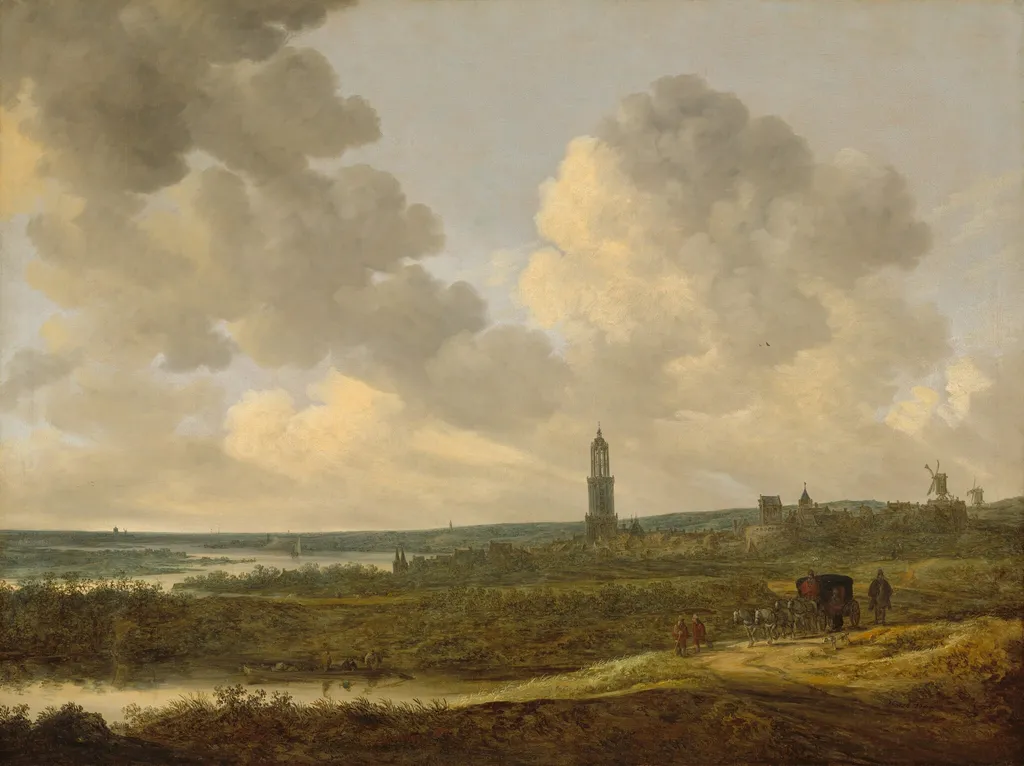
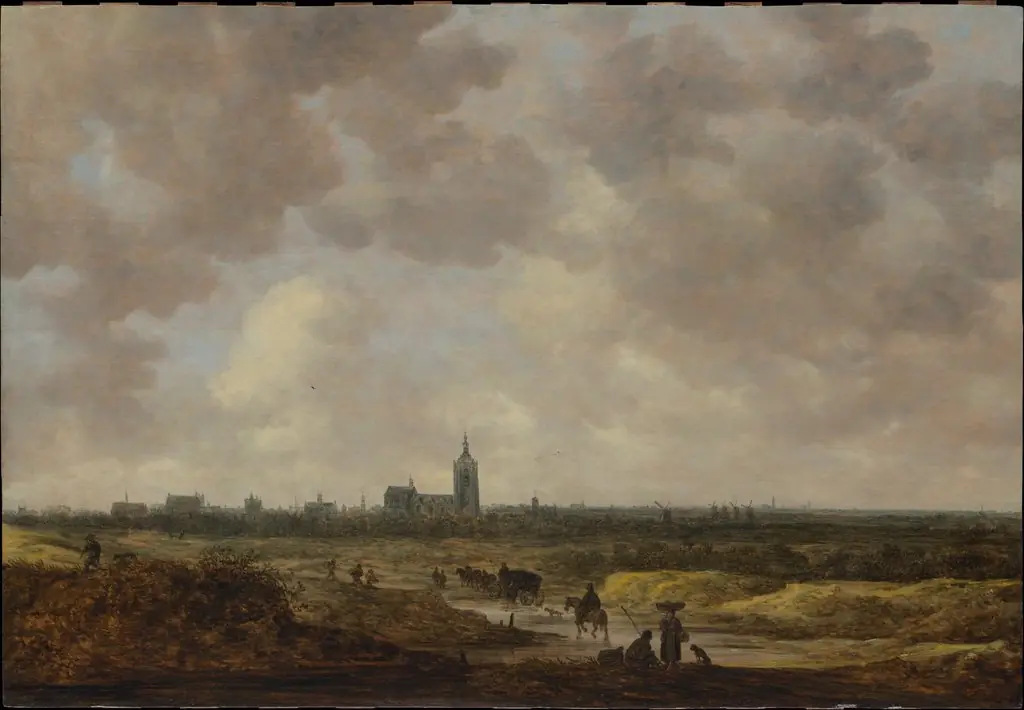
View of Rhenen is an oil painting by the Baroque artist Jan van Goyen. It dates from 1646 and is held in the collection of the National Gallery of Art.
- Inscription
- Inscribed:lower right, VG in ligature: VGoyen 1646
About this work
Subject & Meaning
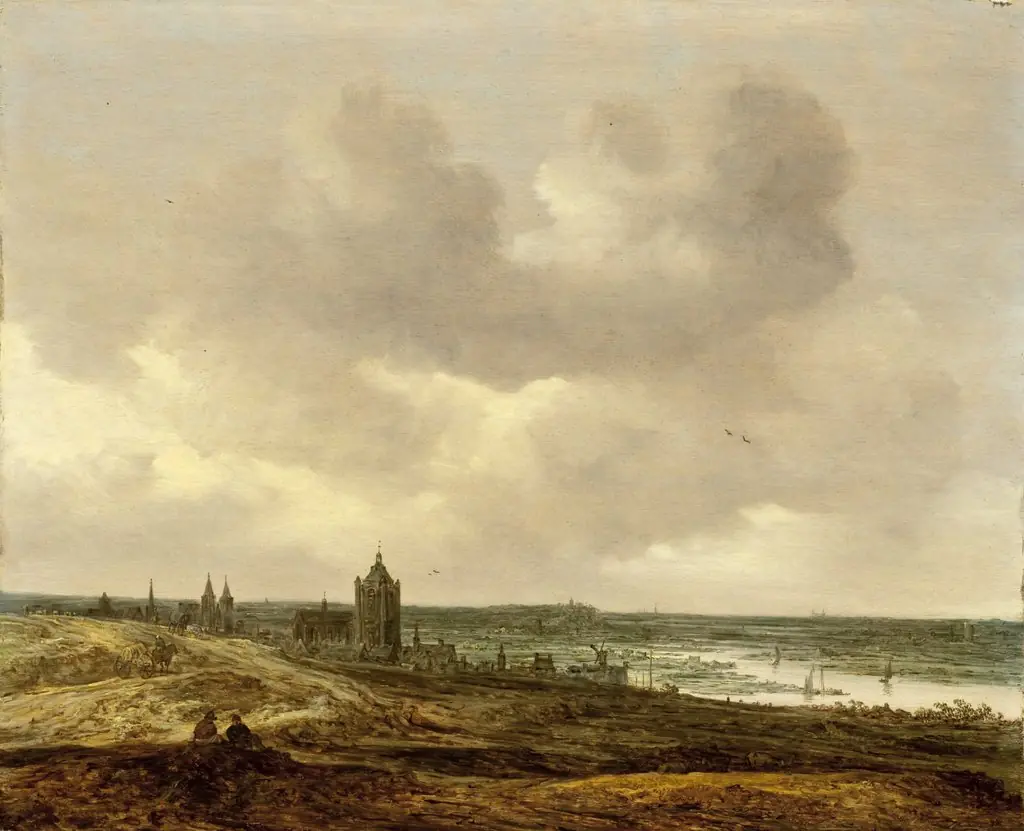
The painting depicts a panoramic view of the town of Rhenen, dominated by the Cunerakerk (Church of Saint Cunera) as its central architectural landmark.
The painting depicts a panoramic view of the town of Rhenen, dominated by the Cunerakerk (Church of Saint Cunera) as its central architectural landmark. The foreground includes a coach, a horse-drawn vehicle, a windmill, and a man, elements that characterize everyday life in the Dutch countryside during the 17th century. As a landscape painting by Jan van Goyen, the work exemplifies the artist's focus on rendering the typical Dutch landscape with a sense of atmospheric space and naturalistic detail.
The composition presents a harmonious integration of the built environment and rural activity, reflecting the cultural and economic importance of towns and transport in the Dutch Republic. No explicit symbolic or allegorical meaning is indicated in the provided sources.
Technique & Style
View of Rhenen (1646) is painted in oil on canvas, measuring 101.6 × 135.9 cm. It depicts a panoramic landscape featuring the Cunerakerk in Rhenen, a windmill, a horse-drawn coach, and figures. The horizontal format and prominent sky are characteristic of Jan van Goyen's Dutch Golden Age landscapes. The oil medium allowed for varied tonal effects in the sky and terrain. No information on the painting's handling or condition is provided in the sources.
History & Provenance
Painted in 1646 by Jan van Goyen, View of Rhenen depicts the Cunerakerk and surrounding landscape. The earliest recorded provenance begins with an anonymous “Collection of a Gentleman of Nottinghamshire,” sold at Christie’s in 1846. The painting was likely acquired in 1878 by H. Smith Wright of Nottingham and subsequently owned by Thomas Wright of Upton Hall, Nottinghamshire.
It then passed to the noted art historian Dr. Abraham Bredius in Amsterdam, followed by Sir George Donaldson in London, from whom William A. Clark purchased the work in 1906. Clark bequeathed it to the Corcoran Gallery of Art in 1926, and it was acquired by the National Gallery of Art in 2014. No specific commission or other creation details are documented beyond the artist’s authorship and the 1646 date.
The painting is held by the National Gallery of Art in Washington, D.C., where it entered the collection in 2014. It was previously in the Corcoran Gallery of Art, having been bequeathed there in 1926 by William A. Clark, who purchased it in 1906. No inventory or accession number is recorded in the provided sources, and no exhibition history is documented.
Overview
View of Rhenen, painted by Jan van Goyen in 1646, depicts the Dutch town of Rhenen situated on the Utrecht Hill Ridge where it meets the river Rhine. The composition captures the settlement's characteristic elevation changes, with a church spire rising prominently above low rooftops against a vast, overcast sky. In the foreground, a dirt road leads the eye past a tall windmill, where a horse-drawn coach travels accompanied by a pedestrian in a wide-brimmed hat.
Executed in oil on canvas, the work exemplifies the artist's mature tonal landscape style, utilizing a restricted palette of soft grays, browns, and ochres to unify the atmospheric conditions and the earthy terrain. This piece reflects van Goyen's lifelong dedication to documenting the specific topography and daily life of the Dutch countryside. Created during the height of the Dutch Golden Age, the painting serves as a precise record of the municipality's geography, emphasizing the relationship between the built environment and the natural landscape rather than idealizing the scene.
Context
Jan van Goyen was known for his extensive series of townscapes and landscapes, making views such as this a recurring motif in his oeuvre. His consistent portrayal of Dutch towns, often featuring their distinctive architecture and everyday life, established a recognizable visual language. These works contributed significantly to the development of Dutch landscape painting during the Golden Age, emphasizing local scenery.
Own this work as a print
Artist & collection

Artist
Jan Josephszoon van Goyen (Dutch pronunciation: ; 13 January 1596 – 27 April 1656) was a Dutch landscape painter.

 Studied in the Dutch Golden Age course