Portrait of Desiderius Erasmus (1469?-1536) by http://www.wikidata.org/.well-known/genid/27abcfad8e9e4bfc2bd5281e4367ea4d
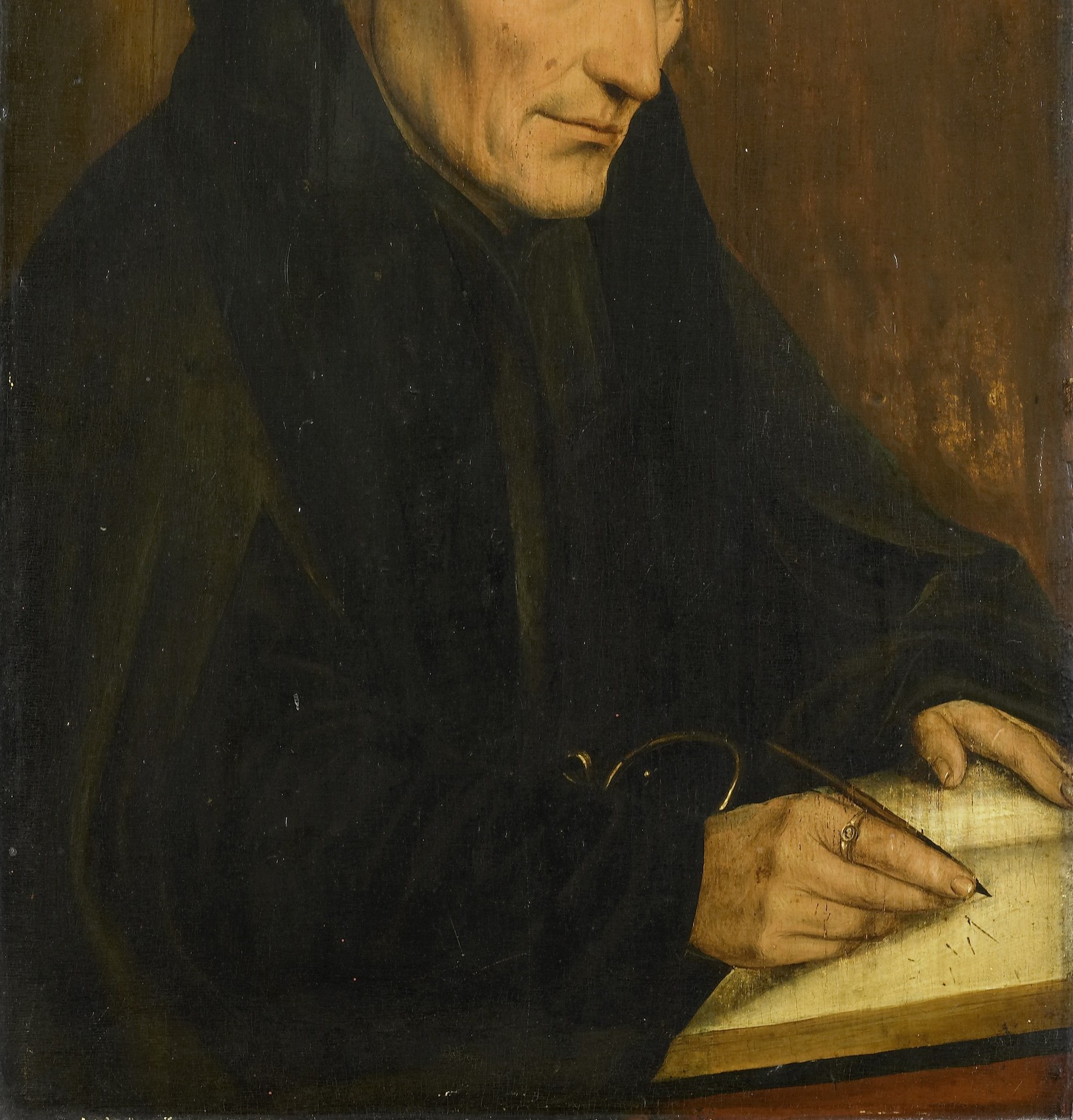
This portrait of Erasmus was painted in 1535, when he was the most famous scholar in Europe. A humanist, a priest, and a Bible translator, he helped set the Reformation in motion. A year after this portrait was finished, he was dead.
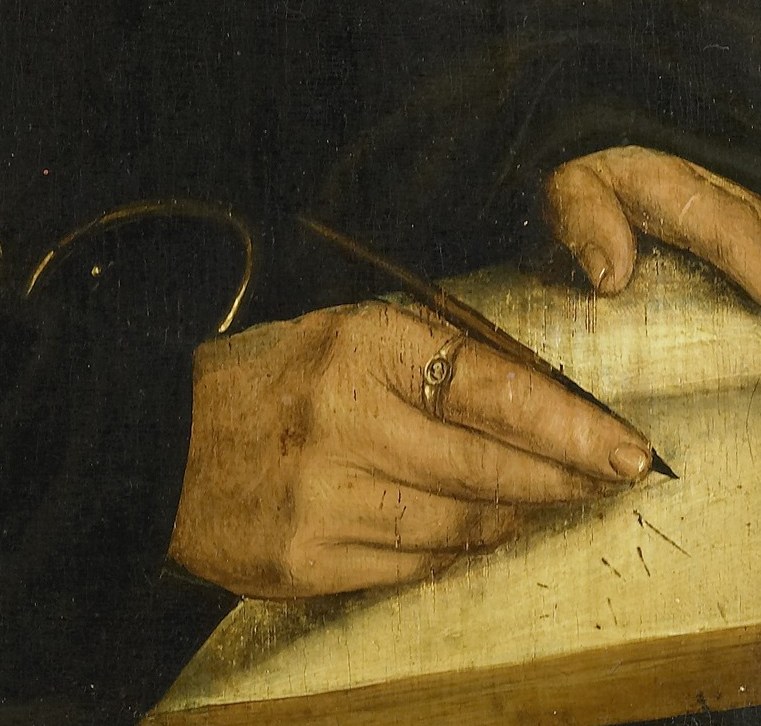
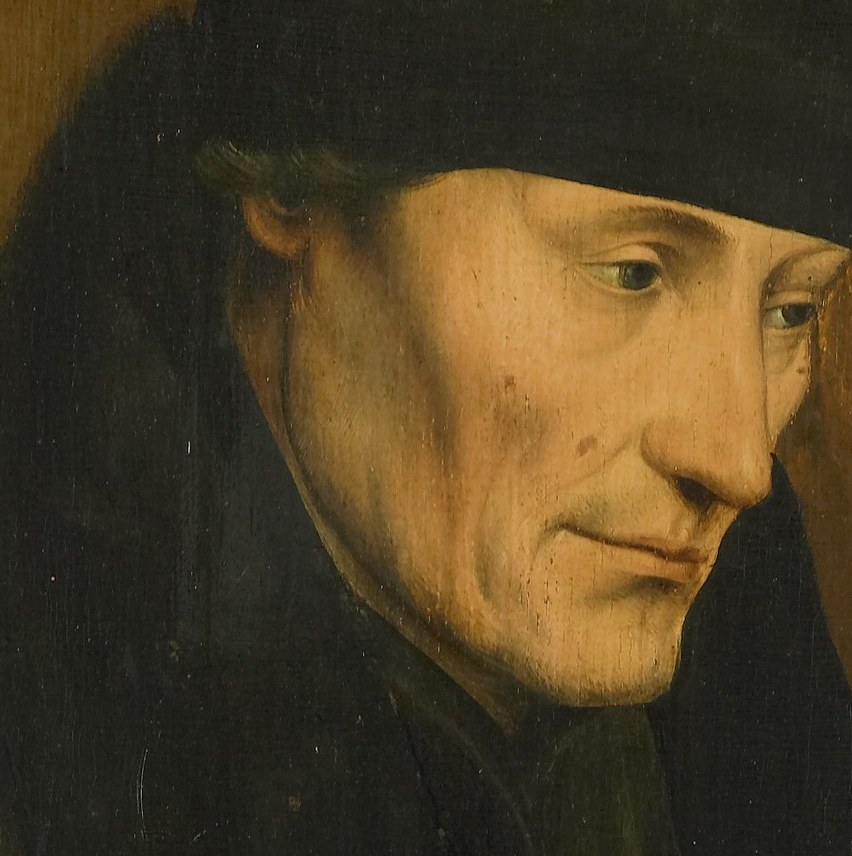
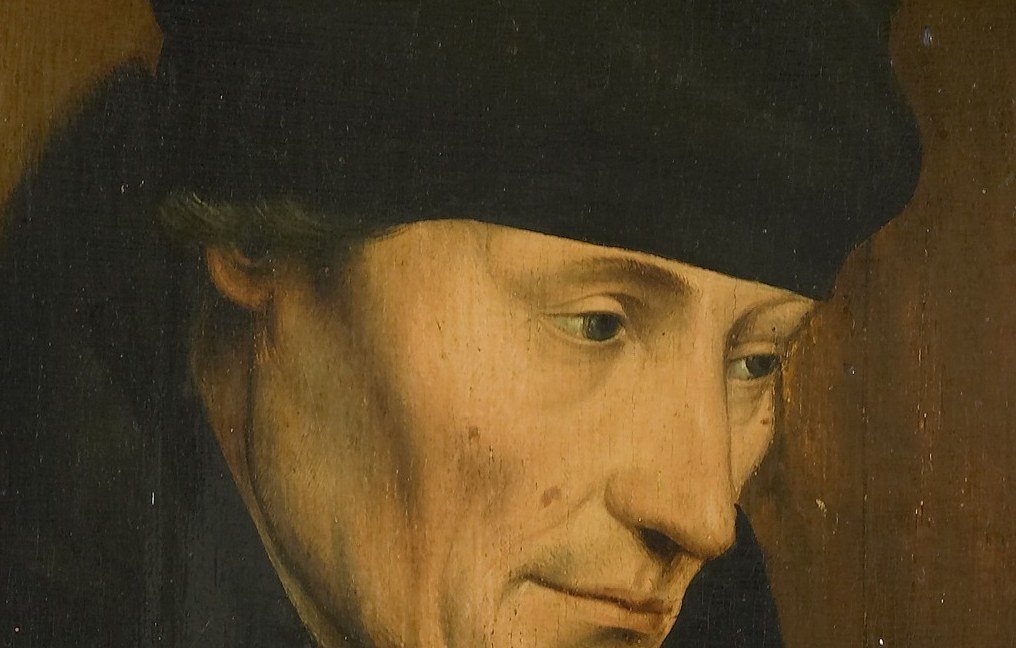
Look at his right hand, the visible veins, the aged skin, the ring. That ring is the painting's quietest detail, marking his clerical status. Above it, his face: sixty-six years of thought settling into a subtle smile.
The portrait circulated among humanist circles after his death, a token of admiration for a man who prized learning over pomp. It now sits in a museum collection of Renaissance portraiture.
We scroll past small things. A ring. A shadow on a cheek. Five centuries later, the smile is still there. What do you see in it?
Details
Transcript
1535. A scholar sits in a dark room, writing. His right hand, veins, bones, every hour he wrote. That small ring: a mark of his clerical calling. Lift your eyes to his face. He died a year later. This smile remains.