Portrait of Daniele Barbaro by Paolo Veronese
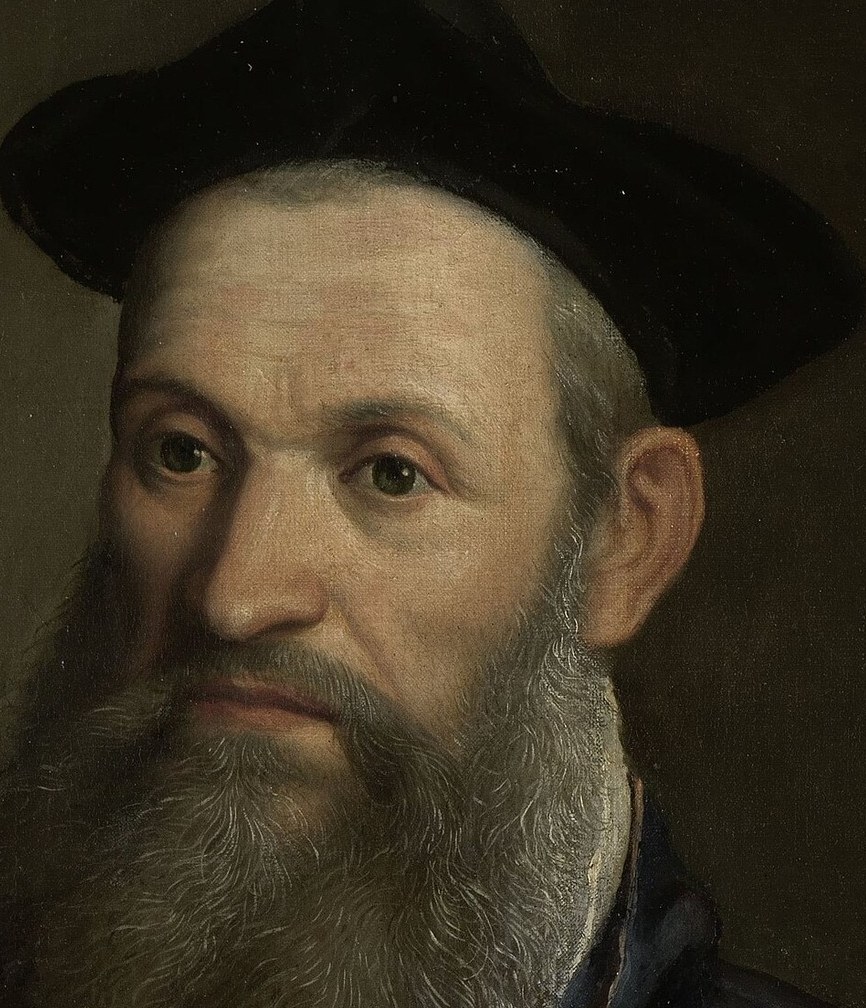
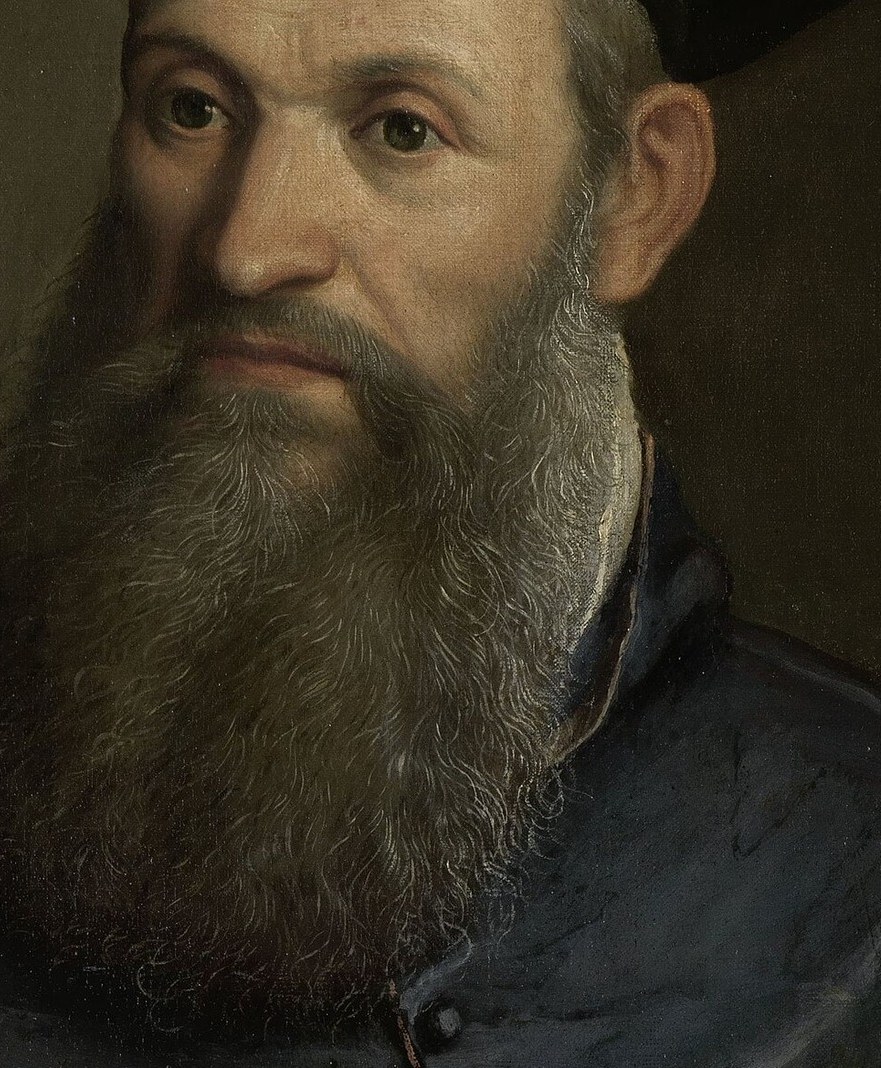
Paolo Veronese's Portrait of Daniele Barbaro (c. 1556, Rijksmuseum, Amsterdam) captures a Venetian nobleman who was a bishop, a humanist scholar, and secretly a cardinal, a title given in pectore, never announced in his lifetime.
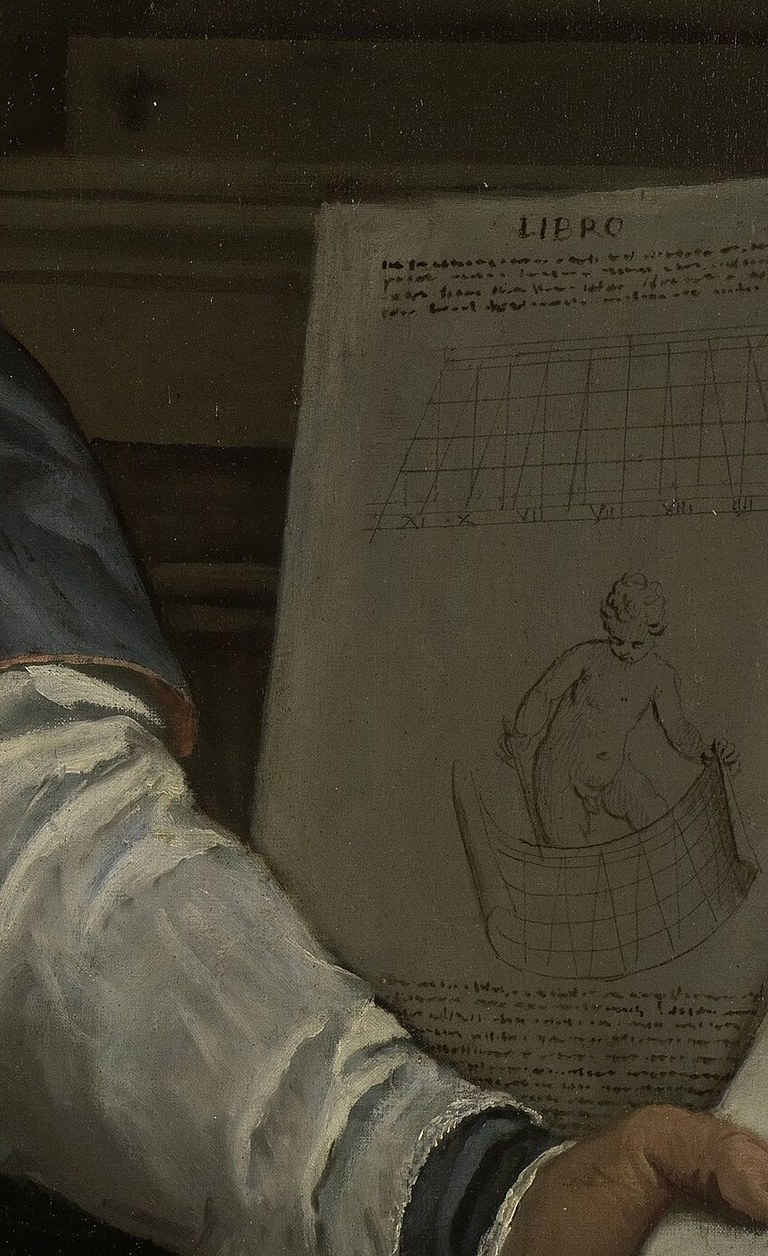
Look at the two open books. The standing volume is his treatise on perspective, La Practica della Perspettiva. Inside you can see a hand-drawn perspective grid. The other is his commentary on Vitruvius, illustrated by Andrea Palladio. His hand rests beside them. These are not props. He wrote them.
Veronese was in his late twenties. He had already collaborated with Barbaro on the Villa Barbaro in Maser, designed by Palladio. The portrait stands at the intersection of painting, architecture, and humanist thought: three disciplines in one dark room.
What else might a portrait reveal if we slowed down to look?
Details
Transcript
Venice, around 1556. He sits for Paolo Veronese. The standing book. He wrote it, a treatise on perspective. Inside: a grid. The geometry of seeing. Five years later, he was secretly made a cardinal. He looks back at us.